


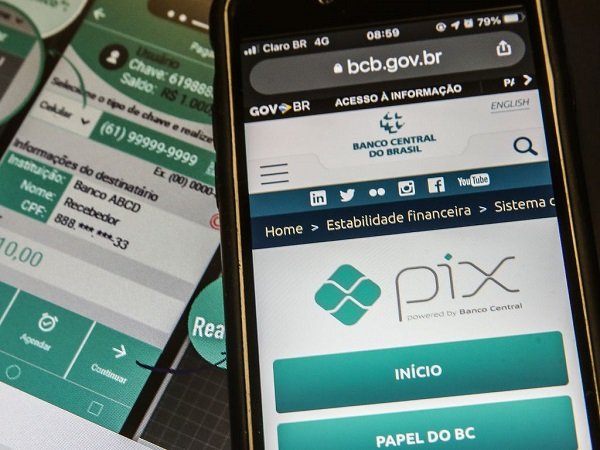
New rules from the Central Bank (BC) to track Pix transfers involved in fraud came into effect on Sunday (23/11), marking the most significant upgrade in Brazil’s anti-fraud mechanisms since the launch of the instant payment system. The changes require financial institutions to adopt enhanced monitoring tools capable of following the path of diverted funds far beyond the first receiving account, addressing a long-standing vulnerability exploited by organized criminal groups. Until now, fraudsters relied on speed and fragmentation—quickly splitting stolen money into multiple accounts across different banks—to impede recovery efforts. With the new system, banks will be able to trace a wider chain of transfers, increasing the likelihood of blocking and returning funds and strengthening overall consumer protection in the Pix ecosystem.
This Content Is Only For Subscribers
To unlock this content, subscribe to INTERLIRA Reports.
Special Return Mechanism
Until now, the main limitation of the Special Return Mechanism (MED), used to request the return of a Pix transfer, was that the BC only traced the first account to which the money had been diverted. Criminal groups, however, usually distribute the stolen amount through a chain of accounts in rapid succession. In 2024, the monetary authority managed to recover less than 7% of the diverted funds.
MED 2
With the implementation of “MED 2.0,” the Central Bank has updated Pix rules to allow more than one return request for the same fraud dispute. Under the new system, institutions can technically track the movement of funds through up to five levels of transfers. If criminals split the money among several accounts, all of them will be analyzed. According to the BC, the return of money diverted can now occur within 11 days of the dispute, although the measure remains optional until February 2 of next year, when it will become mandatory.
100% Digital
Since October 1, the Special Return Mechanism (MED) has become fully digital, eliminating the need for customer service interactions. All participating financial institutions now offer the functionality directly within their Pix platforms, allowing users to dispute transactions without contacting support centers. Created in 2021, the MED can only be used in proving cases of fraud or operational errors by financial institutions. It does not apply to commercial disputes, disagreements between good-faith third parties, or transfers made to the wrong person due to user mistakes, such as entering an incorrect key.
Analysis:
The Central Bank’s new tracking rules for Pix transactions represent a decisive shift in Brazil’s approach to combating digital financial fraud. By expanding the traceability of diverted funds beyond the first receiving account, regulators are directly targeting the fragmentation tactics widely used by criminal organizations. This enhanced visibility not only strengthens the system’s defensive capacity but also signals a broader institutional effort to modernize real-time monitoring in an ecosystem where instant payments have become deeply embedded in daily economic activity.
The introduction of MED 2.0 addresses structural gaps that previously limited the Special Return Mechanism’s effectiveness. With banks now able to follow up to five layers of transfers, the system closes off a key avenue for laundering stolen funds and significantly raises the operational cost for fraud rings. The possibility of issuing multiple return requests for the same dispute creates a more dynamic and comprehensive investigative process, increasing the likelihood of asset recovery within a shorter window.
Sources: A Folha de SP.

