


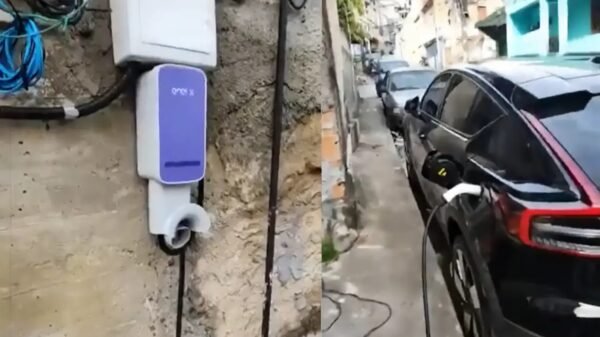
Rio de Janeiro is facing a scenario that diverges sharply from the rest of the country when it comes to electric vehicle thefts. While Brazil recorded a decline in these crimes between 2023 and 2024, the state has moved in the opposite direction, showing an increase well above the national average. The information comes from Senatran (National Traffic Secretariat) and the National Federation of Insurance (FenSeg). According to the Insurance Companies Union of Rio de Janeiro and Espírito Santo, thefts of electric cars have grown by approximately 30% in the state. One factor that may be fueling this trend is the practical advantage of electric cars, which do not require refueling at gas stations—an element that criminals may be exploiting.
This Content Is Only For Subscribers
To unlock this content, subscribe to INTERLIRA Reports.
Recent Case
A man robbed during the September 7th holiday in Abolição said that he participates in a group of electric car owners and that members have been reporting a noticeable rise in cases. The insurance companies’ union believes this increase is intentional on the part of criminal groups. “Due to the ease of maintaining these vehicles within the communities, and the ease of charging. You don’t need a gas station, you don’t need to leave the community to refuel and return with the vehicle,” stated Bernardo Câmara, vice-president of the Insurance Companies Union of Rio de Janeiro and Espírito Santo.
2025
Over the last year, the electric and plug-in hybrid fleet in Rio increased by 8%. Despite this moderate expansion, thefts of such vehicles jumped by 30%. Between January and October 2025 alone, authorities recorded 675 incidents—already surpassing the total for 2023. Brazil currently has about 1.2 million electrified vehicles, with approximately 108,000 circulating in Rio, representing 9% of the national fleet. In 2024, the state recorded more than 48,000 vehicle thefts of all types, a 24% rise compared to the previous year. Among electrified vehicles alone, there were 831 incidents, continuing a steep upward trend.
National Scenario
The contrast becomes even sharper when compared with the national landscape: while Rio de Janeiro saw a 30% rise in thefts involving electric vehicles, Brazil recorded a 10% decline. According to Bernardo Câmara, vice-president of SindSeg RJ/ES, the state diverges from the national pattern. He notes that, in most of the country, electrified vehicles generally present lower risk, but criminal behavior in Rio follows a completely different logic.
Analysis:
Rio de Janeiro’s surge in electric vehicle (EV) thefts reflects a criminal ecosystem that adapts quickly to technological and market changes. While EVs are typically considered lower-risk targets at the national level, Rio’s criminal networks operate under different incentives. The practicality of maintaining and charging these vehicles inside areas dominated by criminal groups removes one of the main barriers to their use and resale. This creates a localized demand that is largely absent in other regions, helping explain why Rio moves counter to the national trend.
Such disproportionality suggests that organized groups are actively seeking out these vehicles, rather than stealing them opportunistically. Charging stations inside communities, informal maintenance networks, and the absence of refueling constraints reduce operational risks for criminals. These factors make EVs particularly attractive for local exploitation, whether for logistics, resale of parts, or use in secondary criminal activities.
Sources: G1; CNN Brasil; Vrum.

