


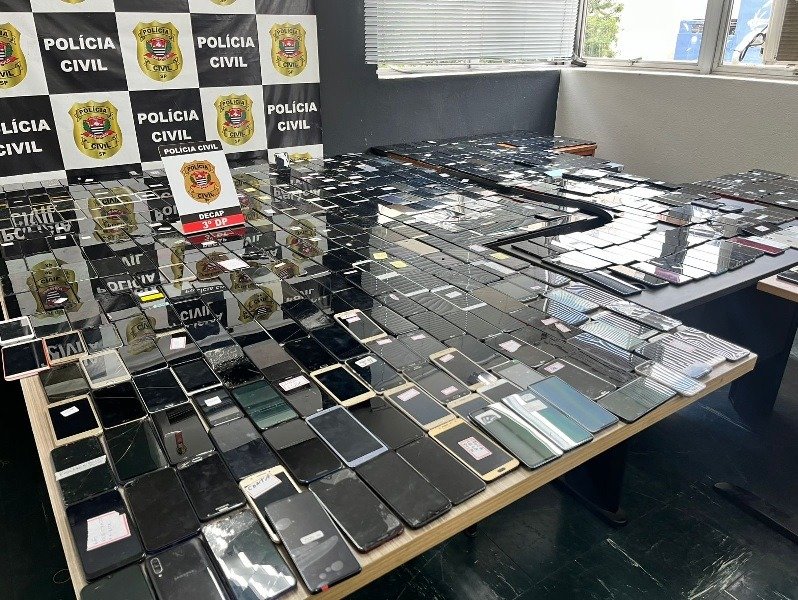
Cell phone thefts and robberies continued to rise in downtown São Paulo four months after the dispersal of drug users who had occupied a stretch of Rua dos Protestantes, in Santa Ifigênia, formerly a fixed point of the called “Cracolândia” until May of this year. Between May and September, police precincts most affected by the former concentration of drug users recorded 3,468 incidents of cell phone theft or robbery, 7% more than the 3,255 cases reported in the same period in 2024. The precincts are the 3rd Police Precinct (Campos Elíseos) and the 77th Police Precinct (Santa Cecília). The increase in these two districts exceeded the overall rise in such crimes across the city, which stood at 3%. During the same period, São Paulo recorded an increase from 67,136 to 68,989 cell phone thefts and robberies citywide, according to data from the Public Security Secretariat (SSP).
This Content Is Only For Subscribers
To unlock this content, subscribe to INTERLIRA Reports.
Empty Cracolândia
In the second half of May, Rua dos Protestantes was suddenly left empty after months of occupation by drug users, who dispersed to various points throughout the central area. In response, the administration of Governor Tarcísio de Freitas (Republicanos) expanded the network of social and health services for drug users to the entire downtown area, which until then had been largely concentrated on the street where drug consumption was most visible. In the same month as the dispersal, thefts increased in the region. At the 3rd Police Precinct alone, reports of theft rose by 15%.
Beginning of the Reduction
The decline in the concentration of drug users on Rua dos Protestantes began in March, after a fire hit a tenement located about 100 meters from Cracolândia, on Rua dos Gusmões. The building had been identified by the municipal administration as one of the drug distribution points in the city center, and the incident accelerated the dispersal process.
Specific Monitoring
Because of the presence of drug users, the areas covered by the two police precincts are part of a specific monitoring program created in 2023 by the state government and city hall for joint public security actions. Six months after the dispersal of drug users from Rua dos Protestantes, the administrations of Governor Tarcísio and Mayor Ricardo Nunes (MDB) announced reductions in crime rates in the city center, particularly in robberies and thefts, although they did not specify figures related to cell phone crimes. In November, the governor stated that Cracolândia no longer existed in the city, while acknowledging that drug use would continue to occur on the streets.
Cell Phones
Crimes involving cell phones in downtown São Paulo have persisted despite the dispersal of Cracolândia because they are carried out by criminal groups unrelated to the open drug use scene, according to Guaracy Mingardi, a criminal analyst and member of the Brazilian Forum for Public Security. “They specialize in this type of crime, live in boarding houses in the city center, and have access to the ecosystem that receives stolen devices,” he said. According to Lieutenant Colonel Rodrigo Garcia Villardi, general coordinator of the Integrated Command and Control Center (CICC) at the Public Security Secretariat, the increase in cell phone thefts and robberies is linked to the greater circulation of people in the area following the dispersal of drug users. “Half of the thefts recorded in the city center occur in enclosed spaces, such as subway stations, buses, and shops. With increased movement in the area, this variation is natural,” he explained. He also attributes part of the rise in incidents to bicycle-based gangs, which are responsible for roughly one-third of the cases in the city center.
Analysis:
The data from downtown São Paulo suggests that the dispersal of Cracolândia altered the spatial distribution of crime without addressing the structural drivers behind cell phone thefts and robberies. While the visible concentration of drug users on Rua dos Protestantes was dismantled, criminal activity linked to property crime adapted quickly to the new urban dynamics. The sharper increase in incidents within the 3rd and 77th Police Precincts, compared with the citywide average, indicates that the central area remains particularly vulnerable due to high pedestrian density, transit infrastructure, and a well-established market for stolen devices.
This pattern reinforces the distinction between open drug-use scenes and organized property crime. As noted by security analysts, groups involved in cell phone theft operate independently from drug users and rely on specialization, mobility, and access to resale and unlocking networks.

