


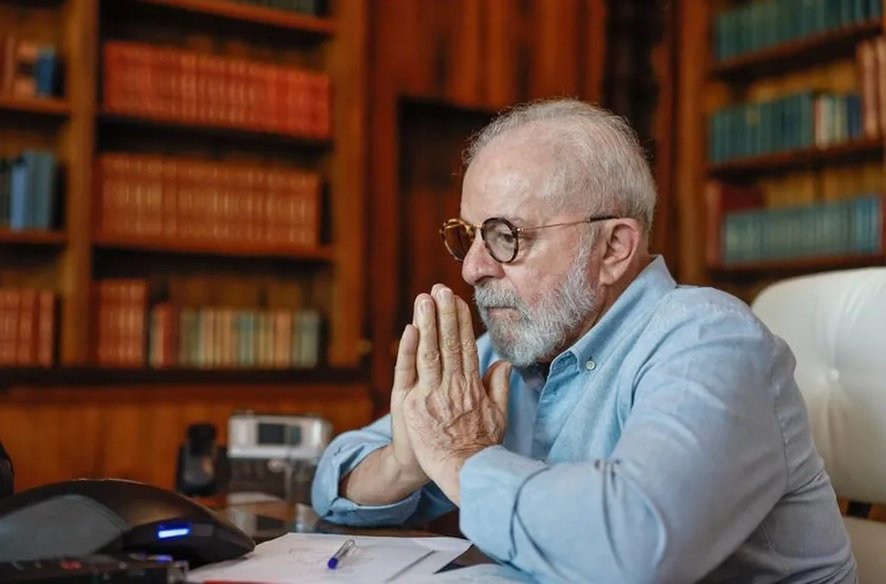
Brazil closed the year with a complex mix of political, economic, and institutional developments. President Lula enters the final stretch of his term facing a polarized political environment, fiscal pressures, and sensitive decisions within his cabinet, particularly in the area of public security, while also benefiting from historically low unemployment rates that bolster the government’s economic narrative. At the same time, the arrest of a former presidential adviser in the coup attempt investigations underscores the ongoing institutional fallout from the 2022 electoral crisis. Together, these elements frame a scenario of cautious recovery combined with persistent political and governance challenges as the country moves toward the next electoral cycle.
This Content Is Only For Subscribers
To unlock this content, subscribe to INTERLIRA Reports.
Last Year of Government
President Lula (PT) enters the final year of his term with approval ratings more favorable than those recorded two decades ago, when he secured re-election, but amid a more uncertain political environment. Analysts point out that persistent polarization, concerns over public security, economic insecurity, and insufficient outreach to groups such as informal workers could complicate the PT’s path to a fourth presidential victory. In 2025, Lula experienced a decline in popularity that brought his approval to the lowest levels of his three terms. Even so, he closes the year with higher approval ratings than at the start of 2006, when he was preparing for his first re-election campaign.
Government Accounts
Government accounts recorded a deficit of R$ 83.8 billion through November, according to data released by the National Treasury on Monday (29/12). In November alone, the shortfall reached R$ 20.2 billion. Even so, the government expects to close the year in compliance with the fiscal target, depending on December’s still-unreleased figures. The accumulated deficit through November 2025 represents the worst result since 2023, when the balance stood at a negative R$ 122.8 billion.
Drop in Unemployment
Brazil’s unemployment rate fell to 5.2% in the rolling quarter ending in November, according to the Continuous National Household Sample Survey (PNAD Contínua), released on Tuesday (30/12) by the Brazilian Institute of Geography and Statistics (IBGE). This is the lowest level in the historical series, which began in 2012. As a result, 5.6 million people are currently unemployed in the country. The number of unemployed declined by 7.2% compared to the previous quarter and by 14.9% year over year, representing 988,000 fewer people without jobs. The employed population reached an estimated 103 million people, a new record, with growth of 0.6% over the quarter and 1.1% compared to the same period last year, equivalent to 1.1 million additional workers.
Ministry of Justice
With the possible departure of Ricardo Lewandowski from the Ministry of Justice and Public Security, President Lula (PT) begins the year facing challenges in managing an area considered central to his re-election strategy. The search for a successor has been accompanied by renewed debate within the Planalto Palace over the possible division of the ministry, including the creation of a structure dedicated exclusively to public security—an unfulfilled campaign promise that still lacks consensus among Lula’s closest advisers. Lewandowski expressed his intention to step down in a conversation with the president on the 23rd, in the VIP lounge at Congonhas Airport, stating that he believes his mission has been completed. Lula acknowledged the request, said it would not affect their personal relationship, and asked for time to decide on a replacement.
Arrest
Former presidential adviser Filipe Martins was preventively arrested on Friday (02/01) at his home in Ponta Grossa, Paraná, by order of Supreme Federal Court (STF) Justice Alexandre de Moraes. Martins had been under house arrest and, according to the ruling, violated court-imposed restrictions by accessing a social media platform. He was sentenced to 21 years in prison in a case related to an attempted coup and four other crimes. The court found that Martins drafted a decree intended to overturn the results of the 2022 presidential election, which was later presented by former president Jair Bolsonaro (PL) to the commanders of the Armed Forces. In the decision ordering preventive detention, Justice Moraes cited Martins’ access to the LinkedIn platform as evidence of noncompliance.
Analysis:
Brazil’s year-end picture reveals a government balancing structural strengths with persistent vulnerabilities as it approaches a decisive electoral phase. President Lula benefits from exceptionally strong labor market indicators, with record employment and historically low unemployment reinforcing the administration’s economic narrative and helping to offset public frustration over inflation and fiscal constraints. At the same time, the deterioration of government accounts and uncertainty surrounding compliance with fiscal targets expose the limits of expansionary policy and the political costs of fiscal adjustment in a polarized environment.
Politically, Lula enters the final year of his term with approval levels that remain competitive by historical standards, but within a far more fragmented and contentious landscape than during his earlier presidencies. Internal discussions about reshaping the Ministry of Justice and Public Security signal an understanding that institutional architecture and leadership in this area will be central to the government’s electoral positioning, particularly as public security and democratic stability continue to shape voter priorities.

