


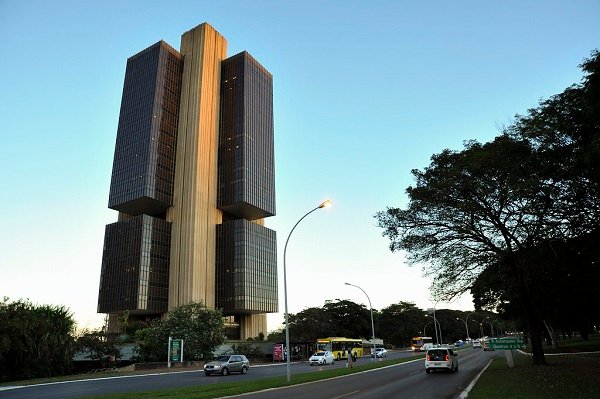
Brazil’s political and economic agenda is moving on multiple fronts at once: the Central Bank has signaled it may begin cutting interest rates in March after keeping the Selic at 15% since June 2025, even as officials remain wary of a strong labor market and record levels of household delinquency reported by credit bureaus. In Brasília, Congress is pressing for costly changes to its own benefits package, with House Speaker Hugo Motta expecting President Lula to approve pay raises and a new leave scheme for staff, while the electoral judiciary prepares tighter ethical guidelines amid concerns over judges’ public conduct in an election year. At the same time, ministers nearing the end of their terms are accelerating the flow of federal resources to political strongholds ahead of October races, and Lula has revisited a 2024 meeting with Banco Master owner Daniel Vorcaro—now investigated in a major fraud case—saying the Central Bank’s scrutiny should be technical rather than political.
This Content Is Only For Subscribers
To unlock this content, subscribe to INTERLIRA Reports.
Inflation and Interest Rates
On Tuesday (03/02), the Central Bank cited an improved inflation environment and expectations “less distant” from the 3.0% target in the meeting minutes to justify signaling the start of interest-rate cuts at the next Monetary Policy Committee (Copom) meeting in March. In the same minutes, however, the committee expressed unease about the strength of the labor market and said the size of the easing cycle will be defined over time to ensure inflation converges to the 3.0% target. The Selic rate has been at 15% per year, the highest level in nearly 20 years—since June 2025. Since then, there have been five meetings, and until January the Central Bank had maintained a firm tone, amid growing complaints from the government, to reinforce its commitment of reducing inflation.
Debt
Indebtedness and delinquency indicators compiled by different credit bureaus ended last year at record levels, despite unemployment at a historically low rate. Experts who track the data say payment delays worsened because the Selic rate, the economy’s benchmark interest rate, has been in an upward cycle for a year and a half, loan repayment terms have shortened, and banks have raised the cost of credit. According to Serasa, there were 81.2 million defaulters at the end of 2025, the latest available figure. That represents a 10.5% increase compared with December 2024. The criteria for classifying someone as delinquent vary by company. For Serasa, it begins once the creditor files the notification. In some cases, bills may be overdue for less than 30 days.
Federal Resources
On the verge of leaving government, ministers have been directing federal resources to their home states and increasing their presence in electoral strongholds in the final stretch of their terms. A GLOBO survey found that, ahead of their expected departures from the Esplanade of Ministries, André Fufuca (Sports), Camilo Santana (Education), and Carlos Fávaro (Agriculture) accelerated investments from their portfolios in areas where they intend to campaign, while Waldez Góes (Integration) prioritized allies in sending funds to Amapá, where he plans to run for the Senate in October. Fufuca, who is trying to persuade his party, the PP, to nominate him for the Senate as well, made Maranhão the top recipient of Sports Ministry funds. In 2025, R$ 170.3 million was invested in projects such as stadium construction, multi-sport courts, and community spaces. The amount represents a 144.7% jump compared with the R$ 69.6 million sent the previous year.
Increase in Funding
House Speaker Hugo Motta (Republicanos) said on Thursday (05/02) that he expects President Lula (PT) to sign off on the pay raise for House employees approved by Congress. According to party leaders, the increase could reach around R$ 30,000. The bills provide for annual increases to employees’ base pay between 2026 and 2029. The approved proposals also create a leave benefit tied to days worked in the House and Senate. In the House, the benefit would apply to staff “holding permanent positions who perform a commissioned function at level FC-4 or higher” and would compensate for “the performance of a unique relevant function and the accumulation of activities.” The proposal sets a maximum of one day off for every three days worked, with a cap of up to ten days of leave per month. Under the text, the leave may be converted into cash, meaning employees could receive the benefit as a payment, without being subject to the civil service salary cap.
Code of Ethics
Justice Cármen Lúcia, president of the Superior Electoral Court (TSE), said on Monday (02/02), at the opening of the electoral judiciary’s year, that she plans to present a recommendation on ethical conduct for the electoral courts. She said the proposal will be presented at a meeting of presidents of the TREs (Regional Electoral Courts) next Tuesday (10). In total, the justice listed ten recommendations, including that electoral judges should show restraint in public and private statements about the electoral process. She also said judges’ attendance at public or private events during an election year where there is fraternization with candidates or campaign stakeholders creates a conflict of interest. Earlier on Monday, she was announced by STF (Supreme Federal Court) President Edson Fachin as rapporteur of a proposal for a code of conduct for Supreme Court justices.
Meeting with President Lula
President Lula (PT) said he told Banco Master owner Daniel Vorcaro, during a meeting at the Planalto Palace in December 2024, that the Central Bank would conduct a “technical investigation” into the banker’s financial institution, without “a political position for or against” it. Lula recalled the meeting with Vorcaro—now under investigation for an alleged billion-real fraud scheme—in an interview. According to the president, the banker claimed he was being targeted by “persecution” and that “there were people interested” in bringing him down. The Banco Master scandal only became public at the end of 2025, after the meeting with Lula. Daniel Vorcaro was arrested by the Federal Police in November but was released the same month by a decision of the TRF-1 (Regional Federal Court of the 1st Region). The case is before the STF (Supreme Federal Court).
Analysis:
Brazil is navigating a complex moment in which monetary policy, fiscal pressures, and electoral dynamics are increasingly intertwined. The Central Bank’s signal that rate cuts may begin in March reflects genuine progress on inflation expectations, but the caution expressed in the Copom minutes is well founded. A strong labor market alongside record household delinquency suggests that high interest rates have shifted stress from employment to credit, creating a fragile equilibrium. Any easing cycle will therefore need to be gradual, as premature cuts could reignite inflation while delayed relief risks deepening social and financial strain among heavily indebted households.
On the political front, the acceleration of federal spending by ministers approaching electoral deadlines illustrates how budget execution becomes a strategic tool in election years. While channeling resources to states and municipalities can have legitimate development effects, the timing and concentration of these transfers raise questions about equity and fiscal discipline. At the same time, Congress’s push to expand its own compensation and benefits package sends a contradictory signal, undermining efforts to project fiscal responsibility at a moment when the government depends on credibility with markets and voters alike.
Sources: A Folha de SP [1], [2], [3], [4], [5]; G1; O Globo [1], [2].

