


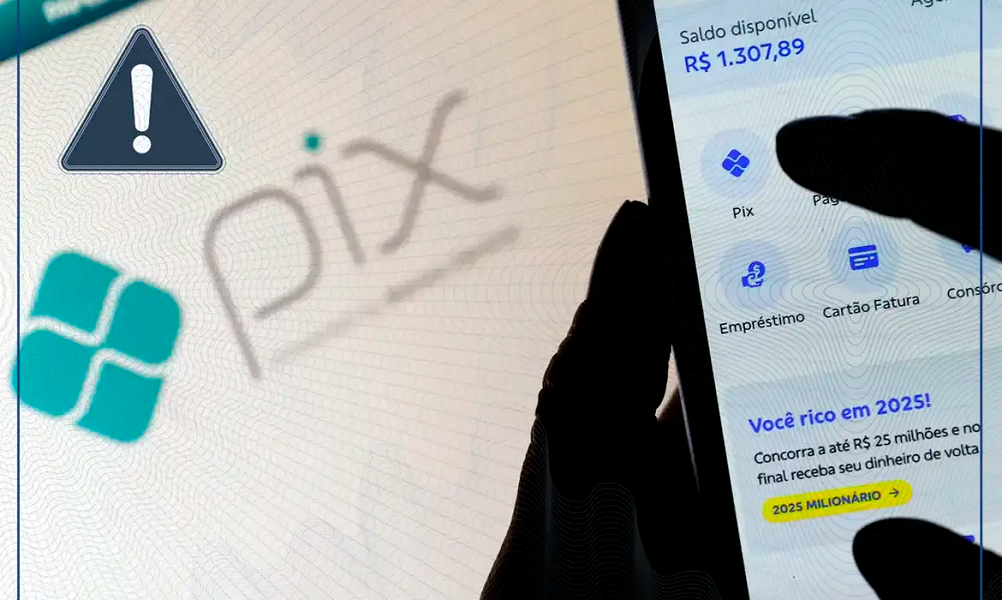
The new Pix security rules came into force on Monday (02/01), introducing stricter standards for fraud detection and monitoring. With the update of the Special Return Mechanism (MED) to its second version, the Central Bank now requires financial institutions to track the “path of the money” across multiple layers of transactions, making it easier to recover funds in cases of scams, fraud, or coercion.
This Content Is Only For Subscribers
To unlock this content, subscribe to INTERLIRA Reports.
MED
The MED was originally launched in 2021, one year after the creation of Pix, with the aim of enabling faster reimbursement for customers harmed by scams or fraud. However, as early as 2022, banks and the Central Bank identified the need to expand the mechanism’s scope. In its original format, the return of funds could only occur from the account initially used in the fraudulent transaction. The problem was that fraudsters often moved the money quickly, transferring it to other accounts before the original one could be blocked. With the upgrade, the MED will now identify “possible paths for the funds,” going beyond the first recipient account. This information will be shared among the financial institutions involved in the transactions and will allow funds to be returned within up to 11 days after the customer files a dispute.
Dispute Button
Since October 1 of last year, Pix has included a “dispute button,” a feature integrated into the MED that can be activated directly through a user’s banking app in cases of fraud, scams, or coercion. According to the Central Bank (BC), the goal is to simplify the process of contesting a Pix transaction. The procedure is fully digital and does not require contacting a customer service agent. This functionality allows for faster blocking of funds in accounts linked to criminal activity, increasing the chances that victims will recover their money in a shorter period of time.
How to request a Pix refund?
According to the Central Bank, to request a refund it is necessary to register the claim with your financial institution within 80 days of the date on which the Pix transaction was made.
- You file a complaint with your financial institution;
- The institution evaluates the case and, if it determines that the transaction involved fraud or a scam, the recipient of the Pix transfer will have the available funds in their account blocked;
- The case is analyzed within up to seven days. If it is concluded that there was no fraud, the funds are unblocked. If fraud is confirmed, the money will be returned within up to 96 hours, either in full or in part, depending on the balance available in the fraudster’s account;
- If the refund is only partial, the fraudster’s bank must carry out additional blocks or partial returns whenever new funds enter that account, until the full amount is recovered or until 90 days have passed since the original transaction.
Analysis:
The new Pix security rules represent a significant evolution in Brazil’s approach to combating financial fraud in instant payments. By requiring institutions to trace the flow of funds across multiple transactions rather than stopping at the first recipient account, the Central Bank is directly addressing one of the main weaknesses exploited by criminal networks. Fraud schemes involving Pix are typically fast, fragmented, and decentralized, and the updated MED acknowledges that effective prevention and recovery depend on understanding these transactional chains in near real time.
From an operational standpoint, the upgrade shifts part of the responsibility from individual banks to a more integrated system of information sharing. This increases the likelihood of freezing funds before they are fully laundered through successive transfers, but it also raises demands on compliance structures, data quality, and coordination among institutions.

