

Online scams have become increasingly common, demanding greater attention to the links and online content we interact with daily. Cybercriminals are constantly creating new methods to deceive people for financial gain, ranging from falsified payment receipts to fake technician impersonations. In Brazil, around 71% of the population has already fallen victim to this type of crime, which shows the need for caution when clicking on links in WhatsApp messages, emails, or SMS, as well as avoiding sharing personal information with strangers. To reduce risks, it is essential to understand how these scams work, recognize their main types, learn what to do if you are targeted, and adopt preventive measures to protect your data and avoid financial losses.
This article is part of a series on digital security. You can read the other texts here.
This Content Is Only For Subscribers
To unlock this content, subscribe to INTERLIRA Reports.
Travel Scam
Planning your next trip? Long holidays, special dates, and irresistible deals can make everything more exciting… but also more risky.
With the rise in demand for flights and accommodations, scammers are taking advantage of the moment to target travelers with fake offers and malicious links.
Too good to be true? It probably is
Ever seen a flight or hotel deal that looks unbelievably cheap? A last-minute promo that seems like a dream? That’s exactly how travel scams start. Criminals use attractive prices and urgency to push you into making quick decisions—before you have time to think twice.
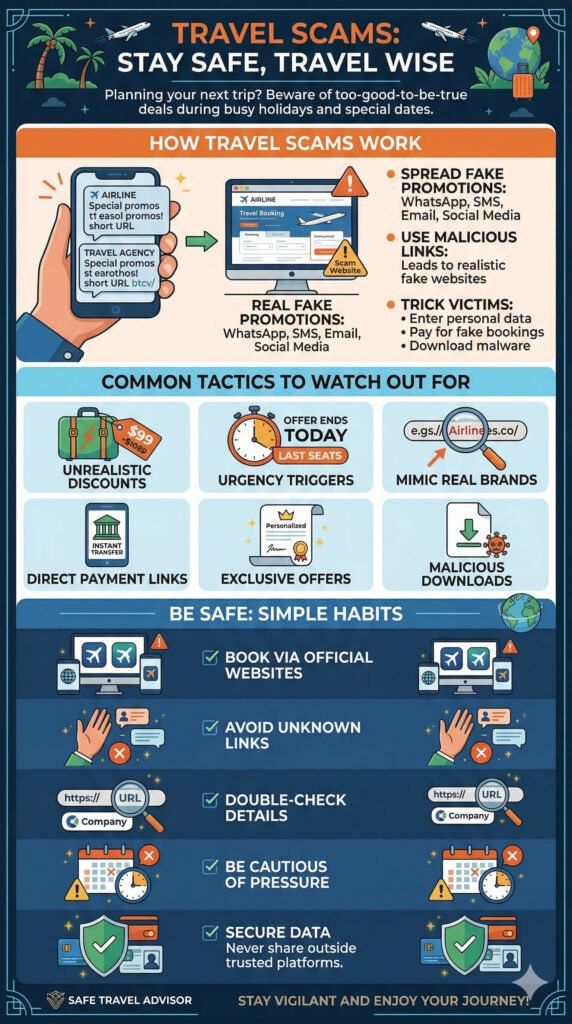
How travel scams work
Scammers spread fake promotions through WhatsApp, SMS, emails, and social media. These messages usually include a link that leads to a website designed to look like a real airline, travel agency, or booking platform.
Once there, victims may:
- Enter personal or payment details
- Complete fake bookings
- Download malicious files
Sometimes, everything looks so real that you only realize it’s a scam after the money is gone… and the trip never existed.
Common tactics
- Unrealistic discounts far below market prices
- Urgency triggers like “last seats available” or “offer ends today”
- Professional-looking websites that mimic real brands
- Messages with direct payment links, often via Pix or instant transfer
- Personalized messages that make the offer feel exclusive
Be safe
A few simple habits can save you from a big headache:
- Always book through official websites or apps
- Avoid clicking on links from unknown or unsolicited messages
- Double-check the URL and company details before paying
- Be cautious with offers that pressure you to act fast
- Never share personal or banking information outside trusted platforms