


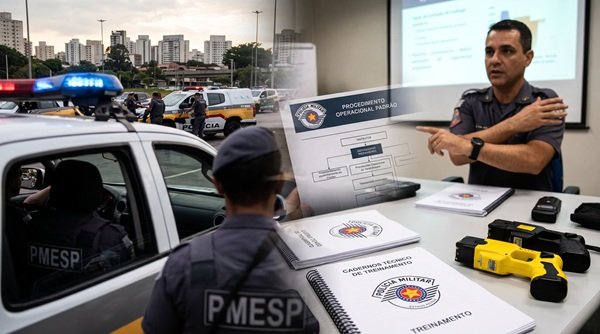
A sequence of deaths during police approaches in São Paulo has reignited the debate over excessive use of force, the preparation of security agents, and the need to improve the operational protocols of the Military Police. In October 2026, three people in apparent psychological distress died in different police interventions in the capital of São Paulo, including a 20-year-old man struck by 27 gunshots after officers mistook his mobile phone for a firearm. The episodes occurred within the context of rising police lethality in the city, which recorded 190 deaths resulting from interventions by security agents between January and September 2026, compared to 186 in the same period of 2025. Considering these events, state authorities began discussions on revising operational procedures, expanding training, and acquiring less-lethal equipment. Experts emphasize the need to enhance control and accountability mechanisms, reinforcing that the preservation of life and the proportional use of force must guide police interventions.
This Content Is Only For Subscribers
To unlock this content, subscribe to INTERLIRA Reports.
Three deaths during police approaches of people in crisis in São Paulo
The three episodes recorded in October highlight questions regarding the ability of police teams to manage situations involving individuals in apparent psychological distress without resorting to lethal force. On October 3, Antonio Nunes Batista, 40, died in Vila Dionísia, North Zone of São Paulo, after officers fired 24 shots during an approach. According to the officers, he was threatening people with a knife and an iron bar. Footage of the event raised questions about the continuation of firing when the victim was already down, and the three police officers involved were removed from operational duties. On October 10, Gustavo Munis de Santana, 20, died in Moema, South Zone, after four officers fired 45 shots, 27 of which struck the young man. According to incident reports, the agents interpreted the cell phone he was holding as a possible firearm. The young man was unarmed, and the officers involved were taken off active duty. The third case occurred on October 15 in Parque São Domingos, in the Pirituba region, when Camila Pereira da Silva, 32, was killed by a gunshot to the chest during a police approach. The woman exhibited altered behavior and was carrying a knife. The responsible officer was arrested in flagrante, later released on bail, and placed under investigation. The circumstances of all three episodes remained under investigation in the analyzed news reports.
Questions regarding the proportionality of police interventions
The circumstances of the deaths sparked discussions regarding the legal limits of police action and officer accountability in high-risk situations. In the case of Camila Pereira da Silva, the chief investigator identified six potential irregularities: lack of imminent aggression, disregard for the progressive use of force, opportunity to retreat, numerical superiority of the officers, gunshot to a vital region, and inadequate handling of a person in an apparent psychological breakdown. The assessment maintains that the mere presence of a bladed weapon does not, in isolation, justify the immediate use of lethal force without a concrete threat. In other cases, questions also arose regarding the number of shots fired and the continued use of force after the apparent neutralization of the victims. These incidents reinforce the importance of necessity, proportionality, and moderation criteria, alongside the use of body-worn cameras and evidence preservation to enable independent investigations.
Protocol revision and expansion of less-lethal weapons
Following the fallout from these cases, the Secretariat of Public Security of São Paulo (Secretaria da Segurança Pública de São Paulo – SSP-SP) and the Military Police initiated discussions on revising the Standard Operational Procedures (Procedimentos Operacionais Padrão – POP), including rules established in 2014. Among the proposals are the purchase of approximately 6,000 new stun guns, adding to the 11,000 already available to the force, and modernizing police training for incidents involving individuals in emotional crisis or with mental disorders. In the three recent episodes, electroshock devices were used only in the approach involving Antonio Nunes Batista, without preventing the fatal outcome. Experts emphasize that the availability of less-lethal equipment must be accompanied by training, negotiation techniques, and protocols that ensure the progressive use of force, reserving firearms strictly for situations of actual threat to life.
Analysis
The episodes recorded in São Paulo illustrate structural challenges related to police preparedness, force regulation, and the capacity of institutions to respond to risk scenarios without causing unnecessary casualties. The rise in police lethality, combined with the recurring fatal interventions involving individuals in apparent psychological distress, underscores the urgent need to revise operational protocols, enhance training, and strengthen oversight mechanisms. Although police work inherently involves high risks and high-pressure decision-making, these circumstances do not relieve officers of the duty to use force only when necessary and proportional.
In this context, expanding access to less-lethal equipment is an important measure, but its effectiveness relies on continuous training and a cultural shift within police institutions. The recurrence of these events reinforces the importance of continually evaluating and refining operational procedures to balance police efficiency, officer safety, and the preservation of life during interventions.

