


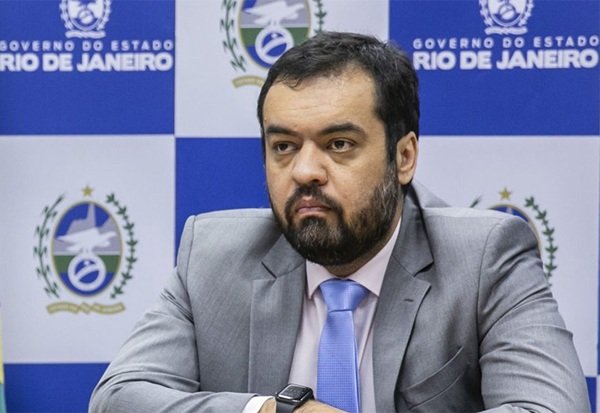
The arrest of former Civil Police Secretary Marcus Amim on October 15, has once again brought into focus investigations involving former top members of Rio de Janeiro’s public safety leadership during Cláudio Castro’s administration. Amim, appointed by the former governor in 2023, was arrested in a Federal Police Operation investigating potential connections between public officials, criminal organizations, and a money laundering scheme involving an estimated R$ 7.6 billion. This episode follows previous cases involving Allan Turnowski, a former Civil Police Secretary arrested in 2022 on suspicion of links to the “jogo do bicho”, and Raphael Montenegro, a former Secretary of Penitentiary Administration arrested in 2021 on suspicion of favoring criminal leaders. All three were appointed by Castro to strategic positions, although the investigations occurred at different times and involve distinct allegations. The succession of these events highlights the critical importance of appointment procedures, oversight, and control mechanisms within the state’s public security structures.
This Content Is Only For Subscribers
To unlock this content, subscribe to INTERLIRA Reports.
The arrest of Marcus Amim and his connections to the state administration
On October 15, 2026, police chief Marcus Amim, former Secretary of the Civil Police and former president of Detran-RJ, was arrested by the Federal Police during the eighth phase of Operation “Unha e Carne”, following an order issued by Supreme Federal Court (Supremo Tribunal Federal – STF) Justice Alexandre de Moraes. The investigation is probing potential ties between public officials and criminal organizations, including a gas station network in the Metropolitan Region suspected of laundering R$ 7.6 billion. Amim was appointed president of Detran-RJ by Cláudio Castro in June 2023 and took over the Civil Police Secretariat in October of that year, after the Legislative Assembly of Rio de Janeiro (Assembléia Legislativa do Estado do Rio de Janeiro – Alerj) approved a legislative amendment proposed by the state government that relaxed experience requirements to lead the force. His nomination involved the participation of then-Alerj President Rodrigo Bacellar. Amim served as head of the Civil Police for approximately ten months and subsequently assumed the position of security coordinator at Alerj.
Investigation of Allan Turnowski for alleged links to the jogo do bicho
In September 2022, the Rio de Janeiro Public Prosecutor’s Office (Ministério Público do Estado do Rio de Janeiro – MPRJ) arrested former Civil Police Secretary Allan Turnowski, suspected of involvement with a criminal organization linked to the “jogo do bicho”. According to investigations, he received bribes from the illegal gambling network and was involved in a plot to assassinate “bicheiro” Rogério Andrade. Turnowski had been appointed Secretary of the Civil Police by Cláudio Castro in September 2020, while Castro was serving as interim governor, remaining in office until March 2022, when he stepped down to run for a seat in the Chamber of Deputies. The investigation also reached other members of the police force, including police chief Antônio Ricardo, who was targeted in search warrants. Turnowski’s defense disputed the allegations and characterized his arrest as political persecution.
Raphael Montenegro Hirschfeld and Suspicions of Misconduct in the Penitentiary System
In August 2021, the Federal Police arrested Raphael Montenegro Hirschfeld, then-Secretary of Penitentiary Administration, alongside two other department officials, suspected of granting improper benefits to members of criminal organizations. Montenegro had been appointed by Cláudio Castro in January of that year and was dismissed by the governor following public fallout over suspicions surrounding the release of Wilton Carlos Rabelo Quintanilha, known as “Abelha,” a key leader of the Red Command (Comando Vermelho – CV). In October 2021, the state Public Prosecutor’s Office conducted further searches to investigate alleged illicit gains related to the release of the criminal, who had an outstanding preventive arrest warrant. Investigations also pointed to meetings between former Seap (Secretaria de Estado de Administração Penitenciária) officials and criminal leaders, as well as allegations of preferential treatment for inmates. Montenegro’s defense denied any wrongdoing and argued that the release was carried out under a valid court order. The case prompted leadership changes within the department during the Castro administration, including the appointment of new officials to head the penitentiary system.
Analysis
The investigations involving three former public security leaders in Rio de Janeiro appointed during Cláudio Castro’s administration underscore ongoing challenges regarding institutional integrity and the oversight of public safety agencies. Although the cases involve distinct circumstances and do not establish direct legal responsibility on the part of the former governor for the investigated irregularities, the recurrence of allegations against former members of his administration highlights the importance of selection criteria for strategic posts and the need for robust oversight mechanisms within these institutions. Charges involving money laundering, receipt of unlawful gains, and alleged interference in penitentiary administration also illustrate the various potential contact points between criminal organizations and public institutions.
From a corporate security perspective, these cases reinforce the need to evaluate potential risks of corruption and criminal influence within institutional and commercial relationships, particularly in sectors prone to illicit interference.

