


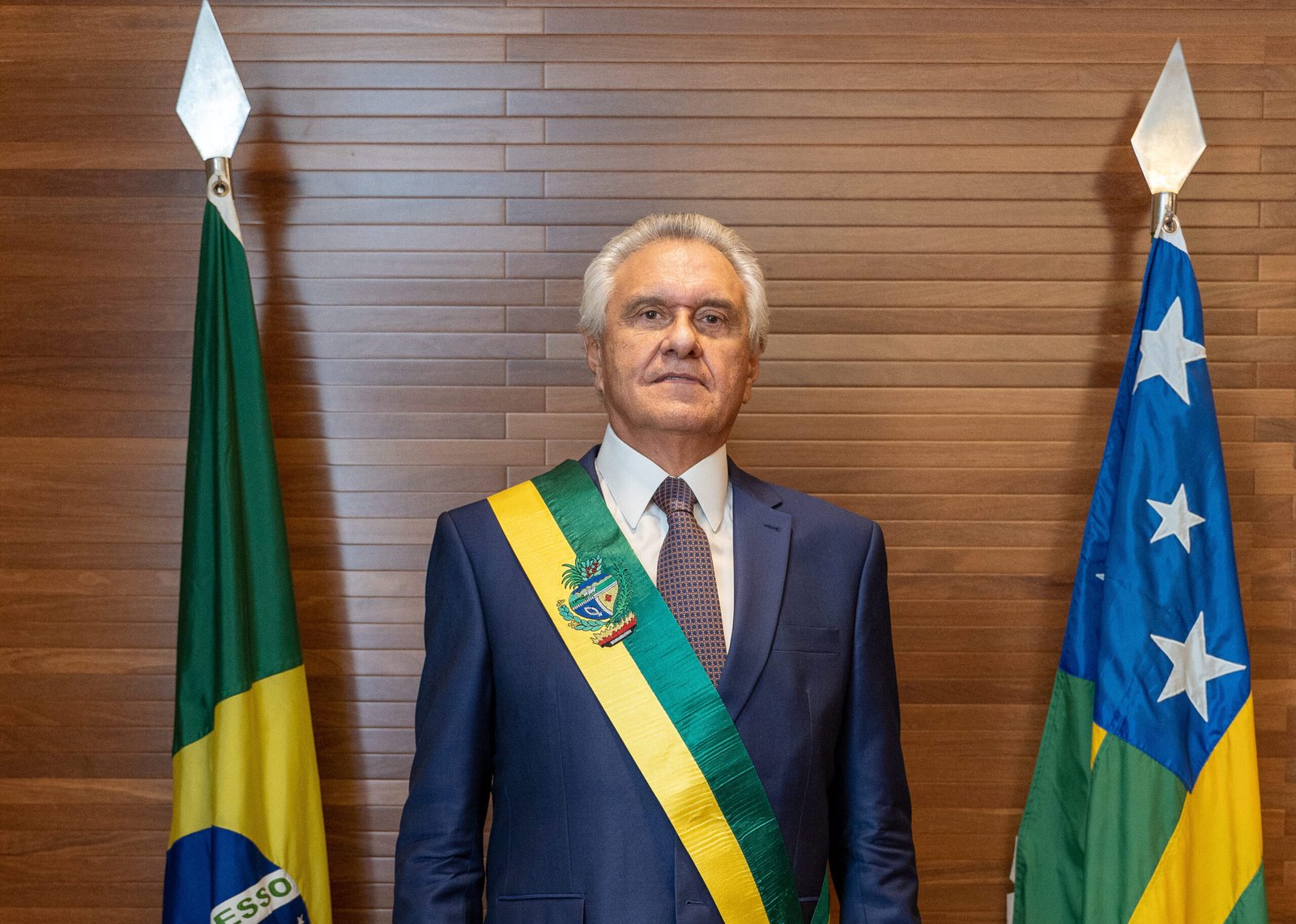
Brazil’s political landscape is entering a phase of intense realignment ahead of the 2026 elections, marked by new presidential candidacies, internal government repositioning, and institutional decisions with broader implications. The launch of Ronaldo Caiado’s pre-candidacy reflects attempts to reshape the right-wing field and reduce polarization, while President Lula works to strengthen his electoral base by mobilizing ministers to run across the country and defend his administration’s record. At the same time, key institutional moves—such as the nomination of Jorge Messias to the Supreme Federal Court—add another layer of political sensitivity, especially in a context of strained relations between branches of government. Parallel to this, economic pressures like rising diesel prices continue to influence negotiations between the federal government and states. In Rio de Janeiro, uncertainty over the method of selecting an interim governor further illustrates how judicial decisions may directly impact the political dynamics in an already volatile electoral environment.
This Content Is Only For Subscribers
To unlock this content, subscribe to INTERLIRA Reports.
Presidential Candidacy
The Social Democratic Party (PSD), led by Gilberto Kassab, officially announced on Monday (30/03) the pre-candidacy of Goiás Governor Ronaldo Caiado for the Presidency of the Republic. Caiado, 76, secured the party’s nomination after competing internally with Paraná Governor Ratinho Junior, who withdrew from the race, and Rio Grande do Sul Governor Eduardo Leite. In his speech, Caiado stated that, if elected, his first measure would be to grant amnesty to former president Jair Bolsonaro (PL), who is currently under house arrest after being convicted of attempted coup d’état. Despite mentioning amnesty, he emphasized that his goal is to move beyond political polarization, describing it as a tool used by others rather than a defining element of his own approach. He also referred to his political trajectory as evidence of his preparedness for the presidency, recalling advice from his father about the importance of experience before reaching such a position. Addressing his potential opponent Flávio Bolsonaro (PL), who has not held an executive role, Caiado argued that leadership cannot be learned without prior administrative experience, stating that “you can’t learn from sitting in a chair.”
Ministers’ Departure
President Lula (PT) met with his cabinet on Tuesday (31/03) to reinforce the need for ministers to defend the government’s record, particularly those preparing to leave their positions to run in the October elections. During his remarks, Lula emphasized the importance of presenting the administration’s achievements and thanked his team for their work. Chief of Staff Rui Costa (PT), who is expected to step down to run for the Senate in Bahia, provided an overview of the government’s accomplishments. According to presidential aides, the strategy is to equip ministers with a comprehensive understanding of the administration’s results so they can effectively counter opposition narratives, particularly those associated with former president Jair Bolsonaro, whose son Flávio Bolsonaro (PL) is expected to be Lula’s main rival. Around 20 ministers are expected to leave their posts to run for office, strengthening the government’s political base in the states. This group includes current officeholders seeking re-election and others entering electoral disputes. Lula has also instructed ministers who hold legislative mandates to step down to consolidate electoral support. Among them, Institutional Relations Minister Gleisi Hoffmann has already agreed to run for the Senate in Paraná. Lula also confirmed Vice-President Geraldo Alckmin (PSB) as his running mate for the upcoming election.
Nomination for the Supreme Court
President Lula (PT) submitted a message to the Senate on Tuesday (31/03) nominating Jorge Messias, the current Attorney General of the Union, for a position as a justice of the Supreme Federal Court (STF). The information was confirmed by the Planalto Palace. Once the nomination is formally received, it must be forwarded to the appropriate Senate committee for analysis, in this case the Constitution and Justice Committee (CCJ). Messias will undergo a confirmation hearing before the committee and, if approved, his nomination will be voted on by the full Senate plenary. Only after approval by the Legislative Branch will he be able to take office at the Court. According to Senate interlocutors, Senate President Davi Alcolumbre (União Brasil) did not expect the nomination at this time, as he had not held a prior meeting with Lula on the matter.
Diesel Price
Finance Minister Dario Durigan stated that the federal government is “very close” to securing the adhesion of all states to a proposed agreement establishing subsidies for diesel importers. The statement was made during a ministerial meeting at the Planalto Palace and reflects ongoing efforts to contain rising diesel prices driven by the war in the Middle East. According to the minister, at least 24 states have already agreed to the proposal. However, there is at least one dissenting position: the Federal District government has expressed opposition, while other states have yet to formally declare their stance. The government of Rio de Janeiro indicated that it is open to joining the agreement, but only after the publication of the Provisional Measure outlining the program.
Governor of Rio de Janeiro
The state of Rio de Janeiro may enter a prolonged period of political uncertainty if the Supreme Federal Court (STF) determines that direct elections should be held to choose an interim governor to serve until the end of 2026, following the removal of Cláudio Castro (PL). The scenario is based on precedents such as the supplementary election held in Tocantins in 2018 after the removal of Governor Marcelo Miranda. The STF is scheduled to rule on Wednesday (08/04) on whether the election will be direct, with popular participation, or indirect, decided by state legislators. Four justices have already signaled support for direct elections. Former Rio mayor Eduardo Paes (PSD), a potential candidate in the October elections, has stated that he intends to run for the interim mandate if the decision allows for a direct vote. State deputy Douglas Ruas (PL) is also positioning himself as a candidate in either scenario and plans to compete in the upcoming election as well.
Analysis:
Brazil is entering a phase of early electoral structuring in which political actors are repositioning themselves well ahead of the formal campaign period. The pre-candidacy of Ronaldo Caiado signals an attempt within the right to diversify leadership beyond the Bolsonaro family while still appealing to its electorate. His discourse, combining references to administrative experience with a commitment to grant amnesty to Jair Bolsonaro, reflects a delicate balancing act between moderation and continuity. At the same time, Lula is pursuing a strategy centered on territorial consolidation, mobilizing ministers to run in key states and reinforcing a narrative of government delivery.
Institutional decisions are also playing a central role in shaping the political environment, particularly the nomination of Jorge Messias to the Supreme Federal Court. In a context of strained relations between branches of government, such appointments carry both legal and political weight, influencing perceptions of judicial independence and executive influence. Simultaneously, the Court’s pending decision on the selection method for an interim governor in Rio de Janeiro illustrates how judicial rulings can have immediate electoral consequences. Whether the process is direct or indirect will shape not only the legitimacy of the outcome but also the strategic calculations of actors such as Eduardo Paes.
Sources: G1 [1], [2]; A Folha de SP [1], [2], [3], [4], [5]; O Globo [1], [2], [3].

