


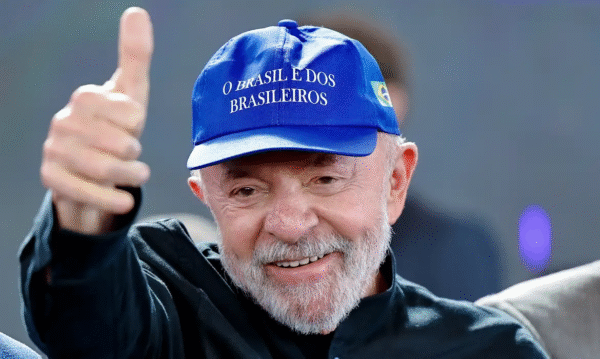
Brazil’s political landscape is closing the year marked by shifting alliances, cautious optimism, and intensified institutional action. While public opinion polls show growing confidence about the future and continued strength for President Lula’s party, recent government moves highlight efforts to consolidate political support and manage sensitive legal and security challenges. Changes within the Cabinet, debates over the scope of the Christmas pardon, and new arrests linked to the coup plot underscore the administration’s attempt to balance political negotiation, public sentiment, and accountability, as the country gradually turns its attention toward the 2026 electoral cycle.
This Content Is Only For Subscribers
To unlock this content, subscribe to INTERLIRA Reports.
Political Parties
The Workers’ Party (PT) continues to lead as the most preferred political party among Brazilians, now followed by the PL, boosted by the legacy of former President Jair Bolsonaro, according to a new Datafolha survey. The PT remains the most frequently cited party, a position it has held since the late 1990s. It is currently mentioned by 24% of respondents, compared to 12% for the PL, which ranks second. The figures indicate stability for the PT during Lula’s third term, with support fluctuating between 23% and 27%. The PL, meanwhile, reached its highest level in the historical series, which began in 1989.
Optimism
Another Datafolha poll shows growing optimism among Brazilians regarding 2026. According to the survey, 69% of respondents believe their personal situation will improve next year compared to 2025, an increase of nine percentage points over the previous edition. Optimism is particularly strong among women, people with lower levels of education, lower incomes, and residents of the Northeast. A year ago, only 60% expected an improvement for 2025—the lowest level recorded during Lula’s third term. Datafolha also asked about expectations for the country as a whole: 60% said they believe Brazil’s overall situation will be better in 2026 than in 2025, a result similar to that observed at the turn of 2022 to 2023, when Lula returned to office.
New Minister
President Lula (PT) swore in the new Minister of Tourism, Gustavo Feliciano, son of Congressman Damião Feliciano (União Brasil), on Tuesday (23/12). Feliciano replaces Celso Sabino, whose departure followed his expulsion from União Brasil for defying the party’s directive to leave his post in the federal government. Government officials say the appointment reflects an agreement between the administration and a faction of União Brasil that has pledged support for Lula’s re-election bid next year. A member of the party’s executive committee confirmed that the arrangement had the backing of party president Antônio Rueda and was orchestrated by lawmakers aligned with the government.
Christmas Pardon
The Christmas pardon granted by President Lula excluded inmates convicted of crimes against the Democratic Rule of Law, including those sentenced for the January 8, 2023 coup attempts, such as former President Jair Bolsonaro. Also barred from the benefit are leaders of criminal factions, as well as those convicted of violent crimes against women, children, and adolescents, and offenses classified as heinous crimes, torture, terrorism, racism, money laundering, and concealment of assets. The decree was published in the Official Gazette of the Union on Tuesday (23). Provided for in the Constitution, the Christmas pardon results in the pardon of sentences and the release of eligible prisoners. Each year, the government reviews the eligibility criteria. In both 2023 and 2024, Lula’s administration adopted the same restrictions, excluding those convicted for January 8. These provisions were included in the draft approved by the National Council for Criminal and Penitentiary Policy (CNPCP) and later reviewed by the Planalto Palace before Lula’s signature.
New Arrests
On Saturday (27/12), the Federal Police carried out ten house arrest warrants ordered by the Supreme Federal Court (STF) as part of the investigations into the coup plot. The actions followed the attempted escape of former Federal Highway Police director Silvinei Vasques, who was arrested in Paraguay while trying to board a flight to El Salvador, and were aimed at preventing further attempts to flee. The warrants targeted individuals convicted of belonging to groups 2, 3, and 4 of the conspiracy to keep former President Jair Bolsonaro in power at the end of 2022. Members of group 1, which includes Bolsonaro himself, have already begun serving their sentences. Those placed under house arrest include former presidential adviser Filipe Martins, Federal Police officer Marilia Ferreira de Alencar, and military officers Giancarlo Gomes Rodrigues, Angelo Martins Denicoli, Fabricio Moreira de Bastos, Sergio Ricardo Cavaliere, Bernardo Romão Correa Netto, and Ailton Gonçalves Moraes Barros.
Analysis:
Brazil is closing the year in a climate of relative political stability, but one that is shaped by careful maneuvering rather than broad consensus. Public opinion data suggests that President Lula and the Workers’ Party retain a solid base of support, reinforced by rising optimism about personal and national prospects in 2026. This positive political sentiment provides oxygen to the administration, even as structural economic and social challenges persist. At the same time, the growth of the PL as the second most cited party shows that the conservative electorate remains mobilized, pointing to a competitive and polarized environment as the next electoral cycle approaches.
On the institutional front, the administration has sought to project firmness in defending democratic norms while avoiding actions that could deepen social or political rifts. The decision to exclude those convicted of coup-related crimes from the Christmas pardon, alongside new arrests ordered by the Supreme Court, signals continuity in the legal response to the January 8 attacks. These measures aim to close remaining avenues of impunity and deter further challenges to constitutional order.
Sources: O Globo [1], [2], [3], [4], [5], [6]; A Folha de SP.

