


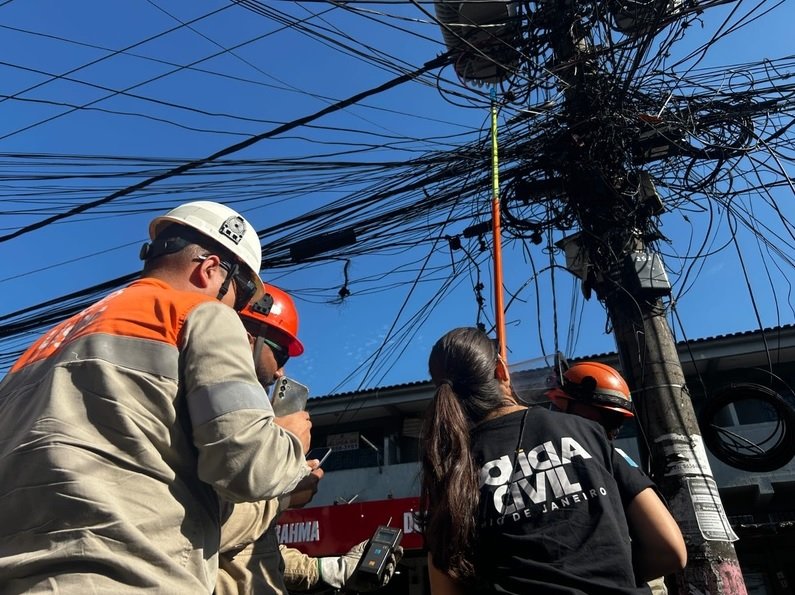
Residents of Copacabana and Leme were notified on Tuesday (31/03) that the concessionaire Light has completed a large-scale intervention in the region’s electrical network, aimed at restoring stability and reducing recurrent outages caused by cable theft. According to the notice sent to consumers, the company finalized the replacement of kilometers of stolen wiring and, as a result, removed the generators that had been operating for weeks to ensure electricity supply in several streets. The operation marks the end of an emergency phase that had significantly impacted daily life in the neighborhoods, especially due to noise and infrastructure disruptions.
This Content Is Only For Subscribers
To unlock this content, subscribe to INTERLIRA Reports.
Cable Replacement
The project required an investment of R$ 28 million, according to the concessionaire, and was designed not only to restore the network but also to prevent future acts of vandalism. For this reason, copper cables were replaced with aluminum ones, a material with significantly lower value on the illegal market, reducing the incentive for theft. The initiative was also supported by coordinated actions with public security authorities. The company noted that the use of generators may still occur in specific maintenance situations or in response to network incidents. In February, at least 26 generators were distributed across the streets of Copacabana, installed in front of residential and commercial buildings, including hotels. These devices operated continuously, generating intense noise and prompting complaints from residents, who also criticized their placement on sidewalks, obstructing pedestrian circulation.
Another Irregularity
In March, Light also intensified its operations to combat irregular electricity consumption throughout its concession area, increasing inspections to curb illegal connections and improve service quality. The company identified 4,139 irregularities across the state of Rio de Janeiro. As a result of these actions, 34 individuals were taken to police stations for questioning, leading to 20 arrests in flagrante delicto and the filing of 38 police reports. The inspections revealed irregularities not only in residential properties but also in commercial establishments, including restaurants, markets, and other high-consumption locations, where clandestine connections or tampered metering systems were detected.
Operation Area
The enforcement actions were carried out across Light’s concession area, covering neighborhoods such as Centro, Brás de Pina, Irajá, Guaratiba, and Sepetiba in the city of Rio de Janeiro, as well as regions in the municipalities of Nova Iguaçu, in the Baixada Fluminense, and Volta Redonda, in the Vale do Paraíba. During this period, a total of 5,712 GWh of energy was recovered, an amount sufficient to supply approximately 28,500 homes for one month, according to the company.
Energy theft: a loss for everyone
Between 2025 and the first two months of 2026, Light regularized approximately 2,900 illegal connections and corrected more than 136,000 irregular installations in homes and businesses. In total, 240 GWh of energy was recovered, enough to supply around 80,000 homes for one year. The company emphasizes that, despite continuous efforts in cooperation with public authorities, energy theft remains a major challenge, with estimated annual losses of R$ 1.3 billion. To illustrate the scale of the problem, for every 100 regular customers, approximately 35 engage in electricity theft. These illegal connections overload the network, damage equipment such as transformers, and contribute to frequent power outages affecting the broader population.
Analysis:
The intervention carried out by Light S.A. in Copacabana and Leme illustrates how infrastructure vulnerability and urban crime are increasingly interconnected in large Brazilian cities. Cable theft is not an isolated phenomenon but part of a broader illicit economy that targets public utilities, generating cascading effects on service reliability and quality of life. The replacement of copper with aluminum represents a strategic adaptation aimed at reducing the economic attractiveness of theft, aligning with international practices that seek to alter the cost-benefit calculation for offenders rather than relying solely on enforcement.
The broader data on energy theft reveals a structural challenge that goes beyond opportunistic crime and points to systemic inefficiencies and inequalities. High rates of irregular connections, including in commercial establishments, indicate that the problem is embedded across different socioeconomic segments. The scale of losses and their impact on the grid—through overloads and equipment damage—ultimately penalize regular consumers, either through higher tariffs or reduced service quality.

