

Online scams have become increasingly common, demanding greater attention to the links and online content we interact with daily. Cybercriminals are constantly creating new methods to deceive people for financial gain, ranging from falsified payment receipts to fake technician impersonations. In Brazil, around 71% of the population has already fallen victim to this type of crime, which shows the need for caution when clicking on links in WhatsApp messages, emails, or SMS, as well as avoiding sharing personal information with strangers. To reduce risks, it is essential to understand how these scams work, recognize their main types, learn what to do if you are targeted, and adopt preventive measures to protect your data and avoid financial losses.
This article is part of a series on digital security. You can read the other texts here.
This Content Is Only For Subscribers
To unlock this content, subscribe to INTERLIRA Reports.
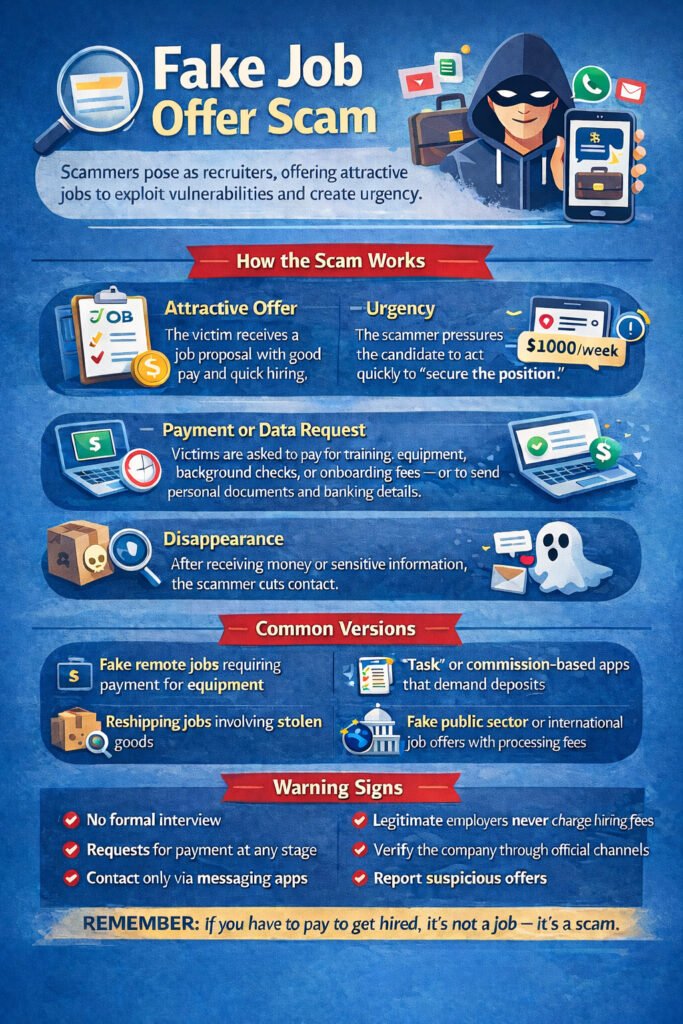
Fake Job Offer Scam
Fake job scams are increasingly common, especially on WhatsApp, social media, and online job platforms. Criminals pose as recruiters or well-known companies, offering attractive positions — often remote and high-paying — to exploit financial vulnerability and urgency.
How the Scam Works
- Attractive Offer – The victim receives a job proposal with good pay and quick hiring, sometimes without a real interview.
- Urgency – The scammer pressures the candidate to act quickly to “secure the position.”
- Payment or Data Request – Victims are asked to pay for training, equipment, background checks, or onboarding fees — or to send personal documents and banking details.
- Disappearance – After receiving money or sensitive information, the scammer cuts contact.
Common Versions
- Fake remote jobs requiring payment for equipment
- “Task” or commission-based apps that demand deposits
- Reshipping jobs involving stolen goods
- Fake public sector or international job offers with processing fees
Warning Signs
- No formal interview
- Requests for payment at any stage
- Contact only via messaging apps
- Non-corporate email addresses
- Pressure to decide immediately
How to Protect Yourself
- Legitimate employers never charge hiring fees
- Verify the company through official channels
- Avoid sharing personal documents without confirmation
- Report suspicious offers
Remember: If you have to pay to get hired, it’s not a job — it’s a scam.