


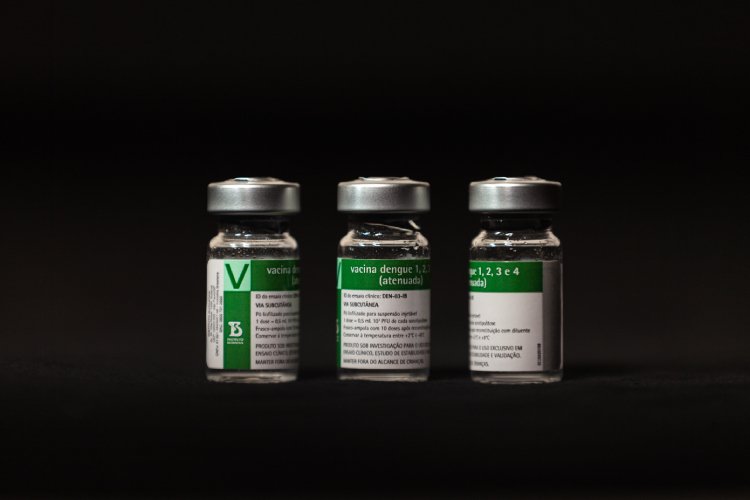
Brazil’s National Health Surveillance Agency (Anvisa) approved on Tuesday (26/11) the registration of Butantan-DV, a single-dose dengue vaccine developed by the Butantan Institute. The vaccine is authorized for people aged 12 to 59 and is expected to be incorporated into the SUS (Unified Health System) in 2026 through the National Immunization Program (PNI).
This Content Is Only For Subscribers
To unlock this content, subscribe to INTERLIRA Reports.
Start of Vaccination
After receiving Anvisa’s positive assessment on safety and efficacy, the Ministry of Health will add the vaccine to the national schedule. Next week, the ministry will present the matter to a committee of specialists and SUS administrators to define the vaccination strategy, which is initially expected to be phased in. At this stage, the vaccine is not authorized for pregnant women, immunocompromised individuals, or older adults.
Partnership
Developed through a partnership between the Ministry of Health, the Butantan Institute, and Chinese laboratory WuXi Biologics, Butantan-DV becomes the world’s first single-dose dengue vaccine. Anvisa had already certified the production facilities in China. Manufacturing began in early 2025, and around 1 million doses have already been produced. According to the government, these initial doses may be distributed as early as December. Butantan plans to supply 30 million doses per year starting in the second half of 2026, with possible expansion depending on demand and production capacity.
Studies
The decision to approve the vaccine is based on five years of follow-up data from the phase 3 clinical trial submitted to Anvisa. Among individuals aged 12 to 59, the vaccine demonstrated 74.7% overall efficacy; 91.6% efficacy against severe dengue and dengue with warning signs; and full protection against hospitalization. The research indicates that immunity lasts for at least five years.
Number of Cases
Brazil recorded the highest number of dengue infections and fatalities in its history in 2024, with 6.6 million cases and 6,297 deaths, according to the Ministry of Health’s arbovirus monitoring system. The total number of deaths in 2024 exceeded the combined number of dengue fatalities over the previous eight years.
Chikungunya
The Aedes aegypti mosquito transmits dengue, chikungunya, and Zika. A chikungunya vaccine has already been authorized by Anvisa, and the Butantan Institute is awaiting approval for the Brazilian version of that immunizing agent.
Sources: A Folha de SP; O Globo.

