

Online scams have become increasingly common, demanding greater attention to the links and online content we interact with daily. Cybercriminals are constantly creating new methods to deceive people for financial gain, ranging from falsified payment receipts to fake technician impersonations. In Brazil, around 71% of the population has already fallen victim to this type of crime, which shows the need for caution when clicking on links in WhatsApp messages, emails, or SMS, as well as avoiding sharing personal information with strangers. To reduce risks, it is essential to understand how these scams work, recognize their main types, learn what to do if you are targeted, and adopt preventive measures to protect your data and avoid financial losses.
This article is part of a series on digital security. You can read the other texts here.
This Content Is Only For Subscribers
To unlock this content, subscribe to INTERLIRA Reports.
Uber Scams
As one of the most widely used ride-hailing apps in Brazil, Uber unfortunately has become a frequent target for scammers — including some dishonest drivers who exploit passengers during rides. These scams range from overcharging tactics to identity manipulation, all designed to take advantage of distracted or unsuspecting users.
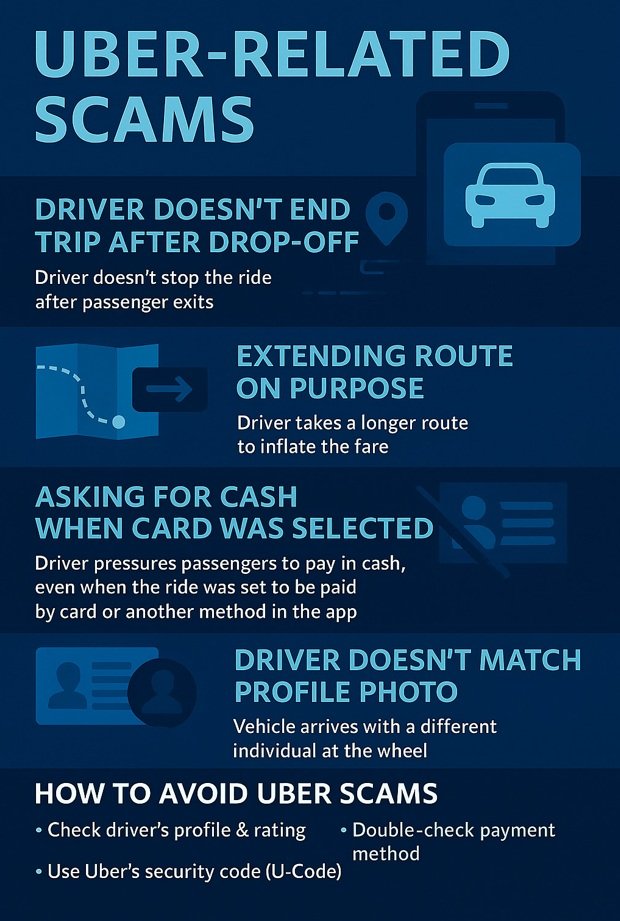
1. The Driver Doesn’t End the Trip After Drop-Off
One of the most frequent scams happens when a driver refuses to end the ride even after the passenger has already left the vehicle at the correct destination.
The goal is simple: inflate the final charge by continuing the mileage and time counter long after the passenger leaves.
How to resolve it: Go to Activity → select the trip → scroll down to Help with your trip → tap Review my fare and explain the situation.
2. Extending the Route on Purpose
Another common scam is when drivers deliberately take longer routes to increase the trip price. Instead of following GPS directions, the driver intentionally chooses slower or more distant paths. In some cases, they justify the detour with vague explanations (“traffic,” “roadblock,” etc.), hoping the passenger won’t notice.
How to protect yourself:
- Confirm with the driver that the route will follow the GPS.
- If you prefer a specific path, clearly state it before the trip starts.
– Stay alert for unnecessary deviations.
3. Asking for Cash When Another Payment Method Was Selected
Scammers may pressure passengers to pay in cash, even when the ride was set to be paid by card or another digital method in the app. They often manufacture excuses (“the app glitched,” “your card didn’t go through,” etc.). If cash was not the selected method, do not pay outside the app — especially if the driver insists or becomes pushy.
Rule of thumb:
- If the app shows card payment, you owe nothing in cash.
4. Driver Doesn’t Match the Profile Photo
A serious and dangerous scam occurs when the driver who shows up is not the same person shown in the app. This represents a severe safety risk, as fraudulent or unknown individuals may be driving the vehicle — increasing the chance of robbery, harassment, or other crimes.
If the photo and the driver do not match: Do not enter the vehicle.
Report the issue immediately through Activity → select the trip → Report a safety issue.
5. How to Avoid Uber Scams
If you want a safer experience on the platform, here are essential precautions:
- Check the driver’s rating and profile
- Check the driver’s star rating
- Check the number of trips completed
- Check how long they’ve been on the platform
- Double-check your selected payment method
- Use Uber’s security code (U-Code)
You can activate a four-digit verification code that must be shared with the driver before the trip begins.
To enable it: Account → Settings → Verify Your Trip → Use code to confirm rides.