


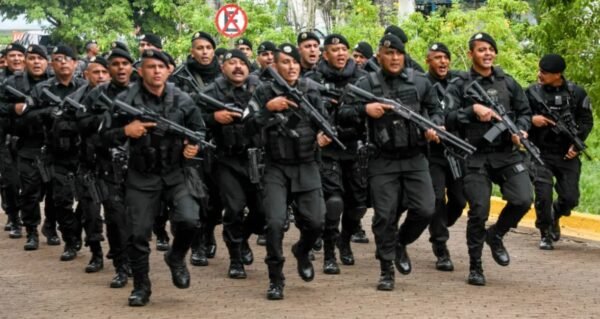
The number of people killed by police increased in 17 Brazilian states in 2025, spanning governments led by multiple parties: PT, PL, União Brasil, Republicanos, PSD, PSB, Novo, and MDB. According to data from the Ministry of Justice and Public Security, there were 6,519 deaths in 2025—4.5% more than the 6,238 recorded the previous year. That equals about 18 cases per day nationwide. The Northeast and North regions saw the biggest increases. The most extreme case was Rondônia, where deaths during police actions rose from 8 to 47 in one year, a 488% surge. The state is governed by Marcos Rocha (PSD).
This Content Is Only For Subscribers
To unlock this content, subscribe to INTERLIRA Reports.
Largest Growth
The sharpest rise occurred in Rondônia, where deaths in police actions jumped from 8 to 47 in one year (+488%), under Governor Marcos Rocha (PSD). It was followed by Maranhão (+87%) and Rio Grande do Norte (+51%), where the totals rose dramatically. In Maranhão, governed by Carlos Brandão Júnior (independent), records went from 76 to 142 deaths. In Rio Grande do Norte, cases rose from 91 in 2024 to 137 in 2025. In a statement, the Public Security and Social Defense Secretariat under Governor Fátima Bezerra (PT) linked the increase to the migration of criminal groups from the Southeast to the Northeast, which intensified territorial disputes and armed confrontations with police.
Political Parties
A breakdown by party indicates that the rise in police lethality cuts across administrations from different ideological camps, from Jair Bolsonaro’s PL—which governs two states that registered increases—to Lula’s PT—which governs three. The PSD leads in this category, with four states showing growth.
Absolute Numbers
In absolute terms, Bahia, governed by Jerônimo Rodrigues (PT), remained first, with 1,569 people killed by police in 2025 (a 1% increase over 2024). Next came São Paulo, governed by Tarcísio de Freitas (Republicanos), with 835 deaths (+3%), and Rio de Janeiro, governed by Cláudio Castro (PL), with 798 cases (+14%). The figures are from the Ministry of Justice and are updated monthly based on data submitted by the states.
Reason for the Growth
Rafael Rocha, a project coordinator at the Sou da Paz Institute, argues that the main driver of higher police lethality is the lack of political will among governors and public security secretaries. He says reducing police violence requires technical measures and investment in training, but leadership posture is also decisive. According to Rocha, some governors adopt rhetoric that ends up encouraging the use of lethal force. Even when such incentives are not explicit, he says, there are cases in which police lethality is effectively tolerated. He also argues that public prosecutors often overlook the problem and fail to exercise robust external oversight.
Nine states show a decrease
Data compiled by prosecutors indicates that nine states registered decreases in deaths in 2025 compared with 2024, while the Federal District remained stable at 15 deaths in both years. Tocantins posted the largest proportional drop, with a 55% reduction in deaths caused by police intervention—from 49 cases in 2024 to 22 in 2025. It was followed by Rio Grande do Sul (-43%) and Roraima (-33%).
Analysis:
The rise in deaths resulting from police actions across 17 Brazilian states in 2025 signals a troubling reversal in efforts to reduce lethal force. With more than 6,500 fatalities nationwide—an average of roughly 18 per day—the data suggests that police lethality remains structurally embedded in parts of Brazil’s public security model. The fact that increases occurred under governors from multiple political parties indicates that the issue transcends ideological divides and is more closely tied to institutional culture, operational doctrine, and oversight mechanisms than to partisan alignment alone.
In absolute terms, the concentration of deaths in large states such as Bahia, São Paulo, and Rio de Janeiro reinforces the scale of the challenge in densely populated and highly unequal urban environments. Sustainable reductions in police lethality typically require a combination of political commitment, professional training, intelligence-led operations, and consistent external oversight.

