


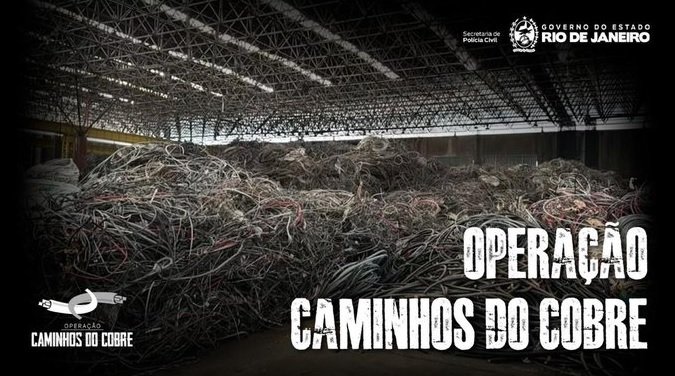
Civil police officers from the Robbery and Theft Division (DRF) launched, on February, another phase of Operation Caminhos do Cobre to dismantle an interstate criminal organization involved in cable theft, receiving stolen goods and money laundering. According to investigators, the group moved R$ 417,954,201 over five years. The operation is being carried out in Rio de Janeiro, São Paulo, Minas Gerais and Tocantins. After the action, Delegate Thiago Neves stated that the investigations indicate the participation of the Red Command (CV) faction in the logistics and security of the scheme. According to the police, the group operated across several states and had already moved more than R$ 400 million, with its main reception points located in areas linked to the faction, such as Complexo do Alemão and Morro do Urubu, in the North Zone of Rio de Janeiro.
This Content Is Only For Subscribers
To unlock this content, subscribe to INTERLIRA Reports.
How the Scheme Worked
According to the specialized unit, the organization maintained a structured network divided into different operational nuclei with specific roles and activities across multiple states. Investigators said the thefts mainly occurred during the early morning hours. Trucks were used to tear out underground cables, while motorcycles acted as scouts to monitor police movement and block roads when necessary. After removal, the stolen materials were transported to dismantling locations. From there, according to the police, the items were sold to scrap yards and recycling companies connected to the criminal group.
Receivers in Favelas
According to Delegate Thiago Neves, the receivers were located in the Complexo do Alemão and Morro do Urubu, in the neighborhood of Pilares, Rio de Janeiro’s North Zone. “These are difficult-to-access locations where police cannot routinely carry out inspections. Because of that, the material is taken there so it can be separated more easily, especially the copper, before being resold,” he explained. The DRF also stated that the financial nucleus of the organization issued false invoices to give the transactions an appearance of legality. The amounts were then fragmented through successive bank transfers in an attempt to make financial tracking more difficult.
Ongoing Offensive
The action is part of Operation Copper Roads, a permanent initiative by the Civil Police to combat the theft of cables and metallic materials at all stages of the chain, from theft to resale. Since September 2024, according to the corporation, more than 430 inspections have been carried out at scrap yards, resulting in approximately 200 arrests of individuals responsible for these establishments. During the same period, around 300 tons of copper wire and other metallic materials were seized. The Civil Police also reported that a request was made to freeze approximately R$ 240 million in earlier phases of the operation. These actions also aim to weaken operational arms of drug trafficking groups that, according to the corporation, finance and facilitate this type of crime.
Analysis:
The investigation into the cable theft network illustrates how organized crime in Brazil has increasingly diversified beyond traditional drug trafficking into highly profitable infrastructure-related crimes. Copper and other metallic materials have become attractive targets because of their high market value and the existence of established recycling chains capable of absorbing large volumes with limited traceability. The scale of the financial movement uncovered by investigators suggests a sophisticated logistical structure, combining coordinated theft operations, transportation networks, and commercial channels capable of quickly converting stolen material into legal revenue streams.
In many cases, territories under the influence of armed groups provide secure locations for the storage, dismantling, and initial processing of stolen materials, reducing the risk of police intervention. These territories can also function as logistical hubs where criminal groups integrate different illegal markets, combining territorial control with access to informal labor and local transport networks.

