


Brazilian police say they disrupted a coordinated plan for violence linked to anti-democratic protests scheduled for Monday (02/02), with investigations pointing to online networks—especially on Telegram—where suspects allegedly discussed attacks in downtown Rio de Janeiro near Alerj and on São Paulo’s Paulista Avenue using improvised explosives such as homemade bombs and Molotov cocktails. Authorities describe the group behind the chats as a youth-heavy network calling itself “Generation Z,” accused of circulating manuals on tactics like using cell-phone signal blockers and spotting undercover officers, while also promoting targets ranging from public buildings and authorities to telecommunications infrastructure. The reports come amid a separate, high-profile Federal Police case in Bauru, where a man was arrested on suspicion of Islamic State ties and planning a suicide attack, underscoring how officials are framing a broader threat landscape that spans both domestic extremist mobilization and alleged jihadist plotting.
This Content Is Only For Subscribers
To unlock this content, subscribe to INTERLIRA Reports.
Operation in Rio
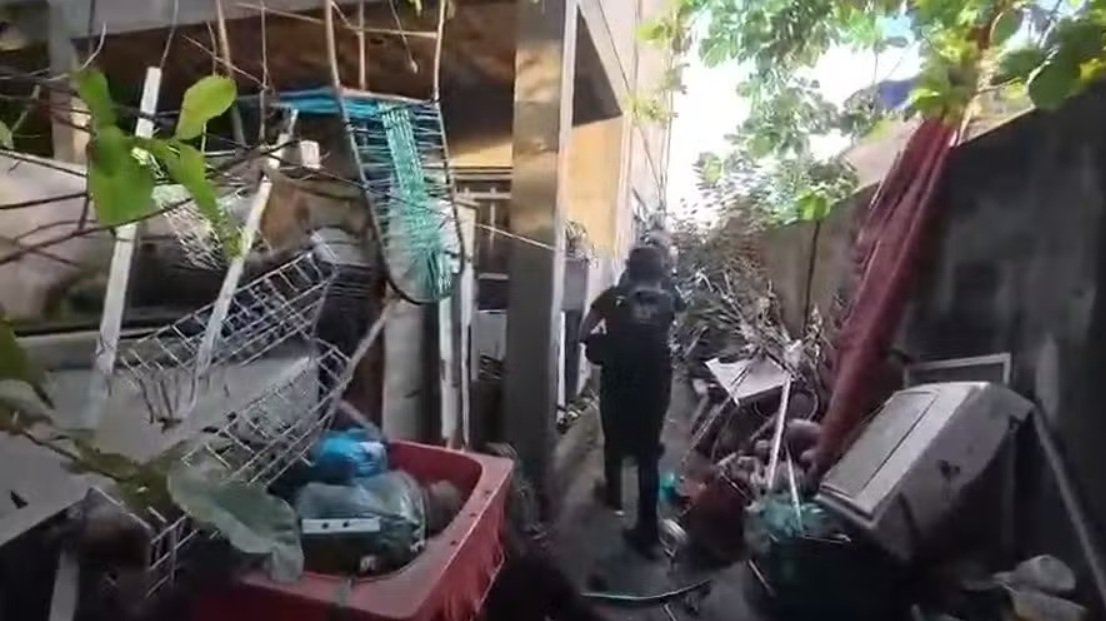
The Rio de Janeiro Civil Police reported on Monday (02/02) that an operation thwarted planned terrorist attacks in the city center. Three people were arrested. According to the police, the action resulted from intelligence work by the Cybercrime Repression Division (DRCI), which identified groups organizing anti-democratic demonstrations involving homemade bombs and Molotov cocktails. The operation was named Break Chain. Investigations began after the DRCI identified messaging groups and social media pages created to organize anti-democratic acts scheduled for this Monday at 2 p.m. in several states. In Rio, the protest was planned for in front of the Rio de Janeiro State Legislative Assembly (Alerj), downtown. Felipe Curi, the Civil Police Secretary, said the group had been planning bomb attacks, circulating tutorials on homemade explosives, and aiming to target authorities, public offices, and large events.
Operation in São Paulo
An operation launched on Monday (02/02) by the São Paulo Civil Police targeted a group that, according to the Public Security Secretariat (SSP), planned to attack locations on Paulista Avenue with homemade bombs and Molotov cocktails. A similar action was carried out in Rio de Janeiro against suspects accused of preparing an attack with explosives in the center of the capital. Investigators said both attacks were planned for Monday. The plans were apparently coordinated through social networks, mainly on Telegram. In total, 12 suspects were detained in São Paulo—six of them reportedly held command roles, according to police—and were taken in for questioning. No explosives were found. The SSP said it is still investigating where the devices might be. The replica weapon was seized.
Generation Z
The suspected group, which called itself “Generation Z,” apparently incited and planned acts of violence and terrorism, according to Rio de Janeiro police. The label refers to people born in the mid-to-late 2000s and throughout the 2010s. Police said one of those under investigation is 16 years old. The SSP said it uncovered a manual shared in the groups in which organizers instructed participants, including teenagers, to carry cell phone signal blockers to prevent security agencies from being alerted. The manual also included guidance on how to identify police officers during protests.
Acts of Violence
Although presenting itself as non-partisan and anti-corruption, the group, according to police, encouraged and planned acts of violence and terrorism. Investigators say members promoted attacks on telecommunications infrastructure, public buildings, authorities, and political centers, with the aim of causing panic, disorder, and social chaos. During the investigation, police found content aimed at radicalization and confrontation, as well as materials and instructions for making improvised incendiary devices, such as Molotov cocktails, and homemade bombs packed with marbles and nails, which, according to police, posed a concrete risk to the public. The group involved in the plan in Brazil had about 8,000 people. The Rio-based group had 300 members. One of those arrested is the group’s administrator in Rio de Janeiro.
Terrorist Attack
The Federal Police arrested a man on Thursday (29/01) in Bauru, in the interior of São Paulo, suspected of being an Islamic State member who was preparing to carry out a suicide terrorist attack in Brazil, according to investigators. The man’s identity was not disclosed. The Federal Police seized items apparently intended for making explosives. According to the investigation, he had been monitored since last year and displayed behavior deemed radicalized. He apparently intended to carry out an attack at a public event, likely in Bauru. The operation had support from the FBI, which provided the first information to Brazilian authorities and described the suspect as dangerous. In a statement, the Federal Police said, “the investigations continue with the objective of deepening the inquiry into the facts, as well as preventing acts that threaten public safety and social order.”
Analysis:
The cases described point to a convergence of digital radicalization, low-cost tactics, and symbolic targeting that has become characteristic of contemporary extremist mobilization. The alleged plans relied less on sophisticated weaponry and more on improvised devices, online coordination, and the use of dense urban spaces with high political visibility. This reflects a strategy aimed at generating fear, disruption, and media impact rather than achieving military effectiveness. The emphasis on locations such as Paulista Avenue and the area around Alerj suggests an intent to maximize symbolic resonance and public exposure.
From a security standpoint, the role of encrypted and semi-public messaging platforms is central. These environments lower barriers to entry, allow rapid diffusion of manuals and tactical guidance, and facilitate the involvement of very young participants who may lack a full understanding of the legal and human consequences of violence. This makes detection more complex, as such groups do not always fit traditional profiles of organized extremism.
The parallel Federal Police case involving alleged jihadist plotting reinforces how Brazilian authorities are increasingly framing the threat environment as plural rather than singular. While the domestic networks described appear fragmented and opportunistic, even poorly coordinated plots can produce severe harm if left unchecked.

