


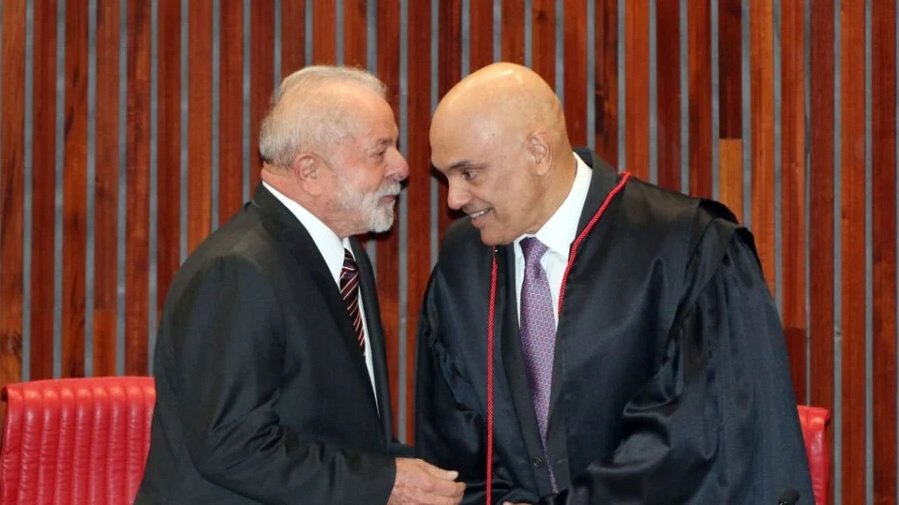
The debate over a potential amnesty bill linked to the January 8th coup plots has intensified in Brasília, with pressure mounting from Bolsonaro allies and members of the Centrão. While the Senate weighs narrower proposals, the opposition pushes for a broader measure that could benefit Jair Bolsonaro and several of his close allies. At the same time, Supreme Court justices signal that such an initiative would likely face constitutional barriers. In this tense environment, negotiations in the Chamber of Deputies now center on the designation of a rapporteur for the amnesty bill, a move that could accelerate discussions and shape the scope of the measure. Meanwhile, the Lula administration advances its social agenda with the launch of the “People’s Gas” program, seeks to consolidate its international standing through BRICS engagement, and mobilizes to block any urgent vote on amnesty, showing the intersection of political maneuvering, judicial oversight, and electoral strategy in the lead-up to 2026.
This Content Is Only For Subscribers
To unlock this content, subscribe to INTERLIRA Reports.
Amnesty
The first days of the coup plot trial coincided with renewed pressure in Brasília for an amnesty for Jair Bolsonaro, with repercussions across all three branches of government and strong ties to the 2026 elections. While Senate President Davi Alcolumbre advocates for a bill that would merely reduce the sentences of those convicted of the January 8th coup—excluding its leaders—opposition and centrist party leaders argue they already have the votes for a broad pardon covering all those involved. Such a measure, however, would maintain Bolsonaro’s ineligibility due to electoral convictions, effectively consolidating Governor Tarcísio de Freitas (Republicans) as the presidential candidate for 2026.
Unconstitutional
Despite the political maneuvering, Supreme Court justices have signaled that any amnesty bill passed by Congress could be struck down as unconstitutional. The proposal gained traction after negotiations involving Centrão leaders, who envision Bolsonaro supporting Tarcísio de Freitas’s presidential run in exchange for a united front in defense of those accused of attacking democratic institutions.
Meeting to Block Amnesty
The Lula administration, aware of the opposition’s coordination, has moved to prevent an urgent vote on amnesty. Speaker of the House Hugo Motta is under pressure from the Centrão to prioritize the measure immediately after Bolsonaro’s trial. To counter this, Institutional Relations Minister Gleisi Hoffman is urging Centrão ministers to pressure their caucuses against the bill. For the government, blocking amnesty is considered a matter of political honor, especially after its recent defeat in the election of leadership positions within the INSS CPI.
Rapporteur Designation
At the same time, Bolsonaro’s allies and lawmakers from the Centrão are working to accelerate the process by pushing Speaker Hugo Motta to appoint a rapporteur for the amnesty bill by the end of the week. The choice of rapporteur is seen as essential to start shaping the bill’s report and negotiating its final contours. The opposition is pushing for the broadest version possible, which would not only annul Bolsonaro’s ineligibility and preempt any conviction in the coup plot case, but also extend amnesty to other figures such as Representative Eduardo Bolsonaro (PL-SP) and former lawmaker Daniel Silveira.
People’s Gas
In Minas Gerais, President Lula launched the “People’s Gas” program, designed to expand the existing Gas Aid. The initiative aims to benefit 15.5 million low-income families at an estimated cost of R$5 billion by 2026. It will provide free LPG cylinders, with the frequency of distribution tied to family size: up to three per year for two-person households, four for families of three, and six for families with four or more members.
BRICS Meeting
Amid these domestic disputes, President Lula participated in a virtual BRICS summit with leaders from the Global South. Officials emphasized that the meeting was not solely about U.S. tariff hikes, although the issue loomed large after President Donald Trump imposed a 50% tariff on Brazilian products in what Brasília views as an attempt to influence Bolsonaro’s trial. Lula is expected to defend Brazil’s sovereignty at the meeting but will calibrate his tone to avoid provoking further U.S. sanctions.
Analysis:
The debate over an amnesty bill tied to the January 8th coup plots illustrates the complex interplay between political strategy, judicial authority, and electoral calculations in Brasília. On one side, Bolsonaro’s allies and the Centrão seek to broaden the measure to preserve the former president’s political influence and consolidate a potential 2026 candidacy for Governor Tarcísio de Freitas. On the other, the Lula administration and Supreme Court justices frame the discussion within constitutional limits, signaling that such an initiative could be struck down, while also moving to block urgent consideration of the bill in Congress.
At the same time, the dispute over amnesty intersects with broader political dynamics. Lula’s launch of the “People’s Gas” program demonstrates the administration’s attempt to reinforce its social agenda and appeal to lower-income constituencies, while international engagements such as the BRICS summit allow the government to project global leadership. The outcome of the amnesty debate will therefore not only influence the balance of power in Congress but also set the tone for Brazil’s political environment heading into 2026.
Sources: O Globo [1], [2], [3], [4]; G1 [1], [2]; A Folha de SP.

