


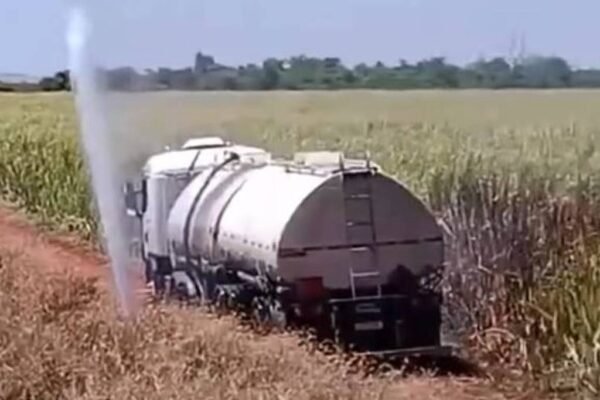
The image of gasoline erupting like an oil well—often seen only in television movies—draws attention to a rural area of Orlândia, a city in northern São Paulo state, about 365 kilometers from the state capital. The incident, which occurred in October 2025, contributed to a renewed rise in statistics related to the theft of petroleum products transported through pipelines across Brazil. According to data from Transpetro, a Petrobras subsidiary responsible for fuel logistics, 31 cases of clandestine theft were recorded in 2025. These crimes involve illegal interventions to steal oil and its derivatives by drilling into buried or exposed pipelines. In 2024, there had been 25 such incidents. The increase interrupted a downward trend observed since 2018, when this type of crime reached a record 261 cases nationwide.
This Content Is Only For Subscribers
To unlock this content, subscribe to INTERLIRA Reports.
The Orlândia Case
In the Orlândia episode, which took place on a farm bordering the municipality of Sales Oliveira, authorities reported a strong odor caused by the gasoline leak, a high risk of explosion, and environmental contamination. One man was arrested in a nearby wooded area. According to police, he confessed that he had gone to the farm at night with four accomplices, who managed to flee. A tanker truck, intended to receive the stolen fuel, was abandoned at the scene. Transpetro explains that this tactic is standard among such gangs: they usually operate at night and transport the fuel using tanker trucks, tankers, or even modified vehicles. Historical records indicate the participation of individuals specialized in toolmaking, responsible for drilling steel pipelines and installing improvised valves. Heavy-duty hoses, similar to those used by firefighters, are typically employed to transfer the fuel to the trucks.
Growth
The increase in incidents has occurred despite annual investments of around R$ 100 million in preventive measures. These include sensors that monitor pressure variations in pipelines in real time—an important indicator of intrusion—artificial intelligence systems, drones, armed patrols, and the operation of a dedicated monitoring center in Rio de Janeiro. When questioned, neither Transpetro nor Petrobras disclosed estimates of financial losses. According to the company, revealing volumes or values linked to pipeline theft could encourage further criminal activity. “For this reason, Transpetro does not release such information,” the subsidiary stated.
States with High Rates
São Paulo led the national increase. With 22 recorded cases, the state accounted for about 70% of all pipeline thefts in Brazil in 2025, compared with 17 occurrences in 2024. By contrast, the numbers dropped sharply in Rio de Janeiro. The state registered 13 incidents in 2020, but only one case in 2025.
São Paulo
Without disclosing operational figures, the São Paulo State Public Security Secretariat says it has intensified actions to combat clandestine pipeline diversions. According to the department, the practice poses serious risks to public safety, the environment, and critical infrastructure. São Paulo is considered a particularly attractive target for this type of crime because it hosts key pipeline networks linking major refineries, such as the Paulínia refinery—the largest in Brazil—located in the Campinas region. The state is also crossed by the São Paulo–Brasília pipeline, the longest in the country, stretching 962 kilometers and capable of transporting approximately 800,000 cubic meters of oil and derivatives per month.
Analysis:
The resurgence of pipeline fuel theft in Brazil signals a shift in the risk environment surrounding critical energy infrastructure, particularly in economically strategic states such as São Paulo. Although the absolute number of incidents remains far below the peak levels seen in the late 2010s, the interruption of a long-standing downward trend suggests that criminal groups are adapting their methods and exploiting geographic and logistical vulnerabilities. The Orlândia case illustrates how these crimes combine technical expertise, nighttime operations, and access to heavy equipment, transforming fuel theft into a sophisticated and high-risk activity with potential consequences that extend well beyond financial losses.
From a security and environmental perspective, clandestine pipeline tapping represents a severe threat. Gasoline leaks create immediate risks of explosions, soil and water contamination, and harm to nearby communities. The fact that these incidents continue to rise despite significant investments in monitoring technologies indicates that deterrence based solely on surveillance is insufficient. Criminal networks appear capable of identifying blind spots, responding quickly to detection systems, and dispersing before law enforcement arrives.
Sources: A Folha de SP; G1; IstoéDinheiro.

