

Online scams have become increasingly common, demanding greater attention to the links and online content we interact with daily. Cybercriminals are constantly creating new methods to deceive people for financial gain, ranging from falsified payment receipts to fake technician impersonations. In Brazil, around 71% of the population has already fallen victim to this type of crime, which shows the need for caution when clicking on links in WhatsApp messages, emails, or SMS, as well as avoiding sharing personal information with strangers. To reduce risks, it is essential to understand how these scams work, recognize their main types, learn what to do if you are targeted, and adopt preventive measures to protect your data and avoid financial losses.
This article is part of a series on digital security. You can read the other texts here.
This Content Is Only For Subscribers
To unlock this content, subscribe to INTERLIRA Reports.
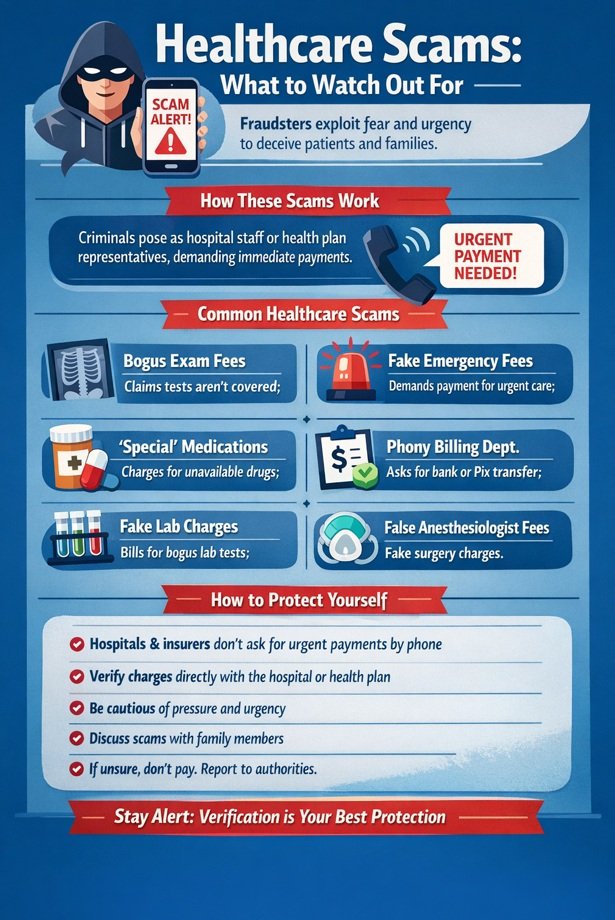
Healthcare Scams: What to Watch Out For
Healthcare-related scams are becoming increasingly common. Police investigations and court cases point to organized criminal groups that exploit fraudulent access to patient data, often without the knowledge of hospitals or health plans. According to authorities, these scams rely on fear, urgency, and trust in well-known medical institutions. Older adults are frequently targeted, but anyone can be victimized.
How These Scams Work
Criminals usually contact patients or family members by phone or messaging apps, posing as hospital staff, laboratories, or health plan representatives. They claim there is a problem with treatment authorization and demand immediate payment.
Most Common Healthcare Scams
- Charges for exams apparently not covered by insurance
Scammers claim the procedure was denied and demand payment to avoid suspension of care.
- Fake emergency fees
Victims are told the patient’s condition worsened and that a fee is required for speed up tests or surgery.
- “Special” medication or materials
Criminals say essential drugs or supplies are unavailable and request payment for items prominently not covered.
- Fake financial department
Scammers impersonate hospital or lab billing staff and send bank or Pix details for payment.
- Fake laboratory cartoons
Fraudsters use the name of well-known labs to bill for exams that are covered or not yet performed.
- Fake anesthesiologist fees
Claiming an emergency surgery, they charge false professional fees not covered by insurance.
How to Protect Yourself
- Hospitals and health plans do not request urgent payments by phone or message
- Always confirm charges directly with the hospital or insurer using official channels
- Be especially cautious when pressure or urgency is involved
- Talk to family members and caregivers about these scams
- If in doubt, do not pay and report the attempt to authorities
Stay alert: when it comes to health, scammers exploit fear. Verification is your best protection.