

Online scams have become increasingly common, demanding greater attention to the links and online content we interact with daily. Cybercriminals are constantly creating new methods to deceive people for financial gain, ranging from falsified payment receipts to fake technician impersonations. In Brazil, around 71% of the population has already fallen victim to this type of crime, which shows the need for caution when clicking on links in WhatsApp messages, emails, or SMS, as well as avoiding sharing personal information with strangers. To reduce risks, it is essential to understand how these scams work, recognize their main types, learn what to do if you are targeted, and adopt preventive measures to protect your data and avoid financial losses.
This article is part of a series on digital security. You can read the other texts here.
This Content Is Only For Subscribers
To unlock this content, subscribe to INTERLIRA Reports.
Extra Income Scam (“Paid Tasks” Scheme)
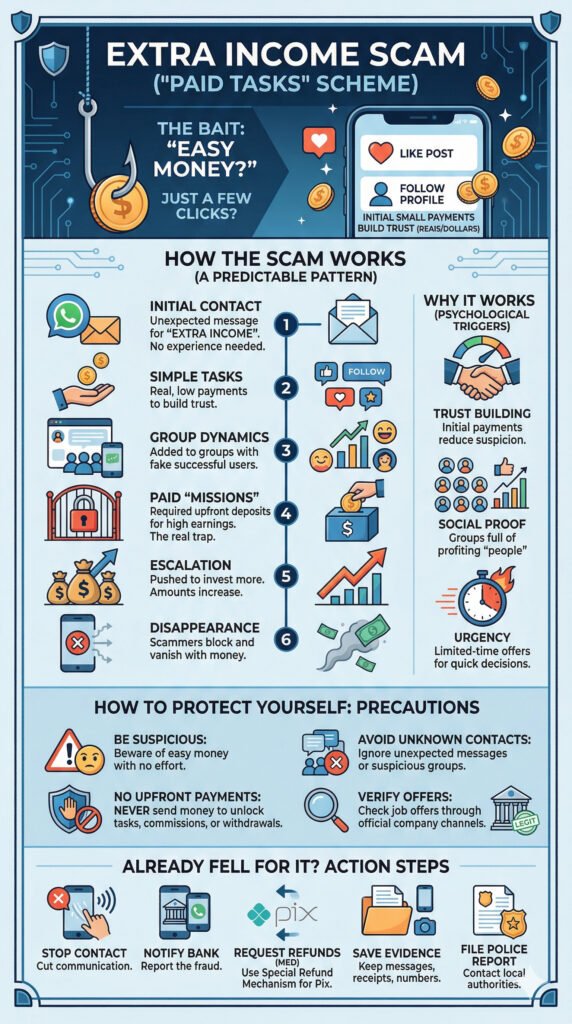
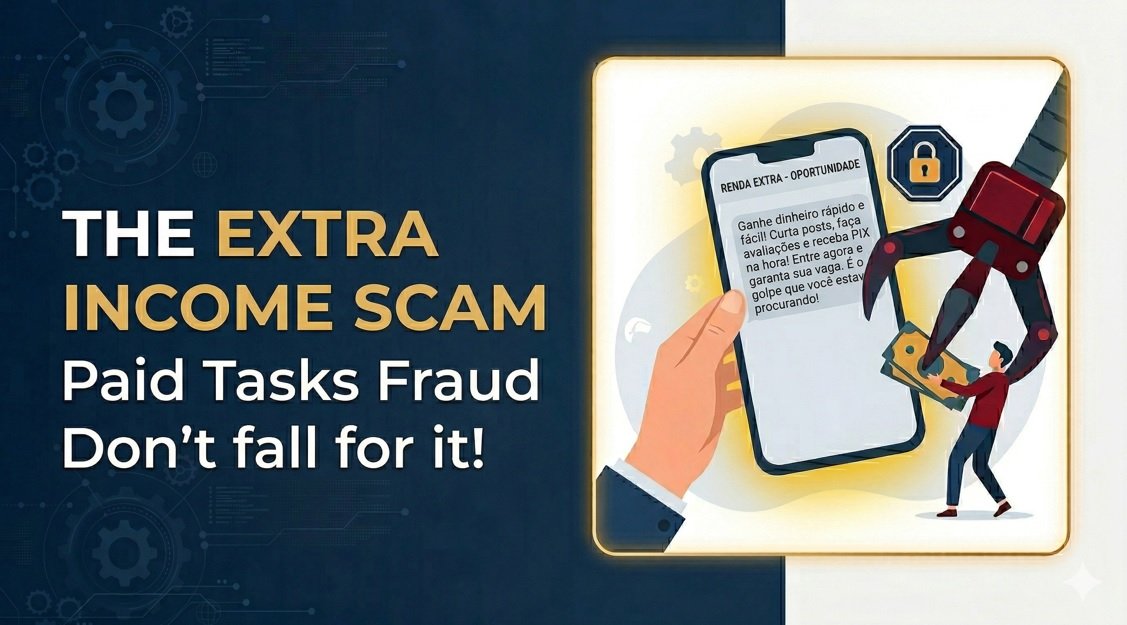
Making money with just a few clicks? Sounds tempting… but that’s exactly how scammers hook their victims. The “extra income” or “paid tasks” scam has been spreading through messaging apps like WhatsApp and Telegram, promising quick and easy earnings. In reality, it’s a well-structured fraud designed to gain your trust—and then take your money.
Easy money? That’s the bait
You receive a message or get added to a group. The proposal is simple: like a post, follow a profile, or rate a product in exchange for small payments. At first, it works. You might even receive a few reais.That’s no accident—it’s part of the trap.
How the scam works
The scheme follows a predictable pattern:
- Initial contact: An unexpected message offering “extra income with no experience needed”
- Simple tasks: Small actions with real (but low) payments to build trust
- Group dynamics: Fake participants simulate success and encourage others
- Paid “missions”: Higher earnings are promised but require upfront deposits
- Escalation: Victims are pushed to invest more and more money
- Disappearance: Once the amount is high enough, scammers block the victim and vanish
Why it works
This scam relies on powerful psychological triggers:
- Trust building: Real initial payments lower suspicion
- Social proof: Groups full of “people” claiming to profit
- Urgency: Limited time offers that push quick decisions
By the time victims realize what’s happening, they may have already lost significant amounts.
How to protect yourself
Stay alert and follow these precautions:
- Be suspicious of easy money offers with no effort required
- Never send money to unlock tasks, commissions, or withdrawals
- Avoid interacting with unknown contacts or suspicious groups
- Verify job offers through official company channels -legitimate jobs never require upfront payments
Already fell for it?
If you made a payment:
- Stop all contact immediately
- Notify your bank and report the fraud
- If you used Pix, request the Special Refund Mechanism (MED)
- Save evidence (messages, receipts, phone numbers)
- File a police report