


Summary
On April 27, a report by the Pastoral Land Commission (Comissão Pastoral da Terra – CPT1) revealed that violence in the rural areas of Brazil has increased, and homicides grew by 100% in 2025. Despite this, the rural and green economies continue to grow and attract investments to different areas of the country.
A primary driver of this investment is the REDD+ (Reducing Emissions from Deforestation and forest Degradation) framework. This UN-backed initiative incentivizes forest protection to mitigate climate change, but it has become a strategic focal point for Oil and Gas (O&G) companies. These firms invest heavily in REDD+ and “Nature-Based Solutions” primarily to secure carbon offsets. These offsets allow them to maintain their core fossil fuel operations while publicly claiming “net-zero” or “carbon-neutral” status.
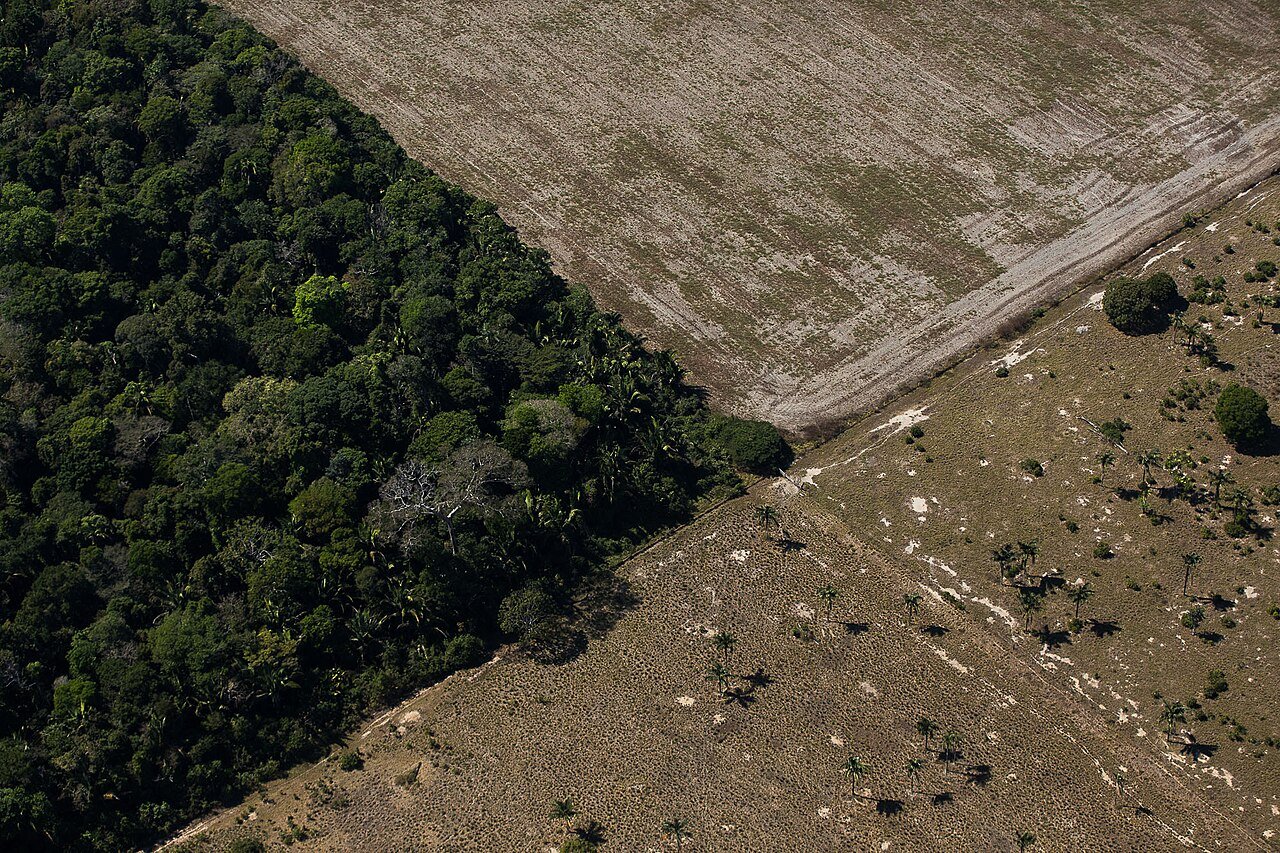
The Amacro2 region, situated at the triple border between Amazonas, Acre, and Rondônia, has consolidated itself as the newest agricultural frontier of the Amazon, presenting growth in agribusiness activities significantly higher than the average for the rest of the biome.
However, the region presents a high-risk paradox for ecological investors because its environmental potential as an alternative to deforestation is undercut by severe land-tenure complexity and social volatility. Legal insecurity is driven by a legacy of grilagem (land grabbing) and the exploitation of self-declaratory registries like the Rural Environmental Registry (Cadastro Ambiental Rural – CAR), which may mask illegal holdings. This is compounded by the fact that the region concentrates the majority of land conflicts in the Western Amazon, fueled by the expansion of organized crime and militant peasant movements like the League of Poor Peasants (Liga dos Camponeses Pobres – LCP) that utilize armed surveillance, significantly increasing the risk of violent conflict underlying land occupations. To navigate these threats, ventures must move beyond superficial analysis and adopt rigorous risk management, including exhaustive due diligence of land ownership and counterparties, and constant security monitoring.
Amacro
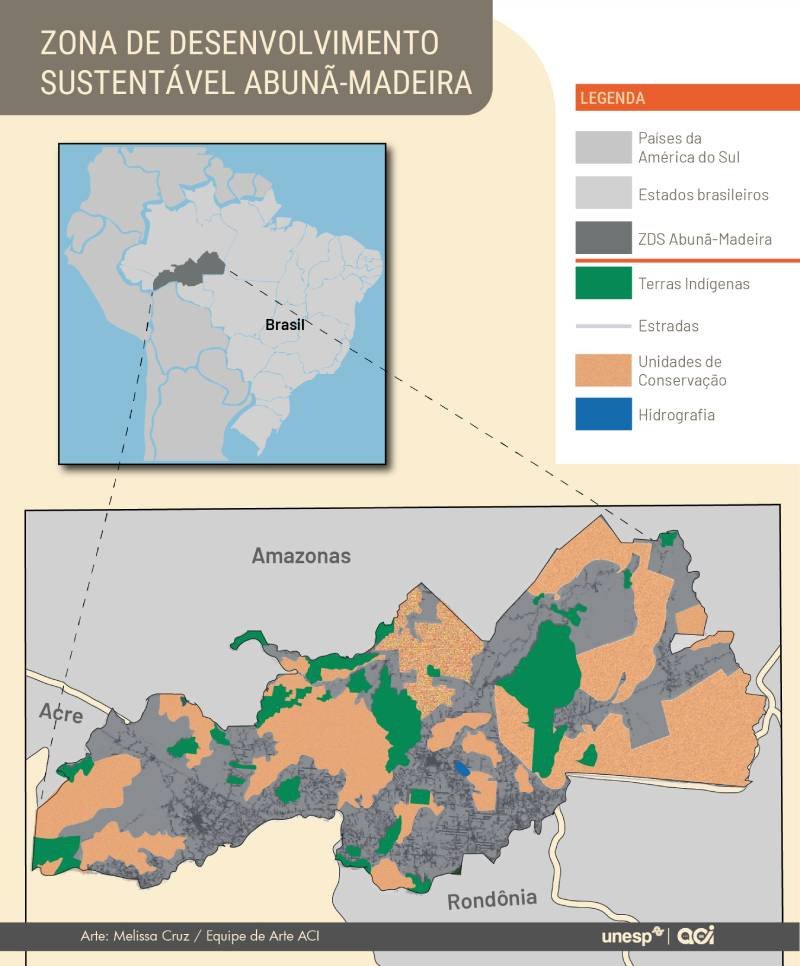
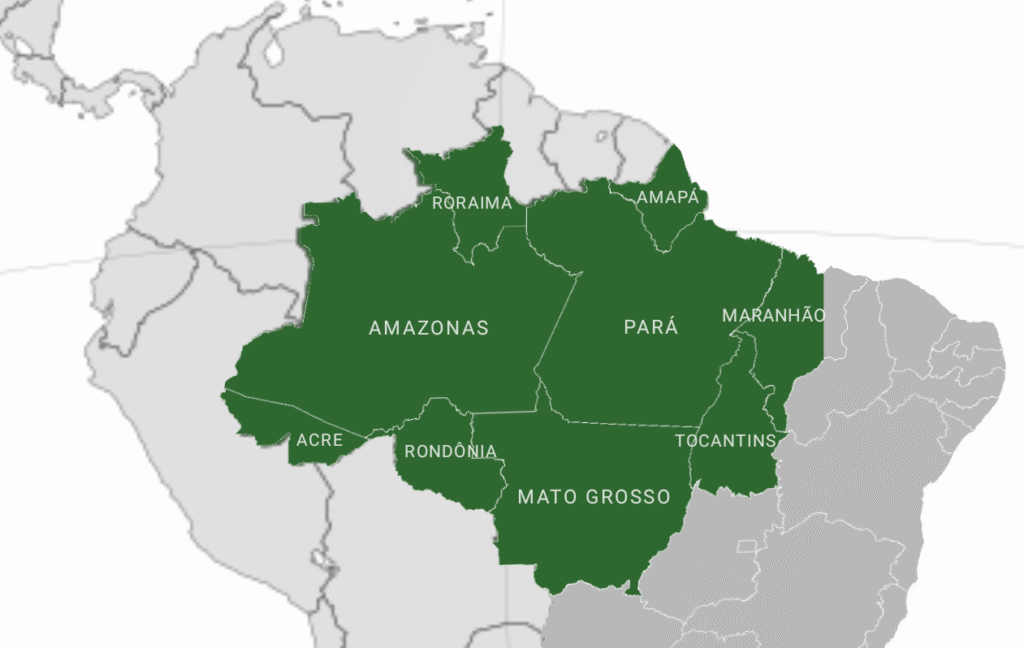
Amacro is a region in the Brazilian Amazon formed by Amazonas (AM), Acre (AC), and Rondônia (RO). It covers 32 municipalities on the border of these states, with an area of about 454,000 km² and an estimated population of 1.7 million people, according to the Superintendency for the Development of the Amazon (Sudam).
Also known as the Abunã-Madeira Sustainable Development Zone (Zona de Desenvolvimento Sustentável (ZDS) Abunã-Madeira), Amacro stands out as a fast-growing agricultural frontier. It was officially created in 2021 by the federal government and is treated as an “experimental laboratory for agribusiness” with the objective of accelerating the advancement of farming, mining, and large-scale ventures in the Amazon.
The region’s economy revolves around agribusiness, primarily cattle and soy. Between 2003 and 2022, the agricultural area in Amacro doubled to 7.2 million hectares—larger than Ireland—with 13 of the 32 municipalities already having more pasture/crops than forest.
According to data from the Brazilian Institute of Geography and Statistics (IBGE), the gross domestic product in 2023 in the municipalities that make up the region was R$ 62.3 billion. Rondônia, with 15 cities in the region, represents the largest weight of the GDP, with R$ 39 billion. The capitals, Porto Velho (RO) with R$ 25 billion and Rio Branco (AC) with nearly R$ 13 billion, represent the most economically vibrant cities.
Despite being far from the Brazilian coast, the region has two land export corridors located on the axes of BR-317, with an exit to the Pacific Ocean via Peru, and BR-364, connecting the state to the rest of Brazil. Additionally, there is the important Madeira River Waterway, one of the main logistical corridors in the North Region. The waterway connects Porto Velho (RO) to the Amazon River.
All this agricultural potential attracts investment and supports projections of strong growth. The expansion of pasture and agriculture grows twice as fast there as in the rest of the Brazilian Amazon. While in other parts of the biome the opening of new agricultural areas grew, on average, 2.63% per year, in Amacro, this annual growth was 5.61% between 2018 and 2022, according to InfoAmazonia.
Attracting Green Investments
In parallel, some investors have gradually applied capital to opportunities that move in the opposite direction of agricultural frontier expansion and consequent deforestation. More recently, some initiatives seek opportunities in the preservation of the biome, with actions in the carbon credit sector, tourism, and sustainable agriculture.
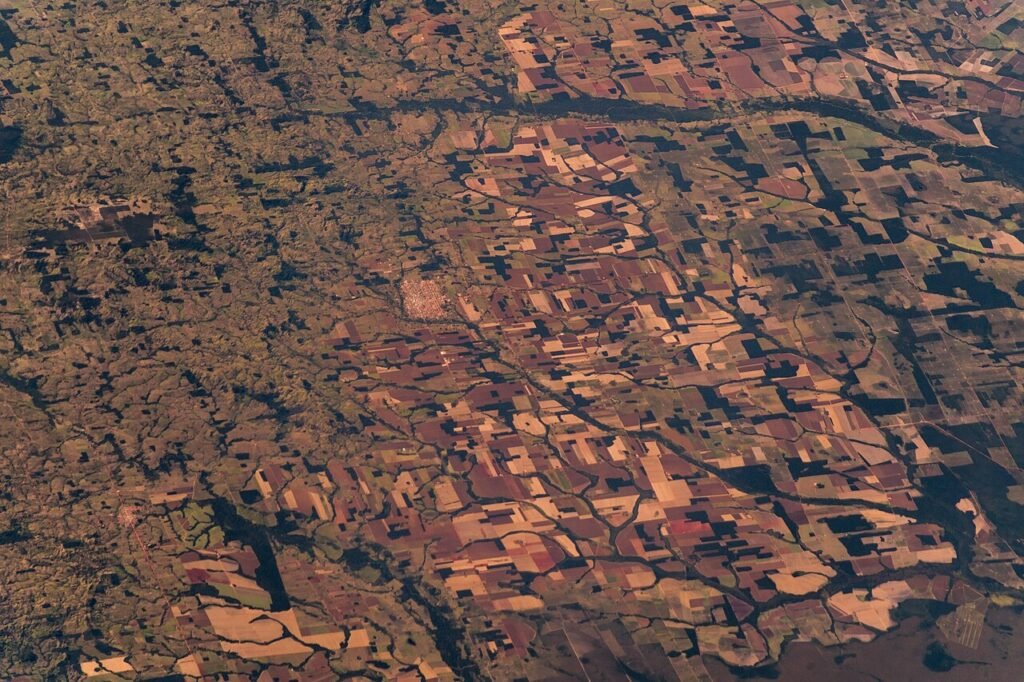
Studies such as “The Amazon Paradox” – research no. 50 – support such initiatives by warning of the exhaustion of the current agribusiness model in Amacro, recommending a transition to REDD+3, “forest products”, and intensification in already deforested areas to balance growth and preservation by 2030. There are also initiatives like Amazon 2030 and the New PAC, which provide for R$ 40 billion in regional investments by 2050, focusing on conservation, forest restoration, and sustainable logistics.
In Amacro Lands, It Is Not All Grains
Exhaustion warnings and the search for green investments arise as a way to appease one of the two greatest adverse effects of the Amazon: accelerated deforestation. In 2022, the region accounted for 36% of the deforestation in the Amazon, according to Imazon, and concentrated 76% of the clearings in the three states between 2018 and 2022.
However, this is not the only “side effect” that emerged in the region after decades of growth. There are still numerous social, land-tenure, and legal disputes that bring a high level of risk to investments, employees, communities, companies, nature, and many other agents present there.
Amacro quickly became one of the epicenters in Brazil for land-related issues. Some of the factors fostering development are precisely at the base of these problems, such as the availability of land with resources, including timber itself. One problem is that many of these lands overlap with 93 conservation units and 49 indigenous lands already present in this area. Furthermore, several municipalities in the region encompass vast areas of unallocated public land. These undefined territories are prime targets for both grileiros (land grabbers) and peasant movements.
The situation is exacerbated by a historical legacy of land grabbing rooted in the poorly regulated expansion of the far western borders. Encouraged by government policies during the 1960s and 70s, these practices became a normalized component of the local culture. While now officially prohibited, land grabbing persists; modern grileiros exploit the self-declaratory nature of the Rural Environmental Registry (CAR) to manufacture a veneer of legitimacy for their claims.
Additionally, these conditions make it possible for fraudulent actors to attract investors to ecological ventures located on grabbed lands or within traditional territories without consent. This vulnerability extends to REDD+ projects, where oversight gaps enable the creation of ‘phantom credits’ and the duplication of sales on illegally claimed property.
Another aspect that entails a series of risks is the presence of peasant groups in the state, especially the League of Poor Peasants (LCP), a dissident and more radicalized group than the famous Landless Workers’ Movement (Movimento dos Trabalhadores Rurais Sem Terra – MST). Unlike traditional social movements, the LCP repudiates agrarian reform and does not wait for National Institute for Colonization and Agrarian Reform (Instituto Nacional de Colonização e Reforma Agrária – INCRA) to settle their families. The movement, upon occupying a farm, immediately divides the land into lots, builds houses, and begins planting. To generate immediate liquidity, they often engage in timber extraction, selling wood to provide the cash flow necessary to sustain the occupation. The group is also combative, as it organizes security committees in the camps with armed surveillance, barricades, and observation posts.
Furthermore, these groups are not necessarily receptive to green investments, such as carbon credit projects. Among social movements, there are many criticisms of these ventures, seen as latifúndios (large estates) without agricultural function aimed at financial market investors and without benefit to local communities. The eviction of invaded areas is normally a process with great potential for international media disasters and impact on reputation. Usually conducted by the police, many occurrences end with injuries and deaths. In this context, the combativeness of the LCP increases the chances of disaster and reputational impact.
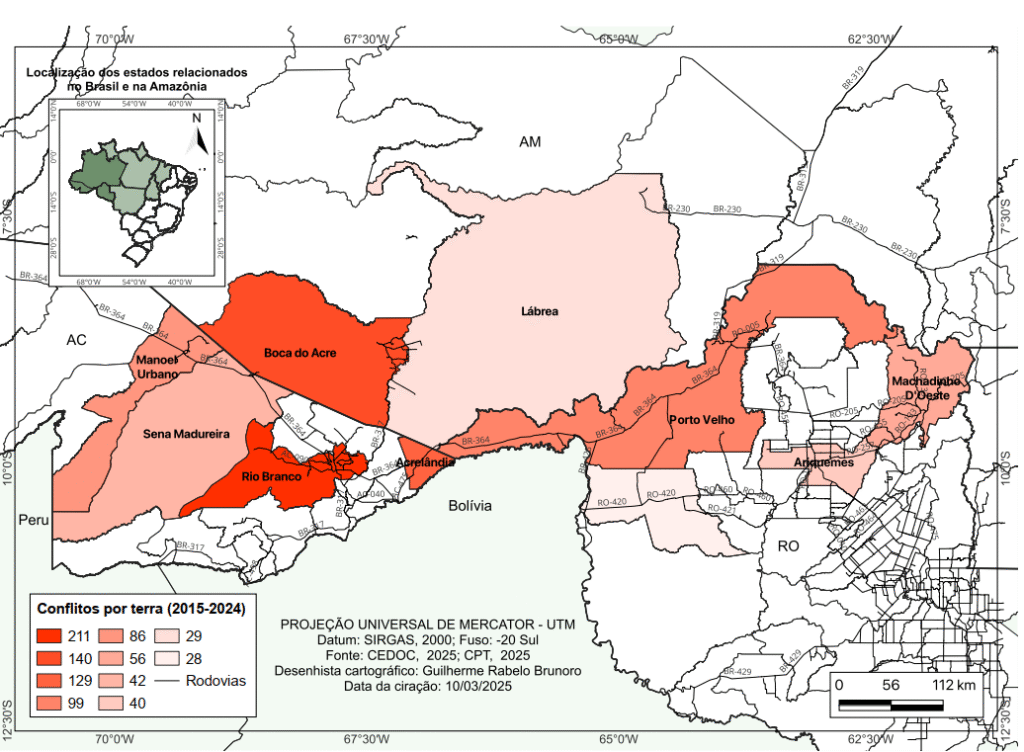
Data from the Pastoral Land Commission (CPT) documents a disproportionate scenario of agrarian conflict: although Amacro represents only 20.9% of all territory in the Western Amazon, it concentrated about 60% of all occurrences of land conflicts in that territory in the last decade. From 2015 to 2024, 1,501 conflicts were registered involving a total of 117,606 families.
Unlike other regions of Brazil, where violence in the countryside over agrarian issues has stabilized, in Amacro, there has been an increase in recent years. Violence in this subregion manifests across three primary fronts. First are conflicts related to land occupation and possession; while diverse, threats constitute the most common form of aggression, appearing in approximately 18% of cases. Second is violence directed against individuals. Records show that 1,343 people were victims of physical violence, with common occurrences including arrests (31%), death threats, intimidation, and murders (6.1%). Third is violence perpetrated by security agents. In these instances, the CPT categorizes violent actions carried out by both private militias and state forces.
Reactions to violent operations can also lead, many times, to another known threat: demonstrations, which include protests and road blockades. Historically, these events have led to conflicts with authorities and disruptions of logistical routes. From 2015 to 2024, in Rondônia alone, there were 247 protests and 23 blockades motivated by land issues reported by the CPT.
Social movements are not the only agents that bring insecurity to the investment scenario in Amacro. There are also illegal timber and mineral extractors, who often invade properties, especially when areas are very extensive and poorly monitored. Organized crime rounds out the list of threats. Once restricted to the Southeast’s urban centers, these factions have spent the last twenty years spreading into every state. They are especially present in border areas with drug-producing countries, such as Bolivia and Peru, which neighbor the AMACRO region. Moreover, they are now associating themselves with illegal miners and illegal lumber companies.
The threat of rural conflict is intensified by the growing number of weapons in the countryside. Currently, the presence of firearms in the Brazilian rural zone is the result of a combination of greater legal liberalization, strong national growth in ownership, and a reality of increasing violence in rural areas, which configures a very volatile scenario from a security and agrarian conflict point of view.
As of 2019, Law 13,870 extended the notion of “residence” to rural areas, allowing owners and farm managers to carry a weapon throughout the entire extent of the property, not just at the headquarters. Between 2017 and 2022, the number of weapons registered in the National Weapons System (Sistema Nacional de Armas – Sinarm) grew about 144%, going from just over 600,000 to about 1.56 million active registrations. It is estimated that today there are around 4.8 million firearms in use in the Brazilian population, many under the control of people in the rural environment. Data from the 2023 Brazilian Public Security Yearbook indicate that the number of intentional lethal violent crimes (Crimes Violentos Letais Intencionais – CVLI) in rural areas grew about 11.4% in 2022 compared to the previous year, with a 12.5% increase in the number of rural homicides.
Mitigation Strategies: Recommendations for Safe Investment
Investing in Amacro requires a robust risk management structure. The land complexity and social volatility of the region demand that the investor go beyond superficial analyses, adopting a proactive stance and rigorous compliance protocols.
Legal security of the land is the basis of any project in Amacro. Due to the history of land grabbing and the self-declaratory nature of some records, analysis must be exhaustive. For this, we have multi-layered land due diligence actions:
- Dominial Chain Audit: A retroactive legal analysis of the property’s history (back to the origin of the title) must be performed, crossing CAR, SIGEF, and INCRA data.
- Validation Geomonitoring: Uses tools such as INPE and MapBiomas to verify if the area has a history of overlap with Conservation Units, Indigenous Lands, or unassigned public areas.
- Disqualification Filter: Areas with documentary inconsistencies or a recent history of litigation must be summarily disqualified, given the high cost of legal and reputational remediation.
Social acceptance is the main shield against conflicts with peasant groups and traditional communities. Resources for this include:
- Community Protocols: Implementation of FPIC (Free, Prior, and Informed Consent) in accordance with ILO Convention 169, respecting the time and internal organization of indigenous people and extractivists. It is also very important to ensure that community consent is an informed fact accompanied by bodies such as the Federal Public Prosecutor’s Office (MPF).
- Non-restriction of Traditional Uses: Ensures that the project does not restrict subsistence activities (hunting, fishing, extractivism). This can be a good strategy to avoid the perception of a “new latifúndio” by peasant groups.
Carbon market and environmental assets require protection against fraud and “phantom credits.” At the contractual level, adaptable rescission clauses should be implemented. Celebrate contracts that provide for periodic reviews and fair distribution of benefits, aligned with the National Policy on Payment for Environmental Services (PSA).
Field technology should integrate remote monitoring (via satellite) with ground patrols. This creates a double protection layer for early detection of invasions. Operations must be strictly aligned with the latest regulations to avoid sanctions and exclusions from international markets. It is also important to submit investment projects to globally renowned certifiers and ensure monitoring by public bodies to validate environmental integrity.
Operational security and risk intelligence actions must be instituted, given the presence of organized crime and the increase in armed violence in the countryside. This includes, but is not limited to:
- A crisis management plan with clear protocols for dealing with occupations, demonstrations, and road blockades, prioritizing eviction via institutional channels to avoid reputational disasters.
- Engagement with local security forces and community councils to monitor the dynamics of threats in the neighborhood.
- Short-term project constitution as a fundamental strategy to avoid negative surprises in the future given the volatility of the local scenario. Clauses for renewals conditioned on periodic reassessments of the legal and security scenario can also be alternatives.
Success in AMACRO depends not only on the area’s biological potential but on an investor’s ability to identify and steer clear of the ‘gray zone’ between formal legality and territorial reality. Prioritizing this understanding prevents exposure to conflict, allowing investors to build the genuine relationship capital necessary to protect environmental assets.
- The Comissão Pastoral da Terra (CPT – Pastoral Land Commission) is a Brazilian Catholic pastoral organization founded in 1975 to support landless workers, small farmers, and traditional populations in rural conflicts, focusing on agrarian reform, human rights, and social justice. Linked to the National Conference of Bishops of Brazil (CNBB), it acts in defense of those affected by slavery and land disputes. ↩︎
- AMACRO is an acronym representing the states of Amazonas (AM), Acre (AC), and Rondônia (RO). ↩︎
- REDD+ (Reducing Emissions from Deforestation and forest Degradation) is an UN-backed voluntary climate mitigation framework. It provides financial incentives for developing countries to reduce emissions by protecting, managing, and sustainably using forest carbon stocks. It is a key tool under the Paris Agreement to turn forest conservation into economic value. ↩︎

