


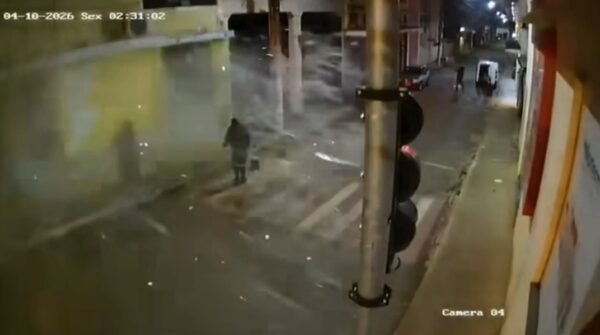
A Banco do Brasil branch was targeted by a heavily armed criminal group in the early hours of Friday (10/04) in the central area of Guidoval, a small city in the interior of Minas Gerais. The attack, which caused widespread damage and panic among residents, was recorded by security cameras and by locals who witnessed the action. According to the Military Police (PM), the assault took place around 3:00 am and involved approximately ten individuals operating in a coordinated manner. The criminals used explosives to breach the bank structure, and at least three suspects have been arrested so far, while others remain at large.
This Content Is Only For Subscribers
To unlock this content, subscribe to INTERLIRA Reports.
Trail of Destruction
Residents of Guidoval reported moments of fear and chaos during the attack on the Banco do Brasil branch, which left a significant trail of destruction in the city center. According to the Military Police, at least eight criminals directly participated in the operation. Two men, aged 21 and 35, were arrested, and a 17-year-old minor was apprehended, while search efforts continue to locate the remaining suspects. Footage from surveillance cameras and videos recorded by residents show the intensity of the explosions, which damaged the bank’s structure and surrounding buildings. As a result of the attack, commercial activities in the area were suspended, and several streets were closed to allow forensic teams to carry out their work. At least one ATM was destroyed by the blast. Authorities have not yet disclosed the amount of money stolen or confirmed whether other valuables were taken from the site.
Explosives
A Bomb Disposal Unit from the Special Police Operations Battalion (BOPE) in Belo Horizonte was deployed to the scene to assess the presence of additional explosive devices and ensure the safety of the area. The operation was concluded on Friday morning, with no further explosives detected. Despite this, access to the affected streets remained restricted while the Civil Police forensic team continued its investigation. Residents in the immediate vicinity were temporarily prevented from leaving their homes during the inspection process. The case is being handled by the Civil Police station in the nearby city of Ubá, which is responsible for the ongoing investigation.
Blocked Streets
Videos circulating on social media show that the criminals acted with a high level of planning and coordination. In order to delay the response of law enforcement and preventive pursuit, the group blocked access to the city by setting up barricades using burning vehicles and tires. They also scattered sharp metal objects along the roads to puncture the tires of police vehicles. The footage further shows armed individuals securing the perimeter while others entered the bank branch to carry out the explosions, indicating a division of roles within the group.
War-like atmosphere
Residents and business owners described the situation as resembling a war zone, with intense gunfire and explosions echoing through the streets. According to witnesses, the criminals fired shots indiscriminately, including in the direction of nearby homes, to intimidate the population and discourage any interference. A pharmacy located near the bank had its glass facade displaced by the force of the explosions, and at least one residence had its windows shattered. Witnesses also reported that the attackers moved back and forth along the street firing into the air throughout the operation. During their escape, the group continued shooting, including at a commercial establishment, further intensifying the sense of fear and insecurity among residents.
Analysis:
The attack in Guidoval fits a well-established pattern associated with what security analysts describe as the “Novo Cangaço,” a form of organized criminal activity characterized by heavily armed groups targeting financial institutions in small and mid-sized cities. Unlike traditional urban robberies, these operations are marked by high levels of planning, military-style coordination, and the use of explosives and long firearms. The objective is not only to access cash quickly but also to create a shock effect that paralyzes local response capacity.
The preference for smaller municipalities is strategic. Cities like Guidoval often lack specialized police units, rapid response teams, and advanced surveillance infrastructure, making them more vulnerable to large-scale assaults. Criminal groups take advantage of this by executing operations during early morning hours, when police presence is reduced and response times are longer. Tactics such as blocking access roads, using burning vehicles, and dispersing metal spikes are designed to isolate the area and delay reinforcements from nearby cities.

