

Online scams have become increasingly common, demanding greater attention to the links and online content we interact with daily. Cybercriminals are constantly creating new methods to deceive people for financial gain, ranging from falsified payment receipts to fake technician impersonations. In Brazil, around 71% of the population has already fallen victim to this type of crime, which shows the need for caution when clicking on links in WhatsApp messages, emails, or SMS, as well as avoiding sharing personal information with strangers. To reduce risks, it is essential to understand how these scams work, recognize their main types, learn what to do if you are targeted, and adopt preventive measures to protect your data and avoid financial losses.
This article is part of a series on digital security. You can read the other texts here.
This Content Is Only For Subscribers
To unlock this content, subscribe to INTERLIRA Reports.
Fake Cell Tower (Fake Antenna) Scam
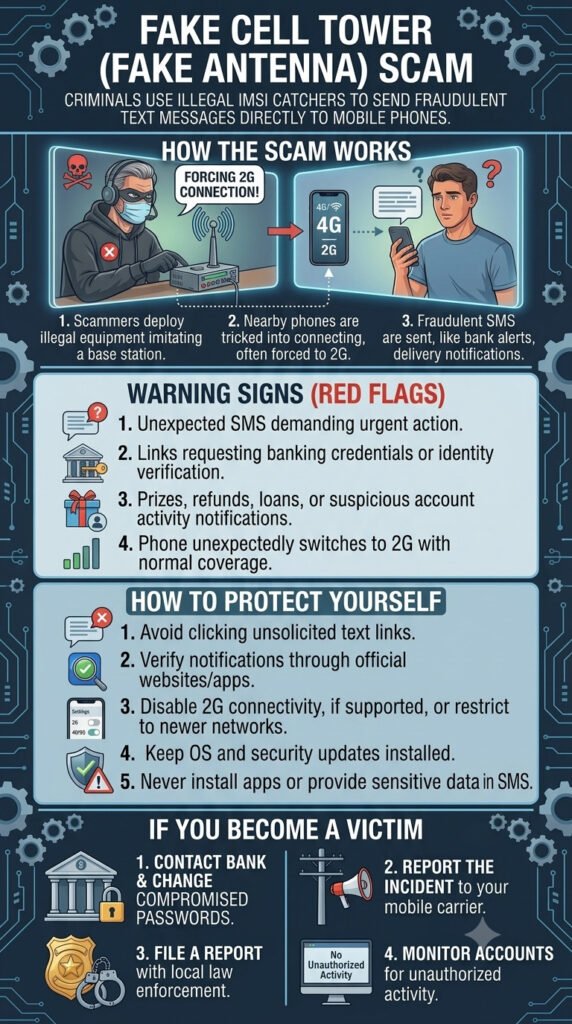
Criminals are increasingly using fake cellular base stations, also known as fake cell phone towers or IMSI catchers, to send fraudulent text messages directly to nearby mobile phones. By exploiting vulnerabilities in older mobile networks, scammers can temporarily interfere with legitimate carrier signals and deliver convincing SMS messages that appear to come from trusted organizations, increasing the chances that victims will click malicious links or share sensitive information.
How the Scam Works
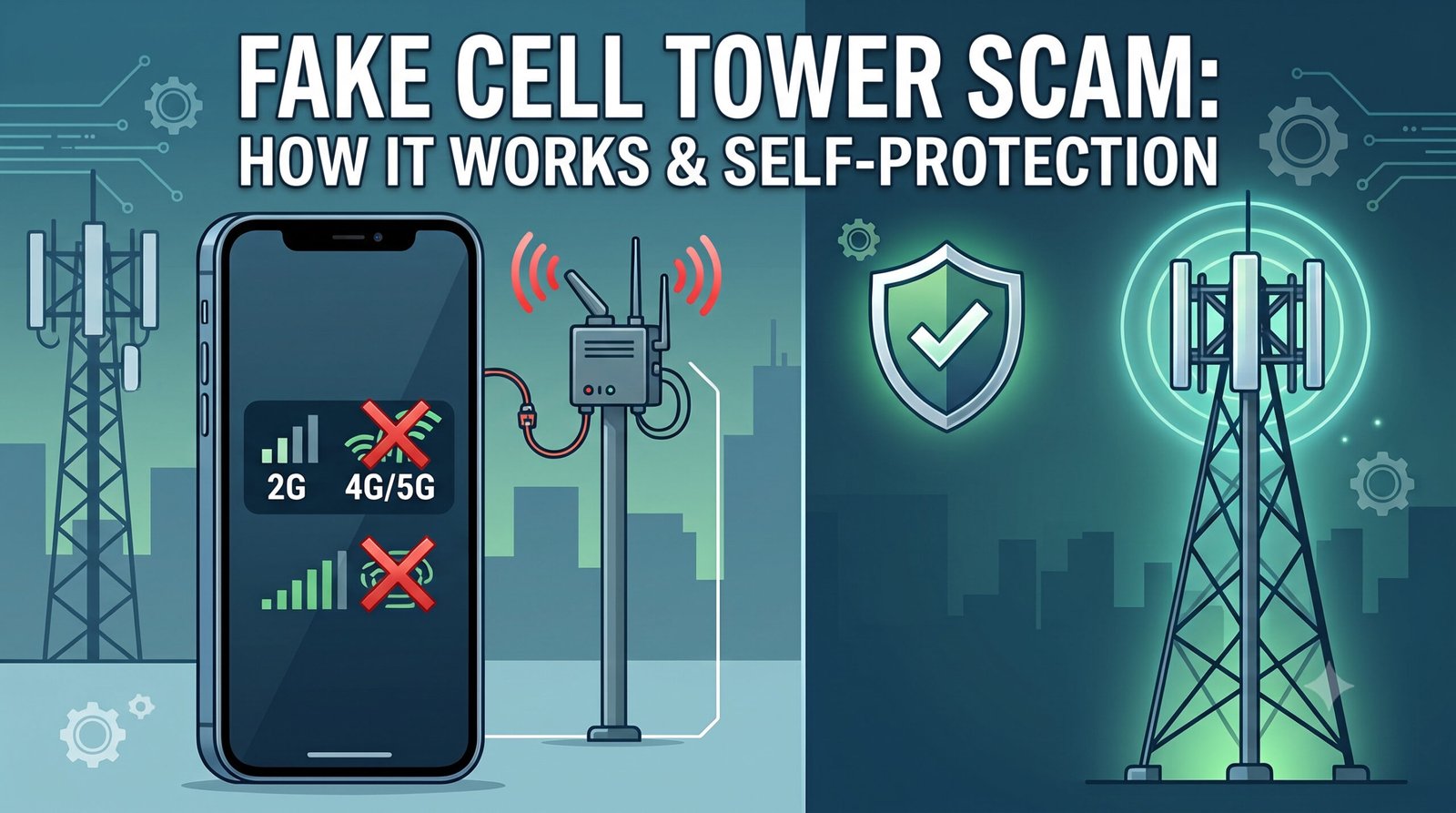
Scammers deploy illegal equipment that imitates a legitimate mobile network antenna. Nearby phones are tricked into connecting to the fake signal—often by forcing the device to switch from secure 4G or 5G networks to the less secure 2G network.
Once connected, victims receive fraudulent SMS messages promoting fake bank alerts, package delivery notifications, credit offers, betting prizes, account verification requests, or other urgent notices. These messages typically contain malicious links that direct users to phishing websites or encourage them to install malware or disclose personal and financial information.
Warning Signs
- Unexpected SMS messages claiming urgent action is required.
- Links requesting banking credentials, payment information, or identity verification.
- Messages announcing prizes, refunds, loans, or suspicious account activity.
- Your phone unexpectedly switching to a 2G network in an area with normally strong 4G or 5G coverage.
How to Protect Yourself
- Avoid clicking links received through unsolicited text messages.
- Verify any banking, delivery, or government-related notification through official websites or mobile apps.
- If your device supports it, disable 2G connectivity or restrict your phone to newer mobile networks.
- Keep your operating system and security updates installed.
- Never install applications or provide personal information based solely on an SMS message.
If You Become a Victim
If you clicked a suspicious link or shared sensitive information, immediately change any compromised passwords and contact your bank or service provider if financial accounts may have been exposed. Monitor your accounts for unauthorized activity, report the incident to your mobile carrier, and file a report with local law enforcement. Acting quickly can help reduce financial losses and limit further misuse of your personal information.