


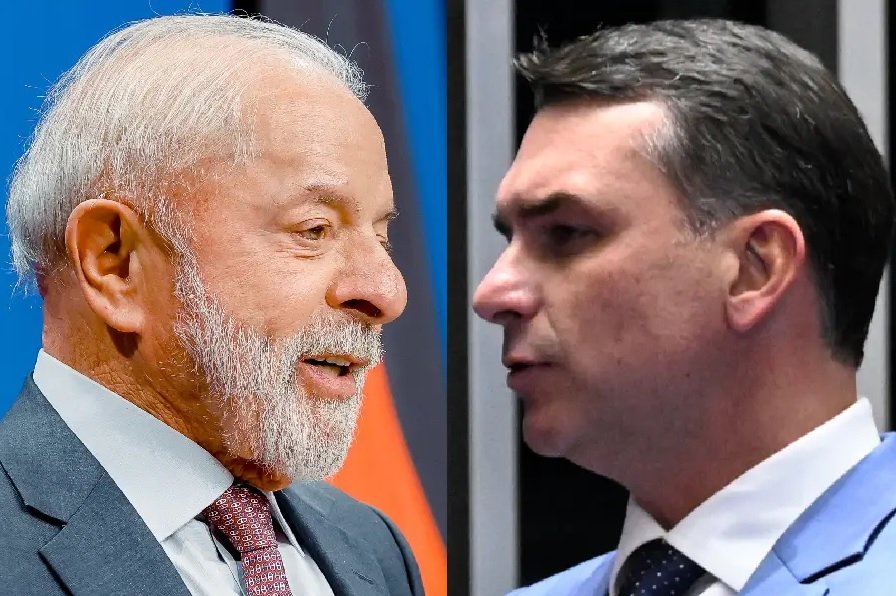
Brazil’s presidential runoff entered its final week with President Luiz Inácio Lula da Silva (PT) and Senator Flávio Bolsonaro (PL) intensifying their dispute across television, street demonstrations, digital platforms, judicial decisions and last-minute policy measures. The candidates exchanged accusations over corruption, public security and the economy during their first televised debate, while competing demonstrations mobilized tens of thousands of supporters. Lula’s campaign also challenged Meta over AI-generated political content and criticized Globo after Flávio met with company executives. Allegations involving lobbyist Roberta Luchsinger and businessman Willer Tomaz also entered the campaign. Meanwhile, Congress promulgated the end of the 6×1 work schedule, both candidates adjusted positions on sensitive issues, and the Lula government advanced measures involving MEIs, Bolsa Família and public transport whose combined fiscal impact has become part of the electoral debate.
This Content Is Only For Subscribers
To unlock this content, subscribe to INTERLIRA Reports.
The Campaigns
Lula and Flávio faced each other on Sunday (18/10) in the Band debate, marked by accusations involving corruption, family members, public security, and economic management. Flávio raised the case of Roberta Luchsinger, investigated alongside Lula’s son Fábio Luís Lula da Silva, while Lula questioned Flávio over Banco Master and Daniel Vorcaro. On the economy, Lula defended public investment, growth and income distribution, while Flávio highlighted food prices, public debt and the cost of living, also proposing a debt-renegotiation program. The candidates further clashed over organized crime, the Covid-19 pandemic, foreign policy and the end of the 6×1 schedule.
The dispute also intensified outside the debate. Lula’s campaign used Argentina under Javier Milei as a warning about possible social and economic consequences of a Flávio government, while Flávio’s allies accused the PT of campaigning through fear. Lula also placed Globo “under suspicion” after Flávio had lunch with Grupo Globo executives shortly before an interview with the broadcaster. Globo said the meeting was institutional, involved no journalists, and that Lula had also been invited to meet company executives.
Street and Digital Campaigns
Both sides demonstrated significant street-mobilization capacity. Estimates cited in the document put Flávio’s Avenida Paulista rally at around 72,000 people and a pro-Lula event in Copacabana at approximately 56,000. Pro-Lula demonstrations also occurred in at least 16 cities, involving political movements, students, trade unions and artists.
Digital campaigning remained another source of controversy. Meta modified its AI tool after it generated images with messages such as “Vote Flávio” while refusing similar prompts involving Lula. The company later said it had adopted measures to prevent political image generation based only on candidates’ first names, while Lula’s campaign petitioned the TSE alleging unequal treatment.
Electoral Court
TSE president Kassio Nunes Marques also revised his decision involving the “Exército do Lula,” a WhatsApp channel administered by deputy André Janones. Kassio initially imposed a 48-hour suspension before allowing the channel to resume, but authorized its immediate return after Lula’s campaign requested equivalent treatment for the pro-Flávio “Tropa do Flávio” channel.
Luchsinger and Willer
Two investigations further entered the campaign narrative. Luchsinger, investigated for alleged influence peddling and other offenses, said she intends to seek a plea agreement and alleged that Lulinha maintained frequent contacts with government ministers; the government and Education Minister Camilo Santana rejected allegations involving them. Separately, documents cited in a Federal Police investigation showed that Cathedral Holdings, linked to lawyer Willer Tomaz, paid for private-jet trips taken by Flávio between Portugal and France in 2025. Tomaz is being investigated in connection with money allegedly originating from the INSS fraud scheme. Flávio and Tomaz said the travel was private and involved no improper arrangement.
The End of the 6×1 Shift and Last-Minute Changes
Congress promulgated the constitutional amendment ending the 6×1 work schedule, one of Lula’s main runoff campaign issues. The measure establishes two weekly days off and gradually reduces the maximum workweek from 44 to 40 hours: first to 42 hours after 60 days and then to 40 hours after 12 months. Business organizations warned of higher labor costs, but the proposal passed both houses with broad support.
Flávio substantially changed his position on the proposal. After previously criticizing it and warning of economic consequences, he announced support for the amendment. His allies nevertheless told business representatives that, if elected, he would seek greater flexibility in working-hour arrangements rather than reverse the reform.
Lula also shifted position on public security by supporting a reduction of the age of criminal responsibility to 16 for heinous crimes. The position differs from views he expressed in previous administrations, although he argued that incarceration alone would not solve youth crime and that offenders also require psychological and social assistance.
The Electoral Package and Its Cost
The Lula government advanced a series of economic and social measures aimed at workers, low-income households and microentrepreneurs. Congress approved an increase in the MEI annual revenue ceiling from R$81,000 to R$100,000 in 2027 and R$140,000 in 2028, while Lula announced the Prosperar MEI package involving debt relief, credit, and support for small businesses. Around 3.6 million MEIs hold approximately R$12.6 billion in federal debts; one measure provides forgiveness of debts of up to R$5,000, with an estimated fiscal impact of R$5 billion.
Bolsa Família payments were also brought forward immediately before the runoff. October deposits were concentrated into three dates beginning on October 19, six days before the second round. The government said the change aimed to reduce the impact of drought and extreme weather on vulnerable families. The move followed a previously announced 15.04% increase that raised the minimum benefit from R$600 to R$691 per family.
Lula additionally announced plans to send Congress a constitutional amendment guaranteeing free public transport on weekends. He said part of the financing could come from parliamentary amendments. The final funding structure had not yet been defined.Taken together, measures adopted or announced by Lula’s government during the electoral period were estimated at approximately R$290 billion for 2026 and 2027. The package includes fuel subsidies and tax reductions, credit measures, expansion of Pé-de-Meia, MEI initiatives, and other policies. Preliminary calculations by the Senate’s Independent Fiscal Institution indicated that the measures could add around 1.2 percentage points to gross public debt by the end of 2027, potentially taking it to 86.4% of GDP. The Finance Ministry said the measures would not compromise fiscal targets, while the Planning Ministry argued that some responded to exceptional economic and social circumstances rather than electoral considerations.
Analysis:
The final stage of the campaign shows an increasing overlap between electoral competition, government policymaking, judicial intervention and mass mobilization. Both candidates have adjusted positions on high-profile issues while using investigations and allegations involving their opponents as campaign material. Disputes involving Meta, WhatsApp networks and the TSE also indicate that digital platforms and electoral-court decisions remain potential sources of controversy before voting.
From a corporate security and political-risk perspective, the main short-term concern is heightened mobilization around the October 25 runoff, particularly demonstrations in major urban centers and reactions to judicial or campaign-related controversies. Beyond election day, the fiscal impact of measures announced during the campaign and the implementation of the 6×1 reform, MEI initiatives and transport proposals could generate additional regulatory, budgetary and operational pressures.
Sources: Folha de SP [1], [2], [3], [4], [5], [6], [7], [8], [9], [10], [11], [12], [13], [14], [15], [16]; Poder 360; O Globo [1], [2] ,[3], [4], [5], [6], [7], [8]; G1 [1], [2].

