

Online scams have become increasingly common, demanding greater attention to the links and online content we interact with daily. Cybercriminals are constantly creating new methods to deceive people for financial gain, ranging from falsified payment receipts to fake technician impersonations. In Brazil, around 71% of the population has already fallen victim to this type of crime, which shows the need for caution when clicking on links in WhatsApp messages, emails, or SMS, as well as avoiding sharing personal information with strangers. To reduce risks, it is essential to understand how these scams work, recognize their main types, learn what to do if you are targeted, and adopt preventive measures to protect your data and avoid financial losses.
This article is part of a series on digital security. You can read the other texts here.
This Content Is Only For Subscribers
To unlock this content, subscribe to INTERLIRA Reports.
Home-Made Deepfake Scams
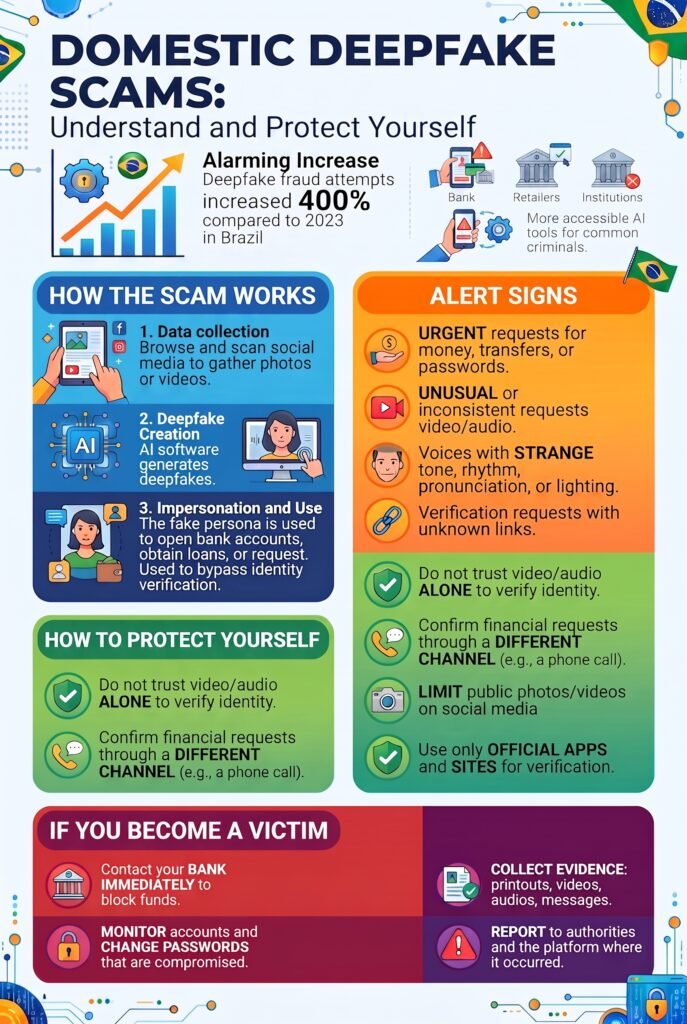
The growing availability of artificial intelligence (AI) image and video-generation tools is making deepfake scams more accessible to ordinary criminals in Brazil. Unlike sophisticated attacks that require advanced technical knowledge, “home-made deepfakes” can be created using widely available applications to impersonate relatives or acquaintances.
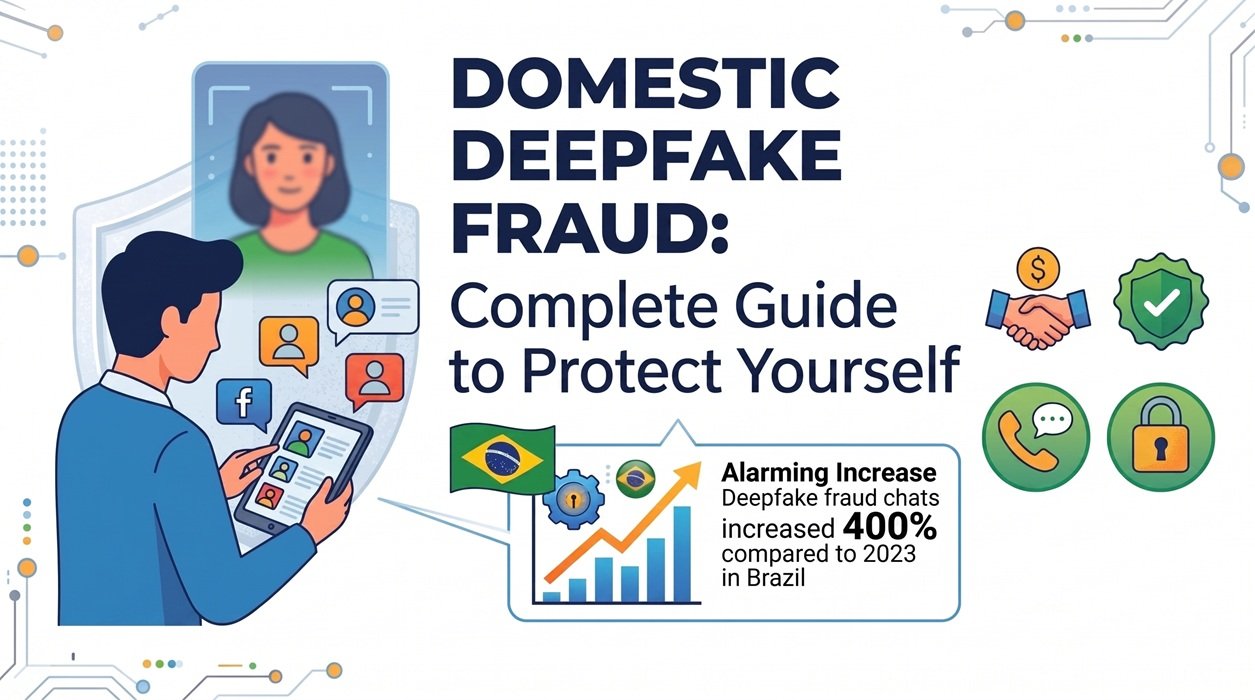
According to Unico, a Brazilian identity-verification company, home-made deepfake fraud attempts increased by 400% in the first half of this year compared with the same period last year. Criminals may use them to target banks, financial institutions, online retailers, and individuals, attempting to bypass identity-verification systems.
How the Scam Works
- Criminals may collect photos, videos, or other personal information from social media and use AI applications to recreate or manipulate a person’s face, voice, or appearance.
- The resulting deepfake can be used to impersonate the victim when opening accounts, obtaining loans, making purchases, or completing identity-verification procedures.
- The technology can also support social engineering scams. For example, a criminal may create a fake video or voice message appearing to come from a relative and use it to request an urgent money transfer.
Warning Signs
- Videos, images, or voice messages that seem unusual or inconsistent with the person.
- Urgent requests for money, transfers, passwords, or sensitive information.
- Unnatural facial movements, expressions, lighting, or image quality.
- Voices with unusual tone, rhythm, pronunciation, or emotional expression.
- Requests to complete identity verification or approve transactions through unfamiliar links or applications.
- A supposed family member who refuses or is unable to confirm their identity through another channel.
How to Protect Yourself
- Do not rely solely on a video, photograph, or voice message to verify someone’s identity.
- Confirm unusual financial requests through a separate communication channel, such as a phone call.
- Limit the amount of personal photos and videos publicly available on social media.
- Never provide passwords, banking credentials, or authentication codes based solely on a video or audio message.
- Use only official applications and websites when completing identity verification.
- Be especially cautious when a family member or friend makes an urgent request for money.
Remember that AI can convincingly imitate faces and voices, making independent verification increasingly important.
If You Become a Victim
- If you transferred money because of a deepfake scam, contact your bank immediately and ask about procedures to block or recover the funds.
- If personal information was exposed, monitor your accounts for unauthorized activity and change compromised passwords. Keep screenshots, videos, audio files, messages, transaction receipts, and other evidence related to the scam.
- Report the incident to the appropriate authorities and to the platform where the fraudulent content appeared. Acting quickly can help limit financial losses and prevent further misuse of your identity or personal information.