


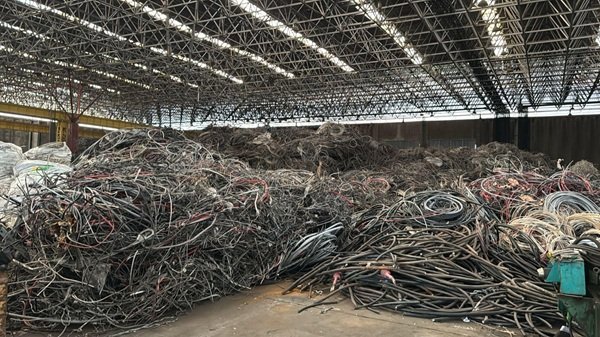
Since 2021, nearly 500 km of traffic light cables and 488 controllers—the units responsible for operating traffic signals—have been stolen across the city of Rio de Janeiro. The search for solutions to combat this type of crime, which has caused R$27 million in losses over the past five years, prompted City Hall to create the Integrated Task Force to Combat Cable Theft and Fencing. Announced on Tuesday (01/09), the group brings together municipal and state agencies, as well as utility companies.
This Content Is Only For Subscribers
To unlock this content, subscribe to INTERLIRA Reports.
Task Force
The group’s proposals include identifying the locations, times, and patterns associated with cable thefts; mapping areas where incidents repeatedly occur; identifying scrapyards and businesses involved in purchasing, storing, and selling stolen cables and other materials; and seizing illegally obtained goods. Operations will be coordinated among the Civil and Military Police, the Municipal Secretariat of Public Order, the Municipal Guard, CET-Rio, and the electricity utility company Light.
Escalation During the Pandemic
“Cable theft and the trade in stolen cables have intensified since the pandemic. We are experiencing an epidemic of these crimes, which affect citywide operations, including traffic lights, electricity distribution, and telephone services. Scrapyards fuel this supply chain because they purchase these materials in large quantities,” explained Eduardo Cavaliere, who also warned about the broader impact of the illegal market.
Proposals
Two properties in the Sampaio neighborhood, located in the Greater Méier area—the region most affected by these crimes—are already undergoing expropriation proceedings and will be repurposed as part of the city’s response. Another proposed solution involves replacing utility pole and traffic light cables with alternative materials that have little or no commercial value, such as copper-clad steel cables for traffic signals.
Data
Greater Méier and Greater Tijuca top the list of affected areas and will be the focus of the initiative’s first phase. Together, they account for 25% of all incidents recorded since 2021, with major hotspots concentrated along Rua 24 de Maio, Avenida Marechal Rondon, and Boulevard 28 de Setembro. According to City Hall, 457 km of traffic light cables and 488 controllers have been stolen since 2021, resulting in losses totaling R$27 million. In 2024, the city recorded 82 km of stolen cables, compared with 107 km in 2025, representing an increase of 30.7%. Between January and August 2026, another 74.5 km of cables and 39 traffic light controllers were stolen, causing approximately R$3.2 million in losses to the municipality.
Losses of R$ 69 million
The Grande Méier area has seen 125,586 cable thefts since 2021. The list continues with Grande Tijuca (116,352), Barra/Jacarepaguá (56,290), São Cristóvão (46,063), the North Zone (45,283), the City Center (44,042), the West Zone (18,539), and the South Zone (5,610). The highest theft rate occurs at the intersection of Rua Radial Waldir Amaral and Rua 28 de Setembro, where 87 thefts have been recorded at a single traffic light—averaging one every three days. Regarding the city’s streetlights—operated by Rioluz and responsible for public lighting—Rio recorded 94,800 incidents between 2021 and August 2026, equivalent to 1,816 kilometers of cable. Financial losses during this period reached R$ 42 million. Combined, the amounts Rioluz and CET-Rio had to invest to maintain this equipment total R$ 69 million. Residential power supplies are also affected in this context. Between January and July of this year, 780 thefts were recorded—averaging three to four incidents per day—involving the theft of approximately 80 km of cable and estimated losses of R$ 10.4 million. The highest incidence is in the City Center and the South Zone, particularly in Copacabana.
Analysis:
Cable theft in Rio de Janeiro has evolved into a persistent form of infrastructure crime with consequences that extend far beyond the immediate cost of replacing stolen materials. Nearly 500 km of traffic-light cables and 488 controllers have been stolen since 2021, generating R$27 million in losses and disrupting essential urban services. The 30.7% increase in stolen cable length between 2024 and 2025, followed by another 74.5 km stolen through August 2026, indicates that the problem remains structurally entrenched rather than episodic. Traffic signals, electricity distribution and telecommunications are particularly vulnerable because they combine extensive physical networks with materials that can be quickly removed and converted into cash.
The creation of an Integrated Task Force is therefore relevant because cable theft is sustained by an organized supply chain rather than by isolated acts of opportunistic theft. Mapping hotspots, identifying recurrent patterns and investigating scrapyards and businesses that purchase or handle stolen materials can help authorities move from reactive replacement toward disruption of the market that creates demand for stolen infrastructure.

