


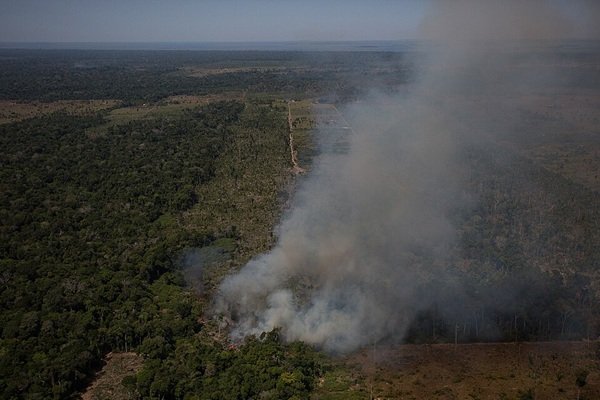
Recent data shows an increase in violence against environmental activists in Brazil in 2025. The ranking by the British NGO Global Witness, released on Wednesday, September 16, places Brazil in second position for the number of environmentalists murdered in 2025, with 26 deaths, more than double the count in 2024. Half of the crimes occurred in Rondônia and Pará, where the main reason for the deaths in the country was land disputes, a historical focus of conflict between Indigenous peoples and large landowners.
This Content Is Only For Subscribers
To unlock this content, subscribe to INTERLIRA Reports.
Data from Global Witness
The number of environmental defenders murdered in Brazil more than doubled in 2025: there were 26 homicides last year compared to 12 in 2024. The country fell from 4th to 2nd place in the global ranking of environmentalist deaths produced by the international NGO Global Witness, positioned between Colombia (39 deaths) and Honduras (12 deaths). This index represents a setback, returning Brazil to the position it held in 2023 and 2022. The country recorded 36 deaths at the start of the historical series in 2012 and reached its peak in 2017 (57); since 2018, the grim figure has hovered around 20 deaths per year (except in 2024). Colombia and Brazil accounted for 52% of all environmental activist murders worldwide last year.
Reasons for the Murders
Nearly all documented cases in Brazil in 2025 were primarily driven by land disputes, including 7 linked to Indigenous territories and 14 to family farmers. According to the report, Rondônia and Pará together account for half of the deaths. Land disputes are a historical focus of conflict between Indigenous peoples and large landowners in the country. In the region, traditional communities face pressure from the advancing agricultural and extractive frontiers. The region also suffers from an increase in violence driven by the expansion of criminal factions, which in recent years have diversified their operations into illegal mining and logging, impacting deforestation and land disputes.
Analysis
The NGO’s report demonstrates a significant increase in violence in the region. The context of land tenure and land use is highly fragmented and contentious, involving claims from Indigenous communities, family farming, and, increasingly, the presence and advance of criminal factions. There is a persistent gap in the State’s capacity to guarantee the safety and integrity of vulnerable populations, such as Indigenous peoples and environmentalists.
This combination of factors results in a multiplication of threats and an increase in both institutional and community vulnerability. Any investment made in the region demands a meticulous analysis of the social, environmental, and operational risks stemming from the local context of insecurity.

