


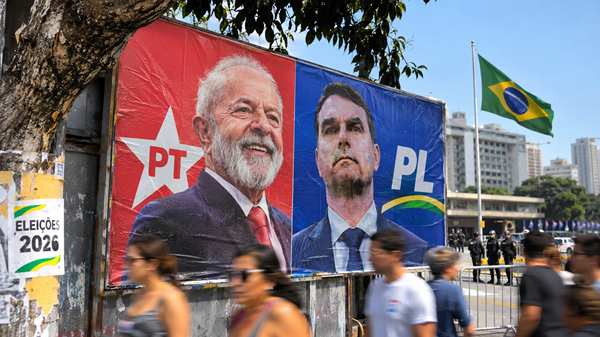
The 2026 Brazilian presidential election, held in two rounds on October 4 and October 25, was marked by a series of political violence incidents across different regions of the country. During the race between President Luiz Inácio Lula da Silva (PT) and Flávio Bolsonaro (PL), candidates, supporters, and voters fell victim to threats, physical assaults, and attacks, some resulting in fatalities. The incidents occurred during demonstrations, campaign events, on election day, and during post-result celebrations. The highly polarized political climate heightened tensions between groups of differing ideological stances, raising serious concerns regarding public security and the persistence of violence even after the conclusion of the electoral process.
This Content Is Only For Subscribers
To unlock this content, subscribe to INTERLIRA Reports.
Rise in Political Violence During the Campaign
According to data from the 4th edition of the Political and Electoral Violence in Brazil study, conducted since 2016 by civil society organizations Justiça Global and Terra de Direitos, 134 incidents of political violence were recorded during the 50 days of the first-round campaign, representing an average of one occurrence every nine hours. During the first round of the 2022 presidential election, the study documented 121 cases over 63 days of monitoring, an average of 1.92 incidents per day. This rate increased to 2.68 per day, representing a 40% rise. The mapping accounted for 64 threats, 33 offenses, 19 physical assaults, 11 targeted attacks, 5 criminalizations, and 2 homicides. The survey noted that out of the 134 total incidents, the vast majority (102, or 76%) targeted officially registered candidates. Women were the most frequent targets: among candidates, women accounted for approximately 59% of victims, despite comprising only 35% of all candidacies.
Second Round Incidents of Violence
Violence also marked the days leading up to the second round, held on October 25. On October 24, in Bonito (Mato Grosso do Sul), a 16-year-old was identified as the shooter who killed a 34-year-old man and injured another during a brawl. In Porto Esperidião (Mato Grosso), two men were killed and two others injured following an argument that escalated into gunfire at a gas station. In Montes Claros (Minas Gerais), city councilor Iara Pimentel was hospitalized after being struck in the face by a stone during a motorcade. On voting day, a woman was stabbed at the Tietê Bus Terminal in São Paulo in an incident alleged to be motivated by politics and homophobia. In Rio de Janeiro, a voter was filmed performing a Nazi salute and directing antisemitic slurs at a Jewish man after casting her vote at a polling place in Botafogo.
Federal Government Response
Starting on Saturday, October 24, the eve of the second round, the federal government recorded 45 occurrences of political violence involving 47 victims and ten deaths, three of whom were Indigenous individuals. Most cases occurred between Sunday night and Monday during celebrations following Lula’s victory over Flávio Bolsonaro in the presidential race. The data was released this Wednesday by the Ministry of Justice and Public Security (Ministério da Justiça e Segurança Pública – MJSP), which announced measures to prevent further incidents and track investigations into crimes committed in the context of the 2026 election. Paraná, São Paulo, Mato Grosso do Sul, Minas Gerais, and Santa Catarina accounted for the highest number of occurrences. Given the severity of these reports, the federal government announced that the Federal Police will oversee investigations in coordination with state Public Prosecutor’s Offices, alongside dedicated monitoring of potential crimes involving law enforcement personnel. Officials also acknowledged the need to improve inter-institutional coordination to ensure fragmented investigations do not hinder accountability.
Analysis
The incidents documented during the 2026 elections highlight how political polarization can degrade the general security environment, particularly around rallies, campaign rallies, and the period immediately following the announcement of election outcomes. The varied nature of the incidents, ranging from threats against candidates to brawls among voters and violent assaults in public spaces, demonstrates that exposure to violence is not restricted solely to politicians or voting stations.
For corporations operating in Brazil, this environment underscores the importance of integrating electoral calendars and social tension monitoring into risk assessments and corporate security protocols. Recommended practices include maintaining continuous situational awareness of political gatherings, adjusting transit routes and schedules to local conditions, and strengthening proactive safety communications with staff, particularly during windows of heightened political volatility. The lingering violence following the closure of polls further indicates that operational and security risks linked to the electoral cycle can persist well after results are settled.

