


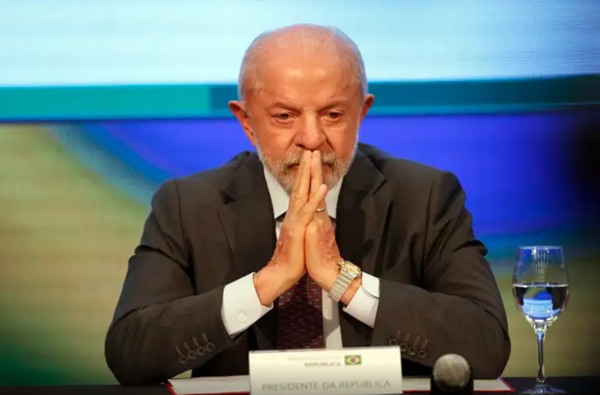
The week following President Luiz Inácio Lula da Silva’s reelection was marked by preparations for his fourth administration, strong financial-market pressure for fiscal adjustment and the reorganization of the political right after Flávio Bolsonaro left Brazil for the United States. Lula is reviewing his cabinet, redefining relations with Centrão parties and preparing appointments that could reshape institutions such as the Central Bank. Flávio traveled through Argentina to Miami after being ordered to surrender his passports, challenged the election result without presenting evidence of fraud, and briefly described himself as Brazil’s “president-elect” before changing the wording to “leader of Brazil.” His departure raised diplomatic concerns, although the Lula government chose not to turn the episode into a dispute with U.S. President Donald Trump. In Congress, negotiations over government positions, Jair Bolsonaro’s legal situation and electoral rules are already shaping the next political cycle.
This Content Is Only For Subscribers
To unlock this content, subscribe to INTERLIRA Reports.
Lula Prepares His Fourth Government
Lula is expected to reorganize his administration while opening space for parties that did not formally support him against Flávio Bolsonaro. Camilo Santana is being considered for the Chief of Staff position, while Geraldo Alckmin and reelected Piauí governor Rafael Fonteles are among the names cited for the Finance Ministry. Some ministers may leave the government, while Alexandre Padilha is expected to remain close to the presidential core.
The president also intends to change how positions are distributed to Centrão parties, linking ministerial and executive appointments more directly to congressional support rather than mainly to caucus size. At the same time, he wants Davi Alcolumbre and Hugo Motta reelected as presidents of the Senate and Chamber, respectively, to facilitate relations with a more conservative Congress.
Budgetary and institutional pressures will also shape the new administration. The Education Ministry estimates that at least R$7.2 billion in additional resources will be needed to finance the expansion of student scholarships promised during the campaign, while other education commitments remain without defined costs. Lula will also be able to nominate six Central Bank directors by the end of 2027, potentially changing the composition of the Copom. Economists cited in the document warned that appointments perceived as more tolerant of inflation could increase market uncertainty.
Flávio Bolsonaro Leaves Brazil and Challenges the Result
Flávio Bolsonaro traveled to Miami with his family after leaving Brazil through Argentina using an Italian passport, despite an STF order requiring him to surrender his Brazilian and diplomatic passports. He had been summoned by the Federal Police to deliver the documents and is investigated in cases involving the financing of the Dark Horse film and his relationship with lawyer Willer Tomaz. The United States subsequently granted visas to Flávio and his family.
His defeat means that, after his Senate term ends, he will face two criminal investigations without parliamentary jurisdiction. One involves alleged corruption and money laundering connected to former Banco Master owner Daniel Vorcaro and financing for the Dark Horse project. The second concerns suspected money laundering and his relationship with Willer Tomaz. Flávio denies wrongdoing.
From the United States, Flávio released a letter contesting Lula’s victory and initially describing himself as the “true president-elect of Brazil.” The wording was later changed to “leader of Brazil.” He alleged electoral irregularities, criticized the STF, and said he intended to lead the opposition from abroad, but presented no evidence proving fraud.
One of his arguments concerned the two-hour extension of voting on election day. However, TSE data showed that only 34,330 votes—0.03% of the total—were cast after 17h, while Lula won by approximately 4.43 million votes, meaning the extension could not have changed the result.
Government Seeks to Avoid a Diplomatic Crisis
The Lula administration decided not to transform Flávio’s presence in the United States into a direct confrontation with Donald Trump. Reports cited in the document said a White House communications official helped arrange the private aircraft used by Flávio and that the U.S. government granted visas to his family. Planalto officials nevertheless concluded that an aggressive reaction could damage broader commercial and political relations.
The government therefore intends to leave legal questions surrounding Flávio’s departure to the judiciary and decided against publicly pressuring Trump to recognize the election result, arguing that this could unnecessarily increase Flávio’s political relevance.
The Right Reorganizes After Flávio’s Defeat
Several conservative allies have distanced themselves from Flávio’s challenge while maintaining opposition to Lula. São Paulo Governor Tarcísio de Freitas said the election was over, the ballot-box result must be respected, and the right should focus on building a strong opposition. Santa Catarina Governor Jorginho Mello adopted a similar position, while the MDB and PSD reiterated confidence in the electoral system.
These reactions strengthen Tarcísio’s position as an alternative conservative leader and indicate that important sectors of the right are shifting from contesting the result to organizing opposition to Lula. Flávio nevertheless intends to remain politically active from abroad and has supported Senator Rogério Marinho for the Senate presidency.
Political Articulations in Congress
Congress is becoming the main arena for negotiations between Lula’s government, Centrão parties and the strengthened conservative opposition. Senate President Davi Alcolumbre plans to discuss with Lula a humanitarian pardon for former president Jair Bolsonaro or, alternatively, an amnesty through Congress. At the same time, he is seeking right-wing support for his reelection and wants to reduce pressure for impeachment proceedings against STF justices, particularly Alexandre de Moraes.
The strategy faces resistance because at least 49 of the 81 senators expected in the next legislature have expressed varying degrees of support for impeaching STF ministers; 54 votes are required for removal.
Parties that lost ground in the election are also considering changes to electoral rules before the new Congress takes office. Leaders are discussing replacing the proportional system with a mixed district model in which half of federal deputies would be elected in individual districts and the other half through party lists. The proposal would reduce the influence of high-vote candidates who currently help elect several colleagues, although the drawing of districts could itself become politically contentious.
Markets React to Lula’s Victory
Financial markets reacted sharply to Flávio’s defeat and uncertainty over Lula’s fiscal policy. The Brazilian stock market fell approximately 18% during the week after the election, its worst weekly performance since 2020, erasing around R$996.5 billion in market value. The dollar recorded its largest weekly gain in 18 years, while future interest rates rose substantially.
Foreign investors withdrew R$2.8 billion from the stock market on the first trading day after Lula’s victory, following another R$2.9 billion outflow immediately before the election. Analysts linked the movement to the dismantling of positions based on expectations of a Flávio victory and fears that the reelected government may not adopt sufficiently strong measures to stabilize public finances.
Inflation expectations also deteriorated. Market participants projected IPCA inflation of 5.3% for 2027 and 4.3% for 2028, while gross public debt was already close to 83% of GDP. Economists cited in the annex estimated that a fiscal adjustment of at least R$250 billion over the next four years may be necessary.
Inside the administration, however, the scale of the adjustment remains disputed. Finance and Planning officials are considering spending reductions and structural measures, while Lula has resisted initiatives that could be interpreted as abandoning campaign commitments or weakening social programs.
Pressure for Big Tech Regulation
The controversies involving social-media platforms during the election strengthened efforts to approve new regulation of major technology companies before the end of 2026. The government and the bill’s rapporteur want Congress to vote on legislation focused on competition in digital markets, giving a proposed “Digital Cade” powers to regulate and supervise companies considered systemically important.
The proposal could affect companies including Google, Meta, Microsoft and Uber and impose obligations intended to reduce anticompetitive practices. Negotiations remain difficult because Centrão parties want the debate to also include social-network rules and electoral advertising, while the congressional “digital caucus” opposes broader regulation. Resistance from the United States is cited as another obstacle.
Analysis
The post-election environment combines political transition with significant economic and institutional uncertainty. Lula enters his fourth administration with the advantage of incumbency but faces a stronger conservative Congress and immediate pressure to restore fiscal credibility. His ability to structure a workable congressional coalition while containing spending pressures will be central to governability.
Flávio Bolsonaro’s departure for the United States adds political tension, but the refusal of important allies to support his challenge reduces the immediate risk of a broader institutional rupture. For corporate security monitoring, fiscal policy, congressional negotiations, regulation of digital platforms and persistent organized-crime and cybersecurity vulnerabilities remain the main issues to follow during the transition.
Sources: Folha de SP [1], [2], [3], [4], [5], [6], [7], [8], [9], [10], [11], [12], [13], [14], [15], [16], [17], [18], [19].

