


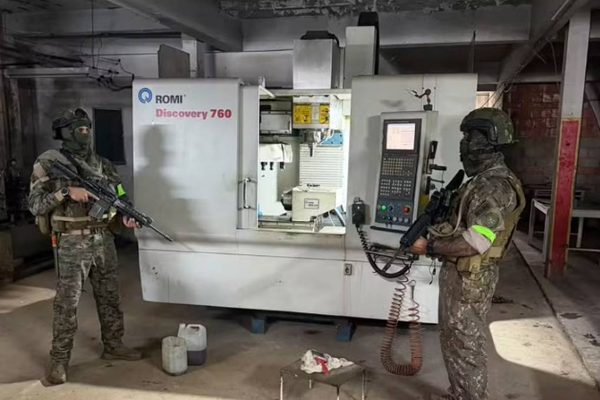
On Tuesday, November 17, 2026, the Special Police Operations Battalion (BOPE) uncovered an illicit rifle manufacturing facility in Morro do Timbau, within the Complexo da Maré favela complex in Rio de Janeiro’s North Zone. The discovery, stemming from intelligence sharing between the Federal Police (PF) and the Military Police, occurred nearly five months after the arrest of the suspect accused of managing the site. According to the PF, the workshop had an estimated production capacity of up to 3,000 rifles per year, though the exact volume manufactured remains undetermined. The operation marks the latest development in an investigation launched following the seizure of 47 rifles at a mansion in Barra da Tijuca in 2023. Over a three-year span, investigators identified production sites in Minas Gerais and São Paulo, revealing that the network supplied the Red Command (Comando Vermelho – CV) and later began negotiating with its rival, the Pure Third Command (Terceiro Comando Puro – TCP).
This Content Is Only For Subscribers
To unlock this content, subscribe to INTERLIRA Reports.
From the Barra da Tijuca Seizure to Interstate Manufacturing
In October 2023, the Federal Police arrested Silas Diniz Carvalho, identified as the scheme’s ringleader, in Barra da Tijuca, seizing 47 rifles from the property. Subsequent inquiries uncovered a clandestine workshop in Belo Horizonte (Minas Gerais) that same year, followed by another in Santa Bárbara d’Oeste (São Paulo) in August 2025. According to the PF, the network relocated its manufacturing base to interior São Paulo after the Minas Gerais facility was shut down. Operation Forja (Operação Forja) expanded in October 2025 with search warrants executed across Rio de Janeiro, São Paulo, and Minas Gerais, alongside a Federal Court order freezing R$ 40 million in suspect assets. At the São Paulo site, agents seized assembled rifles alongside more than 30,000 firearm parts and components, providing authorities with a clear measure of the group’s industrial scale.
A Supply Network Serving Rival Factions
According to investigators, the syndicate manufactured roughly 3,500 rifles annually between 2023 and 2025. A portion of the weaponry was delivered to the CV, supplying territories such as Complexo do Alemão and Rocinha. Investigators noted that the group subsequently opened supply negotiations with the TCP, which controls sections of Maré. On June 30, 2026, during the second phase of Operation Forja, the PF arrested Clayton Combe Ribeiro inside the Maré complex on suspicion of managing the facility later uncovered in November. Police reported that he had been sheltered by TCP members; two other men were arrested in the same raid, and agents seized one rifle. That arrest directly linked the interstate manufacturing investigation to the Morro do Timbau workshop located months later.
Production Capacity and Operational Impact in Maré
The Federal Police estimated that the Morro do Timbau workshop had the capacity to produce up to 3,000 rifles per year, although the actual output prior to its dismantling remained unconfirmed at the time of reporting. For context, the Institute of Public Security (ISP) recorded the seizure of 920 rifles across the entire state of Rio de Janeiro in 2025. The facility was discovered on the second consecutive day of Military Police operations targeting the TCP in Maré. The raids disrupted classes at 43 local schools, while criminal elements set fire to street barricades. The previous day, 38 municipal bus lines were forced to divert their routes after a bus blocked traffic across Avenida Brasil near Vila do João; according to the transit operators’ association, the vehicle had suffered an electrical failure.
Analysis
The relocation of manufacturing operations from Minas Gerais to São Paulo demonstrates how illicit supply networks rapidly reorganize following the dismantling of a production node. Meanwhile, the syndicate’s willingness to supply rival criminal factions expands the market reach of independent arms brokers and underscores the necessity of interstate law enforcement cooperation to disrupt weapons pipelines entering Rio de Janeiro.
For corporate organizations deploying field personnel or managing logistics corridors around Maré, the most immediate operational exposure stems from mobility disruptions during police raids. Avenida Brasil serves as a critical arterial thoroughfare whose traffic flows can be severely compromised even when corporate operations take place entirely outside the complex. Monitoring road closures and public transit diversions prior to team dispatch and throughout transit windows enables security managers to adjust schedules and reroute vehicles in response to evolving ground conditions.
Sources: G1 [1], [2], [3]; CNN Brasil.

