


Summary
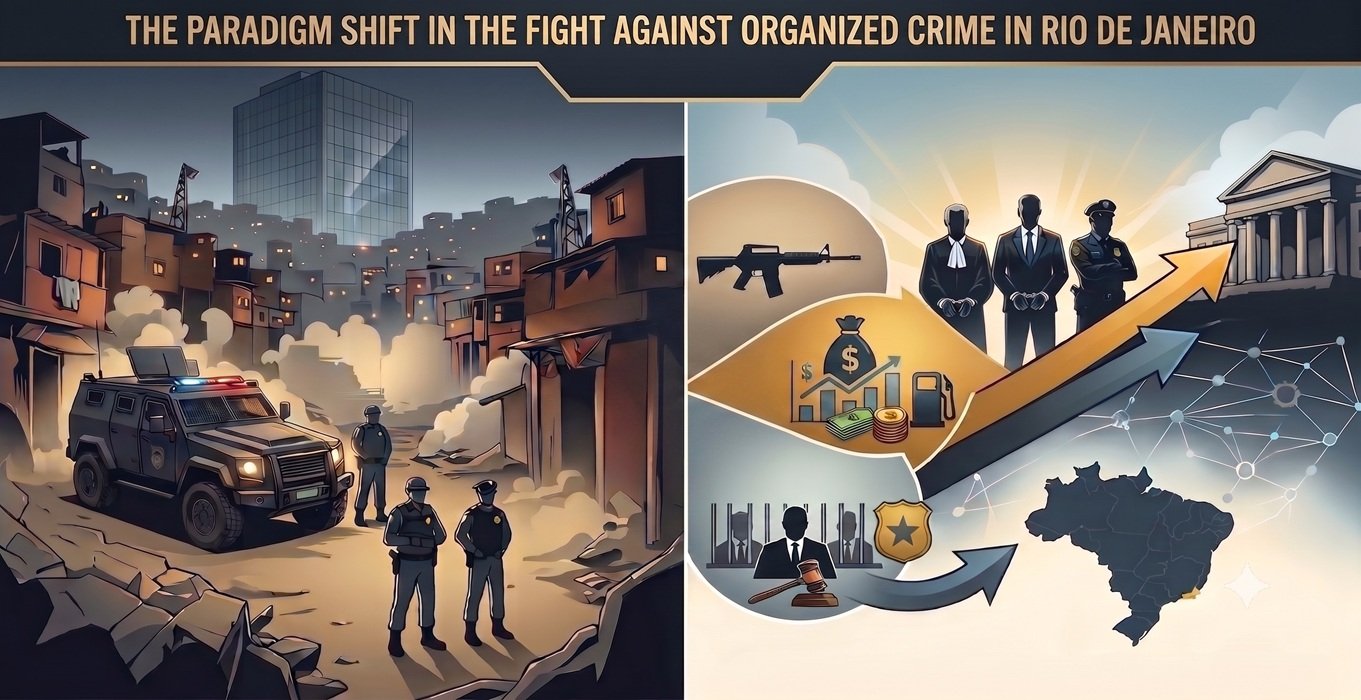
Over the past year, Rio de Janeiro has seen a wave of high-profile arrests that marks a sharp departure from routine street-level policing, turning the spotlight directly toward powerful figures within the system. Politicians, police officers, businesspeople, a federal appellate judge, and even a Federal Police chief investigator have been detained. These cases are not isolated — they are the result of a coordinated strategy that shifted the focus of law enforcement from street-level drug dealers to the people who finance, protect, and sustain organized crime from within the system. That shift traces back to a 2025 Supreme Court rule, ADPF 635, which reshaped how the state and federal governments are required to confront criminal organizations.
This Content Is Only For Subscribers
To unlock this content, subscribe to INTERLIRA Reports.
Three Fronts, One Strategy
Public security specialists describe the new approach as attacking three fronts of organized crime at the same time:
- The armed branch — the factions and militias that control territory through violence.
- The economic branch — fuel and merchandise smuggling, money laundering, and illegal gambling operations that fund criminal groups.
- The institutional branch — public officials, police, and politicians accused of supplying protection, inside information, and cover for these groups.
Three recent operations show what this looks like in practice — reaching the police, the state legislature, and the courts alike, and pointing to a single, coordinated pattern rather than isolated incidents.

The Old Model
For decades, fighting organized crime in Rio followed a predictable script: a police operation, an exchange of gunfire, weapons seized, a handful of low-level suspects arrested, and within days, business as usual resumed. Analysts describe it as a cycle with little lasting impact — costly, dangerous, and rarely reaching the people running the crime business.
What has changed recently is the target. Instead of focusing almost exclusively on front-line criminal workers, investigations are now also reaching the people who finance criminal groups, supply them with weapons, launder their money, and shield them from law enforcement — including public officials.
The Legal Trigger: ADPF 635
This shift stems from ADPF 635, widely known as the “Favela ADPF,” a constitutional case filed with Brazil’s Supreme Federal Court (STF) in 2019 by the Partido Socialista Brasileiro (PSB)[1]. The petition argued that Rio’s public security policy, built around high-lethality police operations in favelas, violated fundamental rights.
During the COVID-19 pandemic, a preliminary injunction limited police raids to exceptional, justified cases. The case’s merits were only decided in April 2025, when the STF unanimously ordered a package of measures for both the state and federal governments. Alongside rules meant to reduce police lethality, the ruling ordered the Federal Police to open a permanent, dedicated task force against organized crime in Rio de Janeiro, backed by a guaranteed budget increase, and instructed Brazil’s financial intelligence unit (COAF[2]), the Federal Revenue Service, and Rio’s state treasury to prioritize related financial investigations.
In doing so, the Court did not just restrict how police operate in communities — it built the institutional and budgetary foundation for investigations to go after the structures that keep criminal groups running.
Three Operations, One Pattern
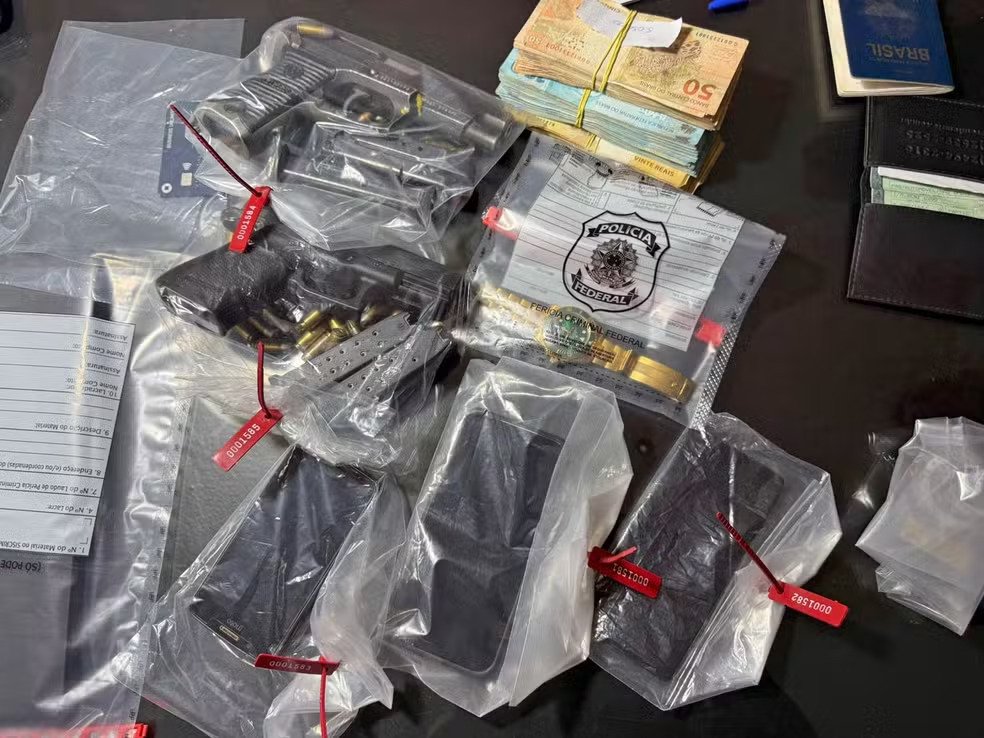
Operation Zargun (September 2025). On September 3, 2025, the Federal Police launched Operation Zargun in Rio de Janeiro, targeting a corruption scheme linking the Red Command (CV) leadership in the Complexo do Alemão favela to public officials. The operation executed 40 warrants — 18 preventive arrests and 22 search-and-seizure orders — and seized roughly R$40 million (about US$7 million) in assets. Among those arrested was state legislator Thiego Raimundo dos Santos Silva, known as “TH Joias,” accused of participating in an armed criminal organization, smuggling, illegal telecommunications operations, currency evasion, interstate drug trafficking, and breach of professional confidentiality. Also detained were a Federal Police chief investigator, arrested while on duty at Rio’s Galeão International Airport; a former state and municipal secretary; an aide to the state legislator; five military police officers accused of escorting traffickers; and a CV member known as “Índio do Lixão.” The case did not end there, and months later, the president of Rio’s state legislature, Rodrigo Bacellar, was arrested as part of the same investigation, accused of obstructing it. Additionally, in March 2026 Rodrigo Bacellar and TH Joias were formally charged with obstruction of justice, alongside federal appellate judge Macário Ramos Júdice Neto — illustrating how far up the case reached the upper echelons of power.
Operation Anomalia (March 2026). The Zargun case fed into a broader, ongoing effort. Operation Anomalia made headlines in March 2026 when three consecutive days of raids resulted in 36 police officer arrests—19 brought in by Rio state prosecutors over illegal gambling networks, and 17 apprehended by the Federal Police, including another chief investigator. Run by the Redentor II task force[3] , Anomalia identified three separate Red Command cells operating inside the system: one political, one within the police, and one operational, tied directly to drug trafficking. Investigators say the case originated from evidence gathered during Zargun itself, pointing to leaks of information that had allowed earlier targets to evade raids.
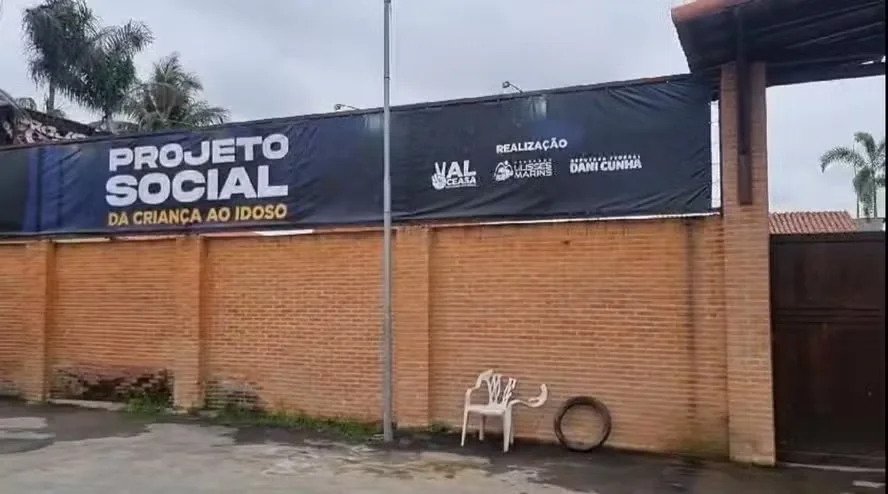
The Val Ceasa Investigation (June 2026). A third case, launched by Rio’s State Prosecutor’s Office (MPRJ) on June 18, 2026, shows the same pattern reaching the legislature directly. State legislator Val Ceasa, former city councilman Ulisses de Almeida Marins, and a former parliamentary aide are under investigation over suspected ties to the Third Pure Command (TCP) — Rio’s second-largest drug trafficking faction. Investigators allege that Val Ceasa laundered money for the TCP and leveraged his influence to protect the faction’s interests in territories under its control, including Irajá in Rio’s North Zone. Most notably, he allegedly pressured the Military Police to halt the demolition of the “crime resort”—a lavish property built by Álvaro Malaquias Santa Rosa, known as “Peixão,” one of the TCP’s primary leaders. Electoral data compiled by Rio’s Regional Electoral Court and the Civil Police reveals an even deeper connection: of the 69,034 votes Val Ceasa received in the 2022 election, around 12,240 — nearly 18% — came from areas under TCP influence, while Ulisses Marins’ 2020 city council bid drew more than 10,000 votes from the Complexo de Israel, a territory long dominated by the faction.
Unlike Zargun and Anomalia, which focused more heavily on police and administrative officials, this case points to direct links between elected officials and the criminal groups that control parts of their electoral base.
A Problem That Keeps Growing
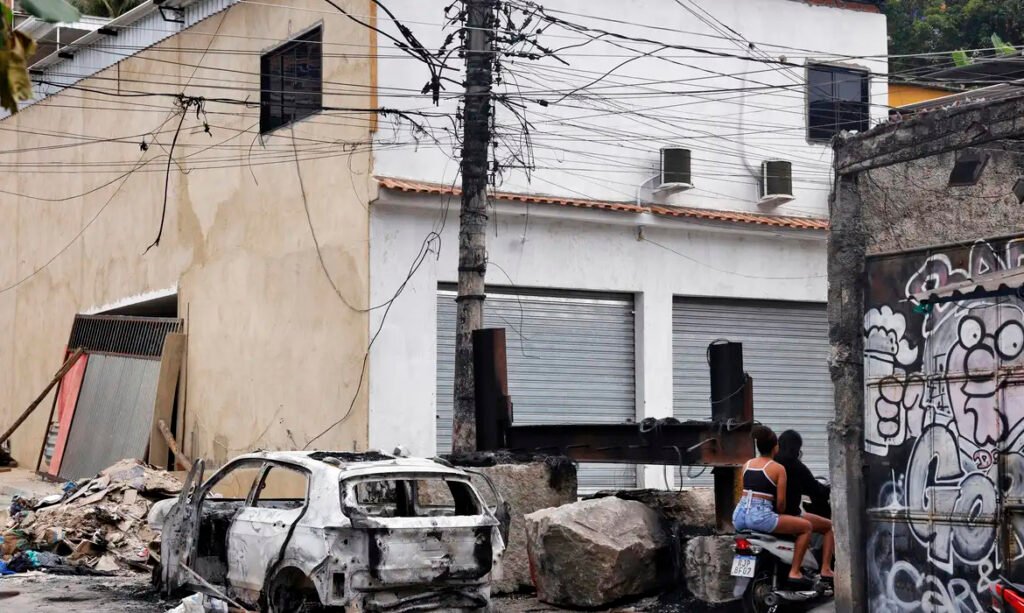
These operations unfold against a large and still-expanding backdrop. Research from the Fluminense Federal University’s Group for the Study of New Illegalisms (Grupo de Estudos dos Novos Ilegalismos – GENI), in partnership with the Fogo Cruzado Institute, estimates that around 4 million people were living in 2024 under the control or influence of armed groups in Rio’s metropolitan region — roughly a third of the population. Between 2007 and 2024, the territory under armed group control grew 130%, while the affected population grew nearly 60%. In the city of Rio itself, over 30% of the urbanized areas and more than 40% of the population were under some form of armed group influence in 2024, concentrated mostly in the West Zone.
Conclusion
The recent high-profile arrests of politicians, judges, and law enforcement leaders are not coincidences, but the direct result of a strategy reshaped by ADPF 635. By targeting the financial and institutional backbones of organized crime rather than just its visible edges, operations like Zargun and Anomalia are yielding tangible results. This approach is no quick fix for a two-decade-old crisis, but it represents a clear departure from traditional street-level policing—one that creates a fundamentally new risk landscape for businesses and observers alike.
What This Means for Businesses
For companies operating in Rio de Janeiro, this shift carries practical implications for risk management. It may reshape traditional risk maps, as pressure on the financial and institutional backbone of criminal groups can alter territorial control over time — in either direction, depending on the region. It also reinforces the importance of strong compliance and due diligence practices, particularly for companies in sectors more exposed to infiltration, such as fuel, logistics, construction, and retail. Finally, as investigations reveal how deeply organized crime has penetrated state structures, companies must recognize that engaging with official institutions or public figures no longer guarantees legitimacy; behind formal titles and government contracts, businesses may unknowingly be dealing with criminal interests, making rigorous political exposure and counterparty screening essential.
[1] The Partido Socialista Brasileiro (Brazilian Socialist Party) is a center-left political party in Brazil.
[2] COAF stands for the Council for Financial Activities Control (Conselho de Controle de Atividades Financeiras in Portuguese). It is Brazil’s national financial intelligence unit, responsible for fighting money laundering, terrorist financing, and the proliferation of weapons of mass destruction.
[3] The Missão Redentor II (Redentor II Mission) is a permanent federal task force created by the Brazilian Federal Police. Composed of roughly 40 specialized intelligence agents, it targets high-level corruption, money laundering, and the infiltration of criminal factions and militias into public administration in Rio de Janeiro.

