


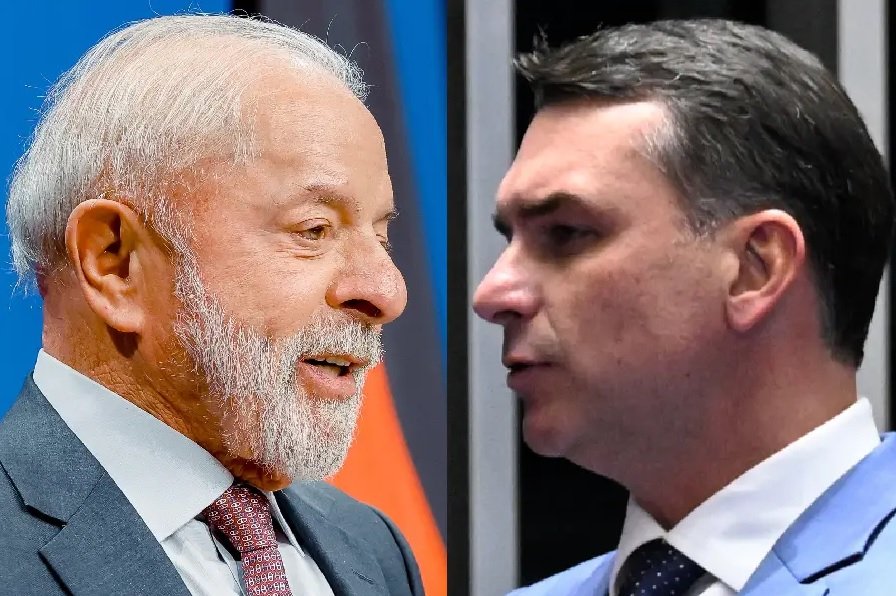
As Brazil’s official campaign season gets underway, the presidential race is taking shape on multiple fronts simultaneously. Senator Flávio Bolsonaro completed his ticket by naming former public prosecutor and federal deputy Alfredo Gaspar as his running mate, though the choice immediately drew attacks from the Lula campaign over a pending STF proceeding involving sexual assault allegations — so far without a measurable impact on polling numbers, which remain stable with Lula at 40% and Flávio at 35% in the first round. On the political alliance front, Senate President Davi Alcolumbre played a decisive role in steering the União Brasil-PP coalition toward neutrality, dealing a blow to Flávio Bolsonaro’s efforts to consolidate Centrão support and easing pressure on Lula’s electoral strategy in key states. Meanwhile, Congress returned from an extended recess with a compressed legislative calendar ahead of the October elections, with only two concentrated working weeks scheduled between August and October, leaving little room for progress on major pending proposals.
This Content Is Only For Subscribers
To unlock this content, subscribe to INTERLIRA Reports.
Vice-Presidential Candidate
Senator Flávio Bolsonaro (PL) announced on Wednesday (05/08) that Federal Deputy Alfredo Gaspar (PL) will be the vice-presidential candidate on his ticket in this year’s election. Gaspar is a former public prosecutor who previously served as Alagoas State Prosecutor General and Secretary of Public Security. Elected to the Chamber of Deputies in 2022, he gained national prominence as rapporteur of the Joint Parliamentary Inquiry Commission (CPMI) investigating the INSS (National Social Security Institute). In the speech announcing Gaspar as his running mate, Flávio highlighted the federal deputy’s experience in public security and his political ties to his electoral stronghold in Alagoas, as well as his connections with other states in the Northeast.
Attacks on the Running Mate
President Lula’s (PT) campaign has decided to begin attacking Congressman Alfredo Gaspar (PL), Flávio Bolsonaro’s (PL) running mate, in an effort to weaken the ticket among female voters. A proceeding before the Supreme Federal Court (STF) is examining allegations involving the rape of a vulnerable person against Gaspar, which he denies. The case reached the Court following a complaint filed with the Federal Police by lawmakers who had clashed with him during the INSS Parliamentary Inquiry Commission (CPI). So far, the attacks do not appear to have affected polling numbers. A survey released on Monday (10/08) shows President Lula (PT) with 40% of voting intentions in the first round, while Senator Flávio Bolsonaro (PL-RJ) stands at 35%. The figures remained stable compared with the previous week. Ronaldo Caiado (PSD), former governor of Goiás, appears with 5% of voting intentions, followed by Renan Santos (Missão) with 4% and Romeu Zema (Novo) with 3%. Samara Martins (UP) registers 2%, while Augusto Cury (Avante) has 1%. A total of 2,001 voters aged 16 and older from across the country were interviewed by telephone. The margin of error is two percentage points.
Neutrality
Before last week’s meeting that restored relations between President Lula (PT) and Senate President Davi Alcolumbre (União Brasil), the senator helped secure a neutral position for the União Brasil-Progressistas (PP) coalition both strategically important parties. Alcolumbre’s efforts were also decisive in steering Centrão parties away from formally aligning with Flávio Bolsonaro’s (PL) campaign in major electoral districts. The Senate President’s political maneuvering could weaken alliances and platforms that had been creating difficulties for Lula’s electoral strategy. Another meeting between the two is expected to take place in the coming days, including discussions involving Rio de Janeiro, an important political stronghold of the Bolsonaro family. The coalition’s neutral position was particularly significant for Eduardo Paes (PSD), who is running for governor of the state, while also benefiting Lula by weakening one of the potential pillars of Flávio Bolsonaro’s campaign.
Back to Work
The National Congress returns to work on Monday (10/08) following the parliamentary recess. Although the Constitution establishes August 1 as the official end of the recess, both the Chamber of Deputies and the Federal Senate effectively extended the break by another week. To compensate, Chamber President Hugo Motta (Republicanos) had already established a schedule in July with specific weeks of “concentrated effort,” allowing deputies more time to campaign in their electoral districts. Senate President Davi Alcolumbre (União Brasil) adopted a similar approach for the upper house. Between August and October, sessions in both chambers will be concentrated into only two weeks. In addition to this week, Congress will convene between August 31 and September 3. In the Chamber, party leaders will meet on Tuesday (11) to define the week’s agenda. One of the proposals likely to be put to a vote, according to people close to Motta, is a measure allowing surplus oil revenue to be used to reduce fuel taxes, which was submitted by the government to Congress in April. With electoral campaigns already intensifying across the states, the Chamber President is expected to face difficulties bringing ideologically sensitive proposals to the floor, including the measure aimed at combating misogyny, which left-wing parties are pushing to have voted on.
Analysis:
The selection of Alfredo Gaspar as Flávio Bolsonaro’s running mate gives the PL campaign a stronger public security profile, particularly because of Gaspar’s previous experience as a prosecutor and public security secretary. His political base in Alagoas also gives the candidacy a connection to the Northeast, a region where Bolsonaro-aligned candidates have historically faced greater difficulty competing with the PT. However, the legal proceeding involving allegations of sexual assault creates a potential vulnerability, particularly among female voters, and provides Lula’s campaign with an avenue for negative campaigning.
The decision by the União Brasil-PP coalition to remain neutral is potentially more consequential for Flávio Bolsonaro’s campaign than the choice of running mate. Centrão parties possess extensive political structures, regional alliances, and access to influential local leaders, making their support particularly valuable in a fragmented presidential race.
Sources: G1 [1], [2], [3], [4]; O Globo [1], [2], [3], [4]; A Folha de SP [1], [2].

