


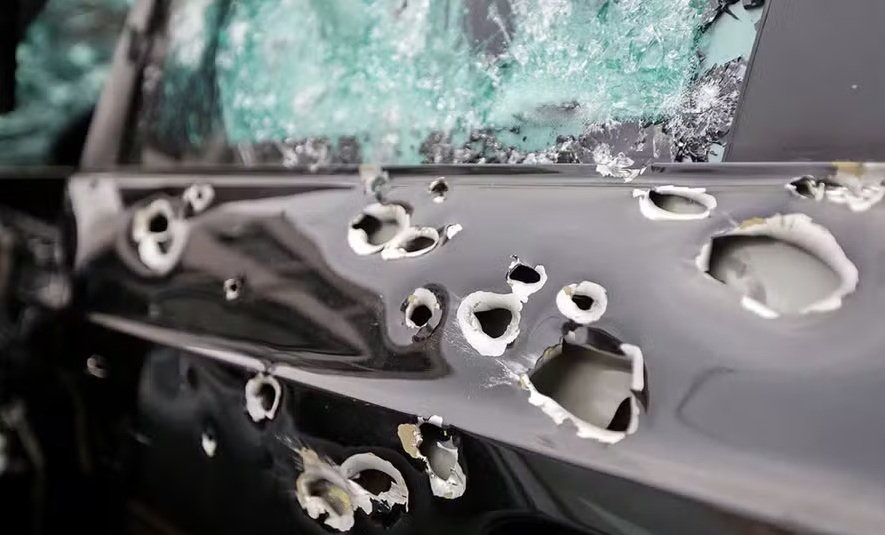
The rapid expansion of Brazil’s car armoring industry reflects a broader climate of insecurity in the country’s largest urban centers. Concerns about crime and personal safety persist, and demand for armored vehicles has emerged, turning Brazil into the world’s largest producer in the sector. The industry now generates around US$660 million annually and is expected to grow by nearly one-third within two years, driven by falling costs, vehicle theft, and a growing perception that personal protection has become a necessary part of daily life rather than a luxury.
This Content Is Only For Subscribers
To unlock this content, subscribe to INTERLIRA Reports.
Fear
“What drives someone to seek protection is fear,” said Marcelo Silva, president of Abrablin, the association representing the sector in Brazil.“If a person realizes they have the financial means and the option to turn an ordinary car into an armored vehicle, they do it.” The surge in demand for armored cars reflects daily life in Brazil’s major cities, where residents spend nearly two hours a day in traffic, often immobilized in congestion that leaves them vulnerable to robberies and ambushes.
400,000 Armored Cars in Circulation in the Country
Public security consistently ranks among Brazilians’ top concerns in opinion polls. Although homicide rates have declined over the past decade, they remain among the highest in the world, according to a report by the Bertelsmann Stiftung think tank. Today, nearly 400,000 armored vehicles circulate almost unnoticed on Brazilian streets. These are not limited to the conspicuous convoys of politicians or security forces, but include everyday models such as Toyotas, Jeeps, BMWs, and Volkswagens that have compliant armoring. In 2024, production rose by 17%, reaching 34,402 units. For this year, the industry association projects another 16% increase, bringing output to around 40,000 vehicles.
Cost between R$80,000 and R$100,000
Prices for the most commonly used civilian armoring systems — Level III-A protection, the highest level authorized by the Brazilian Army for civilian use — have fallen by about 25% over the past decade. Currently, armoring costs between R$80,000 and R$100,000, making this type of protection accessible to a broader segment of the middle and upper-middle classes.
Increased Searches
A survey by Webmotors, a major vehicle buying and selling platform, shows a significant rise in searches for armored cars in Rio de Janeiro, reflecting growing concerns about violence in the state. According to the study, searches increased by 24% for new armored vehicles and by 16% for used ones between January and December of this year, compared with the same period last year. Considering new and used vehicles together, the overall increase was 16%. Among new vehicles, the most sought-after models were the Corolla Cross, Toyota Hilux SW4, and Toyota Corolla, all of which cost no less than R$200,000.
Five vehicles are stolen or robbed every hour in Rio
Between January and August 2025, the state of Rio de Janeiro recorded 26,817 vehicle thefts and robberies, according to data from the Public Security Institute (ISP). This represents an average of five incidents per hour. Compared with the same period in 2024, vehicle thefts fell slightly by 1% (from 11,638 to 11,474), while robberies declined by 15% (from 18,149 to 15,343). In the Metropolitan Region, the downward trend was also evident: thefts dropped by 2% (from 10,544 to 10,371), and robberies decreased by 16% (from 17,874 to 15,067).
Analysis:
The rapid growth of Brazil’s car armoring industry is a clear symptom of how perceptions of insecurity are reshaping urban behavior, particularly among the middle and upper-middle classes. Even as some crime indicators show modest declines, the persistence of vehicle thefts and robberies, combined with long daily exposure to traffic congestion, sustains a sense of vulnerability. Armored vehicles are no longer seen as exceptional assets tied to political or corporate elites, but as a pragmatic response to routine risk in major metropolitan areas, especially Rio de Janeiro and São Paulo.
As a result, Brazil has consolidated its position as the world’s largest producer of civilian armored vehicles, transforming what was once a niche industry into a mature and rapidly scaling sector. This dynamic underscores how private security solutions increasingly compensate for perceived limitations in public security.
Sources: O Globo [1], [2]; O Diário do Rio.

