


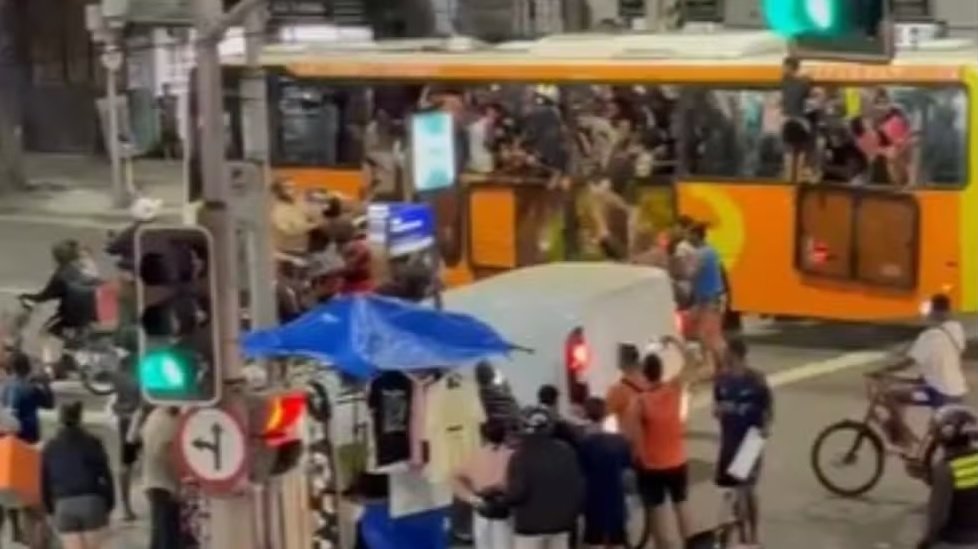
On Wednesday (22/07), for the second consecutive day, disturbances erupted in the Copacabana area of Rio de Janeiro’s South Zone at bus stops serving beachgoers leaving the shoreline. A video shows the moment Segurança Presente officers used pepper spray on passengers aboard a crowded bus shortly after dozens of youths climbed into the vehicle through broken windows. Another recording captures a group of youths smashing one of the bus windows during the unrest.
This Content Is Only For Subscribers
To unlock this content, subscribe to INTERLIRA Reports.
Youths Detained
The Rio de Janeiro State Military Police Secretariat reported that teams from the 19th Military Police Battalion (Copacabana) and the Segurança Presente Copacabana program detained four adolescents on Wednesday afternoon (22). They are suspected of participating in a theft targeting people leaving Copacabana Beach and of belonging to the group responsible for vandalizing a bus. According to the battalion’s command, the operation was carried out as part of Operation Beach, which reinforces policing along Rio’s waterfront on days of high temperatures, when beaches attract larger crowds. Officers deployed between Raul Pompéia and Francisco Otaviano streets identified a group allegedly attempting to steal from beachgoers as they left the area.
Tuesday
Late Tuesday afternoon (21/07), disorder also broke out as crowds left the beaches of Rio’s South Zone. Panic and confusion were reported at Arpoador, Ipanema, and Copacabana, where five buses were vandalized. Social media users claimed that mass robberies had occurred, although the Military Police said those reports had not been confirmed. At Arpoador, the disturbance began on the beach, where videos circulating online show an agitated crowd followed by people running along the beachfront promenade. Some reports alleged that a tourist had been robbed during the incident. According to witnesses, the panic quickly spread to nearby streets. Another disturbance was reported on Rua Francisco Otaviano in Ipanema, while in Copacabana authorities registered a police report concerning one of the buses that was attacked.
Financial Losses
Rio Ônibus condemned the attacks against the buses. According to the union representing the city’s bus operators, the damage caused by the acts of vandalism totaled approximately R$30,000. The organization stated that incidents of this nature directly affect the daily routine of passengers who depend on public transportation and added that the monthly financial losses associated with similar attacks exceed R$2 million.
Analysis:
The disturbances recorded in Copacabana reflect a pattern that has historically been associated with Rio de Janeiro’s summer season, when beaches attract exceptionally large crowds and the concentration of people creates opportunities for theft, vandalism, and episodes of public disorder. During these periods, large groups leaving the waterfront at the same time often overwhelm public transportation and complicated police response. What makes the recent incidents noteworthy is that they occurred during the winter, a time when such events are typically less frequent.
The recurrence of these episodes is closely linked to the increasingly frequent heat waves affecting Rio de Janeiro, which have drawn unusually large numbers of residents and tourists to the beaches despite the winter season. As beach attendance begins to resemble summer levels, security risks also increase, requiring authorities to adapt operational planning beyond the traditional high season.

