


The second round of Brazil’s presidential election has intensified political, judicial and institutional tensions, with President Luiz Inácio Lula da Silva (PT) and Senator Flávio Bolsonaro (PL) adopting increasingly aggressive strategies ahead of the October 25 vote. Lula is seeking to overcome his first-round deficit by reducing abstention, increasing street mobilization and strengthening his digital campaign, while Flávio aims to consolidate conservative support and attract voters from defeated candidates. At the same time, conflicting Electoral Court decisions have fueled accusations of political bias, congressional pressure against Supreme Federal Court (STF) ministers has increased, and concerns remain over politicians elected despite suspected links to organized crime. Campaign polarization has also generated security concerns around demonstrations and universities.
This Content Is Only For Subscribers
To unlock this content, subscribe to INTERLIRA Reports.
Lula’s Effort
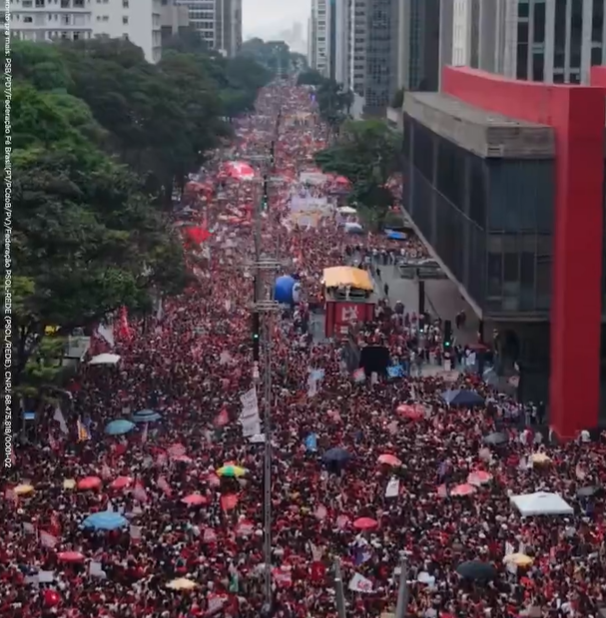
After finishing behind Flávio Bolsonaro in the first round, Lula reorganized his campaign around reducing abstention, expanding street mobilization and improving digital communication. The PT sees the approximately 33.4 million voters who abstained as an important source of potential support, particularly in states where Lula performed well. Supporters are being encouraged to identify non-voters and persuade them to participate in the runoff, while pro-Lula demonstrations have occurred in São Paulo, Rio de Janeiro, Recife, Salvador and other cities. Lula has also acknowledged difficulties connecting with younger voters and has sought greater engagement with this group.
The campaign is simultaneously emphasizing social programs, labor issues and the potential consequences of a Flávio victory. Lula’s allies have promoted messages warning of possible cuts to benefits, defended ending the 6×1 work schedule and pressed the president to speak more forcefully about public security. Federal deputy André Janones has also organized a large WhatsApp network to coordinate pro-Lula digital messaging. Lula is additionally using controversies involving Banco Master and other allegations against Flávio while presenting the election as a dispute over social protections, democracy and institutional stability.
Flávio’s Strategy
Flávio Bolsonaro is focused on preserving his first-round advantage while expanding beyond the traditional Bolsonaro electorate. His campaign is competing for around 9 million votes cast for defeated presidential candidates and is seeking support from figures linked to Augusto Cury, Renan Santos, Ronaldo Caiado and Romeu Zema. Governors, mayors and legislators are being encouraged to intensify direct contact with voters and strengthen local campaigning.
The senator is also reinforcing conservative and religious mobilization while trying to present a broader image in the runoff. He has appeared alongside political allies such as São Paulo Governor Tarcísio de Freitas and participated in Catholic and evangelical events following controversy over false claims involving Nossa Senhora Aparecida. However, the campaign continues to face damaging allegations, including reports linking Flávio to a bank account associated with businessman and lawyer Willer Tomaz, investigated in connection with suspected money laundering involving the INSS fraud case. Both deny a shared financial relationship.
Judicial War
The presidential dispute has increasingly shifted into the TSE, where both campaigns are seeking restrictions on their opponent’s digital content. Ministers André Mendonça and Kassio Nunes Marques ordered the removal of Lula campaign posts considered misleading, while Lula’s campaign filed actions against Flávio over allegedly irregular social-media activity and profiles connected to Pablo Marçal.
The most controversial case involved the “Exército do Lula,” a WhatsApp channel operated by André Janones. Kassio ordered the channel suspended following a request from Flávio’s campaign, but Electoral Corregidor Ricardo Villas Bôas Cueva later reversed the measure and requested supporting evidence. A TSE technical analysis subsequently said it had not found the content cited by Flávio’s campaign among the available messages, although earlier material may have been deleted. The conflicting decisions generated criticism inside the court and accusations from both campaigns that the Electoral Court was acting unevenly.
The Supreme Court on the Target
The election has strengthened congressional groups seeking to restrict STF powers and potentially impeach at least one justice. At least 49 senators expected to serve from 2027 have expressed support, under certain circumstances, for impeachment proceedings, still below the 54 votes required to remove a Supreme Court minister.
Alexandre de Moraes remains the principal target of Bolsonaro-aligned politicians, while some Centrão figures have also mentioned Gilmar Mendes. Proposals under discussion include fixed terms for STF justices, a minimum appointment age, and transferring criminal cases involving politicians to lower courts. Flávio’s campaign coordinator Rogério Marinho has also discussed judicial reform with STF president Edson Fachin, indicating that relations between Congress and the judiciary are likely to remain tense after the election.
Winners Under Suspicion
Three candidates previously questioned over alleged links to organized crime were elected in Rio de Janeiro and São Paulo. Former Embu das Artes mayor Ney Santos (Republicanos-SP) won a federal deputy seat after previously being investigated for alleged connections to the PCC and a money-laundering scheme involving fuel stations. His defense maintains that the allegations were investigated without sufficient evidence to establish wrongdoing.In Rio de Janeiro, Antonio Rueda (União Brasil) was elected federal deputy, and former Belford Roxo mayor Márcio Canella was elected state deputy. Questions surrounding their candidacies involved Canella’s political relationship with two convicted militiamen and Rueda’s joint campaigning with him. Both denied criminal connections, and the Electoral Court authorized their candidacies after finding insufficient evidence of direct participation in organized crime. Junior da Lucinha and Jerson Domingos, also included among questioned candidates, were elected as alternates.
Analysis:
The second-round campaign is developing in an increasingly polarized environment in which electoral strategy, judicial intervention and institutional disputes are becoming closely interconnected. Lula is attempting to compensate for his first-round disadvantage through mass mobilization, abstention reduction and a more aggressive digital and social-policy campaign, while Flávio seeks to consolidate the conservative coalition that performed strongly in the first round and expand it through governors, mayors, religious voters and supporters of defeated candidates.
From a political and security-risk perspective, the most significant concern is that the dispute is extending beyond the presidential vote itself. Conflicting TSE decisions are feeding accusations of institutional bias, congressional groups are openly considering measures against STF ministers, and elected politicians continue to face allegations of links with criminal organizations. Together with threats and confrontations surrounding political activity at universities and public demonstrations, these developments indicate an elevated risk of political tension, disinformation disputes, protests and institutional confrontation through the October 25 runoff and into the beginning of the next administration.
Source: Folha de SP [1], [2], [3], [4], [5], [6], [7], [8], [9], [10], [11], [12], [13], [14], [15], [16], [17], [18], [19].

