


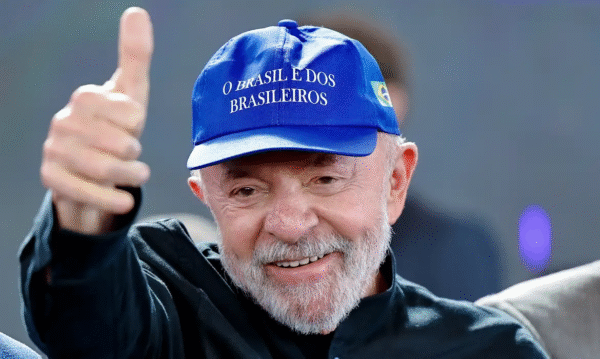
President Lula enters a decisive phase of his term amid intense political reorganization, electoral maneuvering, and economic expectations. With up to 20 ministers preparing to leave their posts to run for office, the government faces the challenge of maintaining political coordination in Congress while accelerating the approval of priority agenda items ahead of the campaign season. At the same time, Lula is personally shaping state-level alliances to support a reelection bid, as the opposition on the right navigates internal disputes over presidential succession. This political backdrop unfolds alongside cautious economic signals, with the Central Bank expected to maintain high interest rates in the short term, reinforcing the complex and uncertain environment in which the government begins the year.
This Content Is Only For Subscribers
To unlock this content, subscribe to INTERLIRA Reports.
Departures of Ministers
Around 20 ministers from President Lula’s (PT) administration are expected to step down from their posts to run for public office across the country, as part of a strategy to strengthen the PT’s electoral base in the states. The estimate includes ministers who have already expressed their intention to leave and others who currently hold elected office and may seek reelection. Following guidance from the president, ministers who are licensed deputies or senators are expected to leave their ministries to secure candidacies and mobilize electoral support for Lula at the state level. If all departures are confirmed, the president will conduct the campaign without much of his core cabinet. One of Lula’s direct requests was for Institutional Relations Minister Gleisi Hoffmann to leave her post to run for the Senate in Paraná. Her departure introduces uncertainty into the government’s political coordination during the campaign. Ministers must resign by April, on the eve of the official start of the electoral period.
Doubts
With the prospect of losing up to 20 ministers to electoral campaigns, Lula has handled one replacement with particular caution: that of Gleisi Hoffmann at the Secretariat of Institutional Relations (SRI). The impending change in leadership of the government’s political coordination has generated concern within the presidential inner circle and in Congress, where lawmakers fear disruptions to agreements negotiated with the Planalto Palace. The key question among Lula’s advisers is whether the post should be filled by a senior aide already working within the ministry or by a parliamentarian with greater influence in the Legislature. At Lula’s request, Gleisi is expected to leave the ministry by April to run for a Senate seat in Paraná. This gives the president little more than a month to appoint a new political coordinator in a year when legislative activity is typically concentrated in the first half, before the election season begins. As a result, there is limited time for the government to advance priority bills it hopes to showcase during the campaign, such as the Security Amendment and the Anti-Faction Bill, the end of the 6×1 work schedule, and the regulation of app-based labor.
Political Articulation
President Lula (PT) has been personally involved in building state-level platforms to support his reelection bid. Seeking at least to replicate the vote total achieved in 2022, he has invested in potential candidates, initially prioritizing major electoral strongholds. Lula has focused on alliances in the Southeast and South, while closely monitoring developments in the Northeast, where he traditionally enjoys his strongest margins. According to allies, the president is convinced that Finance Minister Fernando Haddad (PT) should run for governor of São Paulo and intends to press him to enter the race. Haddad, however, has shown reluctance to contest another election.
Disputes on the Right
Senator Flávio Bolsonaro (PL) told an ally on Tuesday night (20/01) that he feels uncomfortable with rumors about disputes within the right-wing field over the presidential nomination, reiterating that his candidacy project is definitive and that he will not step aside. The conversation took place before the announcement that São Paulo Governor Tarcísio de Freitas (Republicanos) had canceled a scheduled visit to former president Jair Bolsonaro on Thursday (22), citing scheduling conflicts. The postponement fueled speculation that Tarcísio was dissatisfied with Bolsonaro’s decision to back his eldest son as a candidate. According to Flávio Bolsonaro, his father’s choice is final, and Tarcísio is expected to play a key role in the campaign, particularly as a candidate in Brazil’s most populous and electorally significant state.
Interest Rate Maintenance
Economists consulted by the Central Bank (BC) expect the benchmark interest rate to remain at 15% at the first meeting of the Monetary Policy Committee (Copom) this year. The committee meets on Tuesday (27/01), with the decision to be announced the following day. According to the Focus bulletin released on Monday (26/01), analysts foresee the Selic rate holding steady in the short term, while maintaining expectations of a 0.5 percentage point cut, to 14.5%, at the March meeting. The market projects the interest rate will end the year at 12.25%, a forecast unchanged for five consecutive weeks. The bulletin also maintained projections for the Selic rate in subsequent years: 10.5% in 2027, 10% in 2028, and 9.5% in 2029. Among other indicators, the only adjustment was a slight reduction in the inflation forecast for this year, from 4.02% to 4%, marking the third consecutive weekly decline in projections for the IPCA.
Analysis:
President Lula’s strategy of encouraging a large share of his cabinet to enter electoral races reflects a clear shift from governance to campaign mode, but it carries significant coordination risks. The potential departure of up to 20 ministers, especially those with strong congressional links, threatens to weaken the government’s ability to manage legislative negotiations at a moment when time is scarce and political capital is finite. The uncertainty surrounding the replacement of the Institutional Relations minister is particularly sensitive, as this post is central to maintaining cohesion in Congress and advancing priority bills that the administration hopes to showcase as concrete achievements before the campaign intensifies.
The economic backdrop adds another layer of complexity to this political reconfiguration. The expected maintenance of high interest rates reinforces constraints on growth and limits the government’s room to deliver short-term economic stimulus ahead of the election. While easing inflation expectations provide some relief, the slow pace of monetary loosening means that economic improvements may not be strongly felt by voters in the near term.
Sources: A Folha de SP [1], [2], [3], [4]; O Globo [1], [2], [3], [4].

