


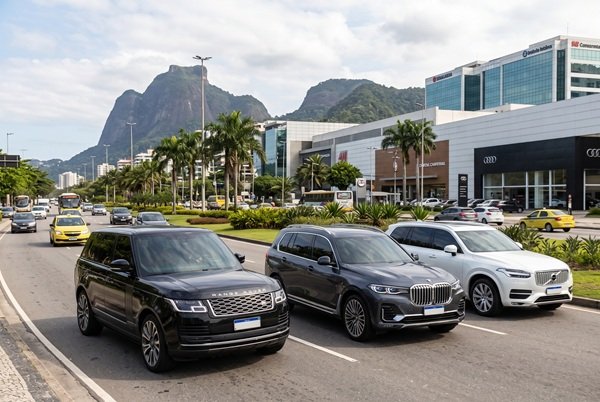
Two police operations conducted in September and October 2026 in Rio de Janeiro revealed the actions of gangs specializing in the theft of luxury vehicles intended for criminal organizations. The investigations led to the identification of one group operating in high-end areas of Rio de Janeiro and another group in Duque de Caxias. The rings used electronic equipment to steal high-value SUVs and pickup trucks, which were subsequently routed to communities controlled by the Red Command (Comando VerMelho – CV) and Pure Third Command (Terceiro Comando Puro – TCP).
This Content Is Only For Subscribers
To unlock this content, subscribe to INTERLIRA Reports.
How the Thefts Work
On Monday, October 5, investigations identified a specialized gang operating primarily in the South Zone, Barra da Tijuca, and Recreio dos Bandeirantes. Their modus operandi involved patrolling streets to locate high-end, luxury vehicles, mainly pickup trucks and SUVs. Once a vehicle was selected, they used tools and electronic equipment designed for key programming and ignition bypass to execute the theft. Three men were arrested. Additionally, on September 6, four suspects were arrested in Duque de Caxias, in the Baixada Fluminense region, for involvement in at least 20 luxury vehicle thefts. Officers seized screwdrivers, glass-breaker tools, three vehicle keys, and a cable used to connect directly to the vehicle’s electronic control module.
Connection to Criminal Factions
The operations revealed that the stolen vehicles were sent to communities controlled by criminal factions, pointing to a supply chain tailored to meet the needs of these organizations. In the first case, vehicles were taken to the Serrinha community in Madureira, where they received logistical support from the TCP. According to the Civil Police (Policia Civil), the criminals received approximately R$ 8,000 per stolen vehicle. An incident on September 25 underscored additional risks: a stolen SUV on Lúcio Costa Avenue contained a cell phone, a work laptop belonging to the Rio de Janeiro Court of Justice (TJ-RJ), and two Glock handguns, all of which ended up in the hands of a drug trafficker in Serrinha. In the second case, the vehicles were destined for areas under CV control, particularly the Complexo do Chapadão, where some could be armored and used to transport faction members during territorial disputes.
Analysis
These incidents highlight a strong connection between property crime and the operational demands of criminal factions in Rio de Janeiro. Stolen vehicles serve as both a revenue stream and a logistical asset for troop movements, arms transport, and territorial expansion. Furthermore, the reliance on electronic devices to bypass automotive security systems demonstrates the technical adaptability of these gangs, elevating risks even for vehicles equipped with standard factory protections.
From a corporate security perspective, these cases emphasize the need to assess the risk exposure of executive vehicles, corporate fleets, and employees in transit, especially within areas where these gangs operate. Mitigating measures such as parking in controlled facilities, vehicle tracking, secondary immobilization devices, and strict protocols for securing sensitive hardware and data inside vehicles can significantly reduce exposure. The analysis shows that the risk extends beyond property loss: losing a vehicle can trigger severe operational, financial, informational, and reputational fallout for organizations.

