


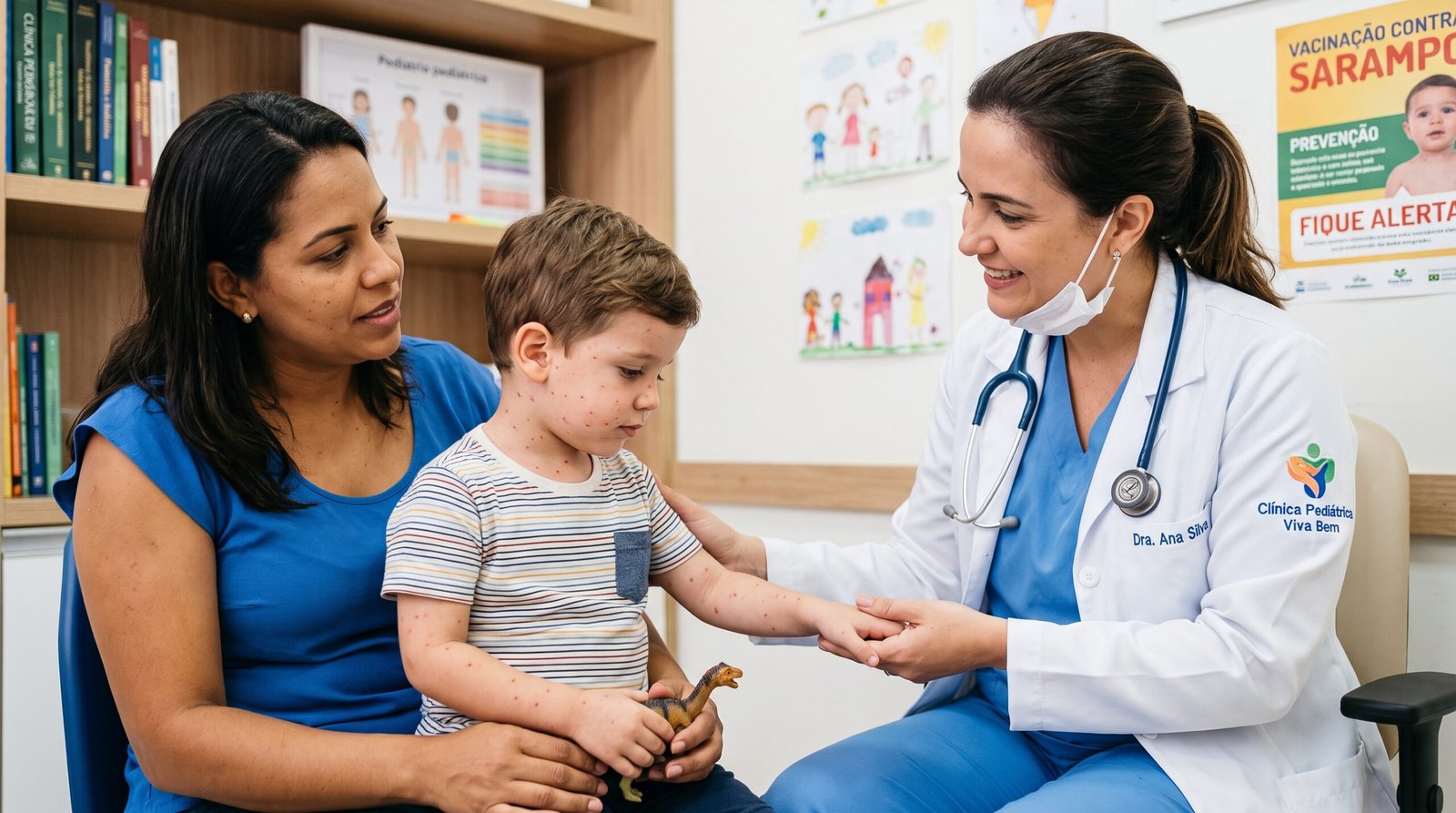
On Wednesday (09/09), São Paulo state confirmed two additional measles cases, both involving children under the age of two living in the capital. Now, the total number of cases reported in the state has reached a total of 30 in 2026, according to the State Health Secretariat. All cases are located in the São Paulo Metropolitan Area; the majority (27) are in the capital, while two were detected in São Bernardo do Campo and one in Guarulhos. No new transmission chain has been detected, thus the total number remains at four.
This Content Is Only For Subscribers
To unlock this content, subscribe to INTERLIRA Reports.
Vaccination
In August, a broad vaccination campaign was carried out in the capital, Guarulhos, and São Bernardo do Campo. According to the Secretariat, more than 2.5 million vaccine doses were administered. Of the 30 recorded cases, 22 involved individuals who had no record of measles vaccination or had an incomplete vaccination schedule.
Children at 12 months should get the first dose. At 15 months, the second dose must be administered. From 15 months to 29 years old, people must have two doses recorded in the vaccination booklet, with a minimum interval of 30 days between them. Between ages 30 to 59, at least one dose must be recorded in the vaccination booklet. Healthcare workers must have two doses of the vaccine, regardless of age.
The exception are children aged 6 months to 11 months and 29 days living in the municipalities of São Paulo, Guarulhos, and São Bernardo do Campo, who remain eligible to receive the so-called “zero dose” of the MMR (measles, mumps, and rubella) vaccine.
Symptoms
Measles is a contagious viral disease transmitted through the air, particularly in enclosed spaces with high foot traffic. Key symptoms include high fever, cough, runny nose, conjunctivitis, and reddish skin spots, which usually appear 7 to 14 days after exposure. Transmission occurs from person to person via airborne droplets released when coughing, sneezing, speaking, or breathing.
Analysis:
The confirmation of two additional measles cases in São Paulo brings the state’s 2026 total to 30, with the overwhelming majority concentrated in the capital. The epidemiological pattern is particularly concerning because 20 patients were unvaccinated or had incomplete vaccination schedules, indicating that gaps in immunization remain a significant driver of transmission. Although the number of cases is still limited compared to large outbreaks, measles has an exceptionally high transmission capacity, particularly in crowded indoor environments. The existence of four separate transmission chains also demonstrates that imported cases can generate sustained local circulation when susceptible populations are present.
Sources: G1.

