


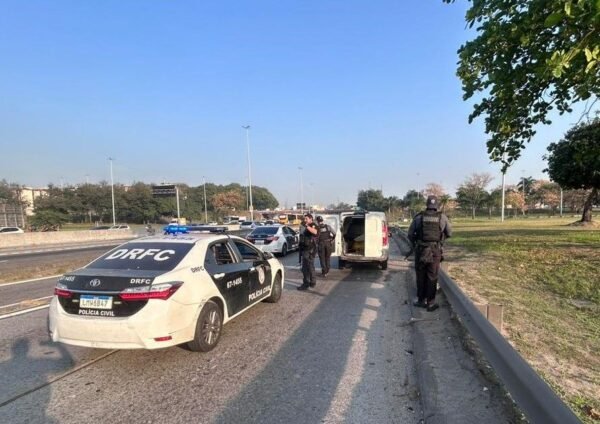
Cargo robbery continues to impose a heavy economic burden on Rio de Janeiro state. In 2025, the crime caused an estimated R$314 million in direct losses, according to a technical note by the Federation of Industries of the State of Rio de Janeiro (Firjan) titled “Overview of cargo theft in the state of Rio de Janeiro – 2026.” Last year, there were 3,114 incidents statewide—an average of eight trucks stolen per day. The problem remains heavily concentrated in the Metropolitan Region, especially along areas crossed by federal highways that are vital for the supply chain and the circulation of goods.
This Content Is Only For Subscribers
To unlock this content, subscribe to INTERLIRA Reports.
Main Highways
Firjan’s survey shows that more than half of all incidents (52.8%) are concentrated in just eight of the 137 Integrated Public Security Districts (Cisp), pointing to persistent logistical and security vulnerabilities along strategic corridors such as BR-040 (Washington Luís), BR-101 (Avenida Brasil), and BR-116 (Presidente Dutra).
Cost Increases
According to the federation, the economic impact goes well beyond the direct loss of merchandise. Indirect costs tied to insurance, armed escorts, and private security are squeezing companies of all sizes and driving up production costs. “Two out of three business owners say investment decisions in Rio are influenced by security conditions. Mapping illegal activity shows the negative impact on the state in numbers. The costs of cargo theft go beyond direct losses. Rising prevention costs, with insurance and escorts, affect the entire productive sector of Rio de Janeiro, not only the direct victims of the crime,” said Firjan president Luiz Césio Caetano.
Duke of Caxias
Duque de Caxias, in the Baixada Fluminense, remains the main hotspot. The municipality and surrounding area accounted for 36% of all cargo thefts in the state in 2025. Cisp 59 (Duque de Caxias) topped the ranking with 399 incidents, a 29% increase compared with 2024. Cisp 60 (Campos Elíseos) recorded 287 thefts in 2025.
Other Locations
Other areas showed mixed trends. Cisp 54 (Belford Roxo) and Cisp 31 (Anchieta) left the group with the highest concentration after substantial reductions, while Cisp 64 (São João de Meriti) and Cisp 39 (Pavuna) became new critical zones, with increases of 31% and 47%, respectively.
Eastern Fluminense
In Eastern Fluminense, São Gonçalo sustained its upward trend. After a sharp rise in 2024, the municipality recorded a further increase in 2025. CISPs 72, 73, 74, and 75 totaled 223 incidents during the year, with November and December standing out and accounting for almost half of the annual total, in areas directly influenced by the BR-101 corridor.
Slight Decrease
In this context, Firjan reports that the state ended 2025 with an overall 9% reduction in cargo thefts compared with 2024. Even so, this does not change the central diagnosis: the crime remains highly concentrated and continues to undermine logistics, increase business costs, and reduce Rio de Janeiro’s economic attractiveness. Part of the decline is linked to integrated operations by security forces last year, as well as deployments of the National Force. The area around the Port of Rio—responsible for handling more than R$260 billion in cargo—also saw fewer cases, although it remains under constant surveillance.
Analysis:
Cargo robbery in Rio de Janeiro remains a structurally concentrated crime with systemic economic effects, amid a reported 9% overall decline in incidents in 2025. The estimated R$314 million in direct losses captures only part of the burden, as the crime disproportionately affects strategic logistics corridors that connect the metropolitan region to national supply chains. The concentration of more than half of all cases in just eight security districts reveals persistent vulnerabilities along key highways such as BR-040, BR-101, and BR-116, where dense cargo flows, predictable routes, and proximity to urban peripheries create favorable conditions for organized theft.
Beyond immediate losses, the indirect cost insurance premiums, private escorts, route alterations, and operational delays—create a cumulative drag on competitiveness. When two-thirds of business leaders say security conditions influence investment decisions, job theft becomes not only a public security issue but a development constraint.

