


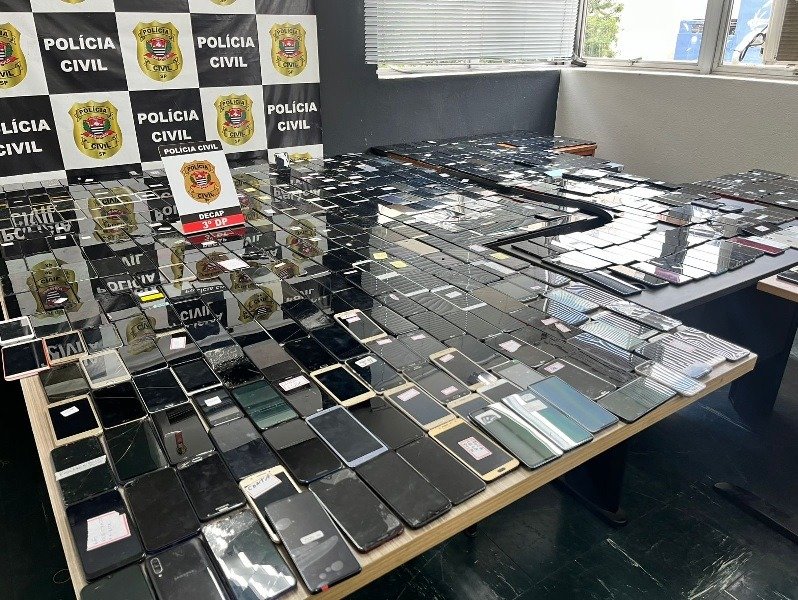
The city of São Paulo recorded 154,058 cell phone robberies and thefts between January and December 2025 — the equivalent of roughly 17 incidents per hour. The data comes from the Public Security Secretariat (SSP). This total is slightly higher than in the same period of 2024, when 153,820 cell phones were stolen or robbed in the capital. In 2023, criminals took 138,633 devices, indicating a sharp rise over the last two years and reinforcing how widespread and persistent this type of crime has become in the city.
This Content Is Only For Subscribers
To unlock this content, subscribe to INTERLIRA Reports.
Returned Cell Phones
Despite the high volume of incidents, police say they returned 10,477 cell phones last year — just over 6% of the total stolen or robbed. The figure points to the challenges of recovering devices once they enter illegal resale channels, and it also illustrates the broader harm to victims, who often lose not only the device but also personal data, access to banking apps, social media accounts, and other sensitive information stored on the device.
Neighborhoods with the Most Cases
Neighborhoods in downtown São Paulo accounted for the highest number of cases in 2025: República, Santa Ifigênia, Liberdade, and Jardins. Together, these four neighborhoods recorded 36,165 incidents, reflecting the pressure on areas with intense foot traffic, major commercial activity, and strong connections to public transportation. Next came Pinheiros and Vila Romana, in the West Zone, with 17,958 robberies and thefts. Itaim Bibi and Santo Amaro, in the South Zone, registered 10,811 cases, showing that high incidence is not limited to the central area and also affects districts with significant business activity, nightlife, and daily commuting flows.
SP Mobile
To combat this type of crime, police launched the SP Mobile program in June last year, with the goal of making it harder to reactivate, resell, and reuse stolen devices. The initiative cross-references records of stolen or lost cell phones with information provided by mobile operators. Using this data, the system identifies when a device is reactivated and sends alerts to users, informing them that the phone is listed as stolen or lost and providing guidance on how to resolve the situation. The expectation is that increased traceability will discourage the illegal market, support investigations, and, in some cases, improve the chances of returning devices to their rightful owners.
Analysis:
The coordinated use of buses and service vehicles as barricades in Madureira reflects a well-established tactic employed by criminal groups to assert territorial control and retaliate against state action. By targeting major traffic arteries rather than isolated streets, these groups maximize disruption, amplify public visibility, and signal their capacity to impose immediate costs on urban mobility. This strategy is less about direct confrontation with police and more about demonstrating power through paralysis of daily life, using civilian infrastructure as a pressure point against authorities.
From an operational standpoint, the timing of the barricades shortly after arrests suggests a rapid mobilization capability and a degree of local coordination among offenders. Such actions indicate that criminal groups maintain contingency plans to respond to police incursions, even when leadership figures are detained.
Sources: G1.

