

Online scams have become increasingly common, demanding greater attention to the links and online content we interact with daily. Cybercriminals are constantly creating new methods to deceive people for financial gain, ranging from falsified payment receipts to fake technician impersonations. In Brazil, around 71% of the population has already fallen victim to this type of crime, which shows the need for caution when clicking on links in WhatsApp messages, emails, or SMS, as well as avoiding sharing personal information with strangers. To reduce risks, it is essential to understand how these scams work, recognize their main types, learn what to do if you are targeted, and adopt preventive measures to protect your data and avoid financial losses.
This article is part of a series on digital security. You can read the other texts here.
This Content Is Only For Subscribers
To unlock this content, subscribe to INTERLIRA Reports.
AI-Generated Fake Celebrity and Doctor Scam
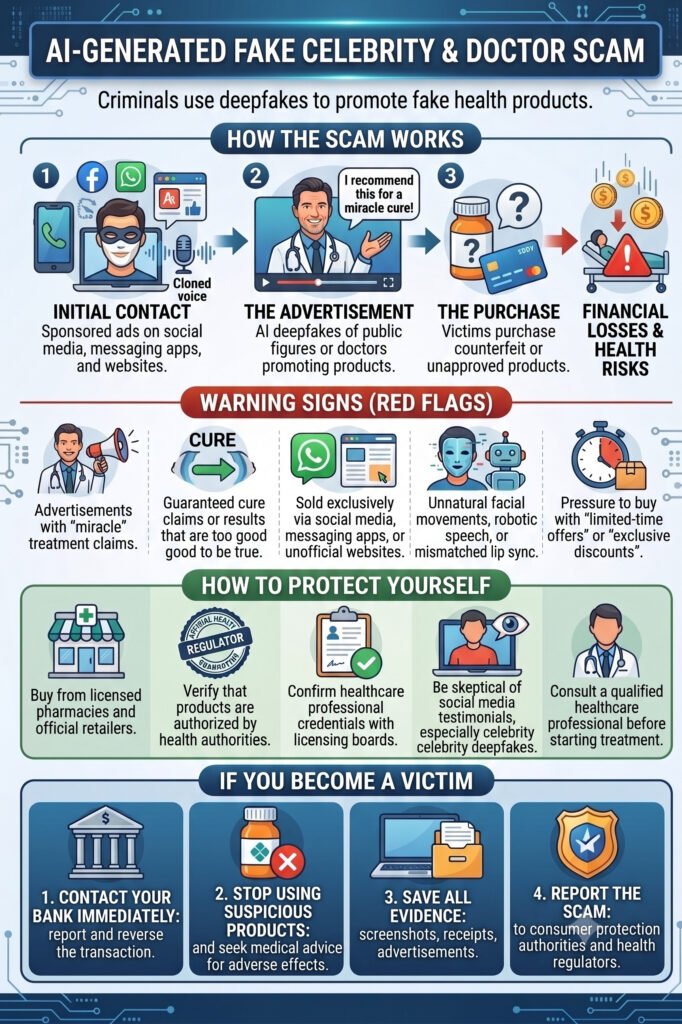
Criminals are increasingly using artificial intelligence to create convincing deepfake videos and images of celebrities, doctors, and health experts to promote fake medicines, dietary supplements, and miracle treatments. These scams rely on manipulated videos, cloned voices, and fabricated endorsements to convince victims that a product is legitimate, often leading to financial losses and potential health risks.
How the Scam Works
Scammers create advertisements featuring AI-generated versions of well-known public figures or fake medical professionals claiming to recommend a product. These ads are commonly distributed through social media platforms, messaging apps, and sponsored online advertisements.
Victims are encouraged to purchase products that promise unrealistic health benefits, such as rapid weight loss, cancer cures, anti-aging treatments, or remedies for chronic diseases. Many of these products are counterfeit, unauthorized, or illegally manufactured and may pose serious health risks.
Warning Signs
- Advertisements featuring celebrities or doctors promoting “miracle” treatments.
- Claims of guaranteed cures or results that seem too good to be true.
- Products sold exclusively through social media, messaging apps, or unofficial websites.
- Videos with unnatural facial movements, robotic speech, or slightly mismatched lip synchronization.
- Pressure to buy immediately because of “limited-time offers” or “exclusive discounts.”
How to Protect Yourself
- Purchase medicines and health products only from licensed pharmacies and official retailers.
- Verify that medications and supplements are authorized by the appropriate health authorities.
- Confirm the credentials of healthcare professionals through official medical licensing boards.
- Be skeptical of testimonials or endorsements shared on social media, especially those involving celebrities or AI-generated videos.
- Always consult a qualified healthcare professional before starting any treatment or supplement.
If You Become a Victim
If you purchased a fraudulent product or shared personal or payment information, contact your bank or payment provider immediately and report the transaction. Stop using any suspicious health product and seek medical advice if you experience adverse effects. Save screenshots, receipts, and advertisements as evidence, and report the scam to consumer protection authorities and the relevant health regulator.