


Summary
In 2025, Brazil’s public security landscape was marked by significant transformations, particularly in major urban centers such as Rio de Janeiro and São Paulo. The year consolidated trends that have been developing over the past decade, while also exposing new layers of complexity in criminal activity and state responses. Three interconnected dynamics stood out. First, digital crimes and scams grew rapidly, becoming one of the most pervasive forms of victimization. Second, organized crime continued to expand and diversify, strengthening its territorial control while deepening its presence in legal, financial, and political structures. Finally, institutions responded through large-scale police operations, legislative initiatives, and growing investments in surveillance technologies, reshaping the debate on security, governance, and rights.
This Content Is Only For Subscribers
To unlock this content, subscribe to INTERLIRA Reports.
Scams
In 2025, digital fraud consolidated itself as one of the most widespread and impactful forms of crime in Brazil, reshaping victimization patterns and challenging traditional public security responses. Throughout the year, Brazil saw a sharp and sustained increase in digital scams, consolidating cyber-enabled fraud as one of the country’s fastest-growing crime phenomena. Data and analyses published in 2025 highlight a clear migration of criminal activity from the streets to digital environments. While states such as São Paulo continued to record declines in several categories of violent and property crime, fraud, online scams, and financial cybercrime expanded at scale, driven by low operational costs, high financial returns, and reduced exposure to physical risk.

The year was marked by the consolidation of recurring schemes, including PIX-related fraud, card-machine manipulation, phishing and smishing campaigns[1], fake online stores, investment scams, and impersonation of banks, delivery platforms, and government agencies. Tourists and foreign residents in Rio de Janeiro and São Paulo emerged as particularly vulnerable targets, often due to language barriers, unfamiliarity with Brazilian payment systems, and reliance on mobile banking and digital services. For reference on how to protect oneself and how to act in case of attempted or successful fraud, click here.
Another defining trend of the year was the growing professionalization of digital crime. Investigations and reports pointed to the deeper involvement of organized criminal groups, particularly structures linked to the Primeiro Comando da Capital (PCC, First Capital Command)—in large-scale fraud operations. These groups increasingly adopted corporate-like models, specialized roles, and sophisticated laundering mechanisms, reinforcing the convergence between organized crime and cybercrime.
From a broader perspective, 2025 reinforced a structural shift in public security. Even as street crime indicators declined, digital victimization became continuous, borderless, and potentially more damaging. The expansion of AI-assisted scams and automated cyberattacks further increased pressure on law enforcement agencies, accelerating the need for specialization, technological capacity, and new investigative models.
Organized Crime and Territorial Control
The 2025 Brazilian Yearbook of Public Security confirmed the continuation of a long-term downward trend in lethal violence. In 2024, Brazil recorded 44,127 intentional violent deaths, corresponding to a rate of 20.8 per 100,000 inhabitants—a 5.4% reduction compared to the previous year and the lowest level since 2012. Between 2012 and 2024, the accumulated decline reached 25%, with reductions observed in all regions of the country. However, this national trend masks sharp regional disparities: while the Southeast reached historic lows, the Northeast and parts of the North continued to register significantly higher homicide rates, with some states exceeding 40 deaths per 100,000 inhabitants.
Beyond evidence-based public security policies, demographic changes, and gun control measures, the dynamics of organized crime played a decisive role in shaping violence patterns. The consolidation of territorial monopolies by criminal organizations—most notably the PCC in São Paulo and the Comando Vermelho (CV, Red Command) in Rio de Janeiro and several northern states—has reduced the frequency of open armed confrontations. This relative “pacification” of disputes contributed to lower homicide rates, even as criminal governance and coercive control expanded within these territories.
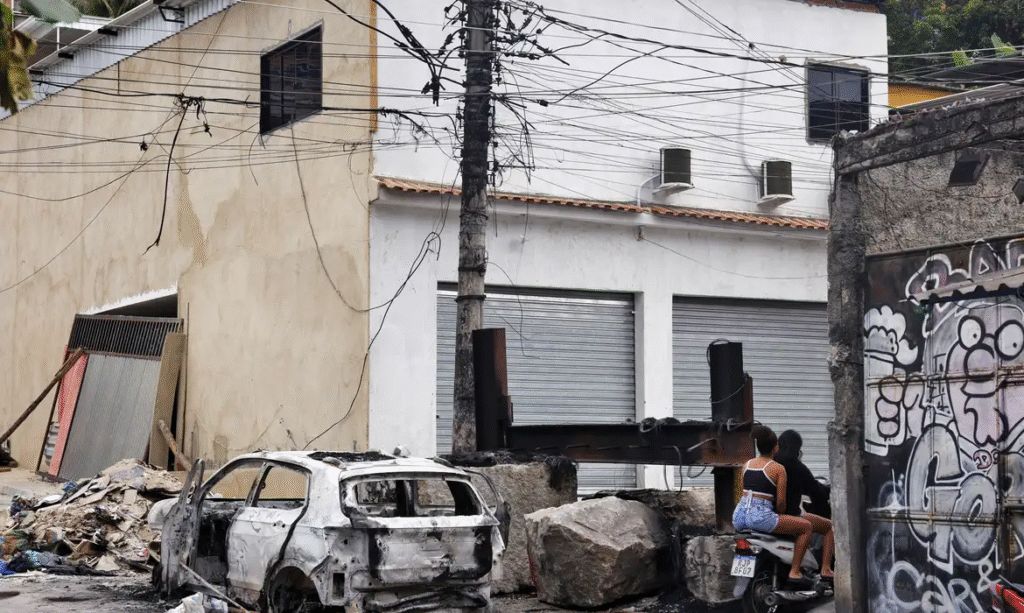
In 2025, the expansion of the Red Command became a defining feature of the security landscape, combining territorial growth with financial diversification. The organization increasingly shifted away from its traditional dependence on drugs and arms trafficking toward the systematic exploitation of services imposed on residents of controlled areas. Extortion, gas distribution, protection fees, illegal internet and cable TV services, front businesses used for money laundering, and financial investments now account for a significant share of revenues. This business model rewards the expansion of territory and the number of people under control, reinforcing incentives for spatial domination.
Looking ahead, these trends point to the strengthening of organized crime’s financial base, expanding resource capture, and growing pressure on authorities to intensify investigations and operations focused on money laundering and illicit financial networks.
Barricades, especially in the metropolitan region of Rio de Janeiro state, remained a central tool of territorial control, restricting circulation, undermining urban mobility, and obstructing access to essential services. The use of drones by criminal factions has evolved from a futuristic tactic into a core defensive and offensive strategy. Groups like the Comando Vermelho and Terceiro Comando Puro (TCP, Pure Third Command) are increasingly repurposing consumer technology to establish “aerial superiority” over law enforcement, particularly in the favelas of Rio de Janeiro.
Policy of Major Operations
Large-scale police operations remained a defining feature of public security policy in 2025, reflecting the persistence of a confrontation-based model rather than a shift in strategic orientation. In 2025, large-scale police operations in Brazil’s main urban centers played a central role in public security policy, particularly in Rio de Janeiro and São Paulo. These actions reflected an official strategy centered on territorial control and confrontation with organized crime, while simultaneously intensifying national debates about effectiveness, proportionality, and long-term consequences.
The most emblematic case occurred in in the Complexo da Penha and Complexo do Alemão clusters of favelas in the North Zone of Rio de Janeiro in October, when authorities launched a massive operation targeting areas under the influence of the Red Command. The action mobilized thousands of military and civil police officers to execute arrest and search warrants in multiple communities, marking one of the largest coordinated police efforts in the state’s history. The operation resulted in a high number of deaths, arrests, and weapons seizures, drawing widespread attention from the media, civil society, and political actors. While state officials defended the operation as necessary to weaken criminal command structures and restore control, critics questioned its execution and outcomes, pointing to the high lethality and limited evidence of lasting disruption to criminal networks.
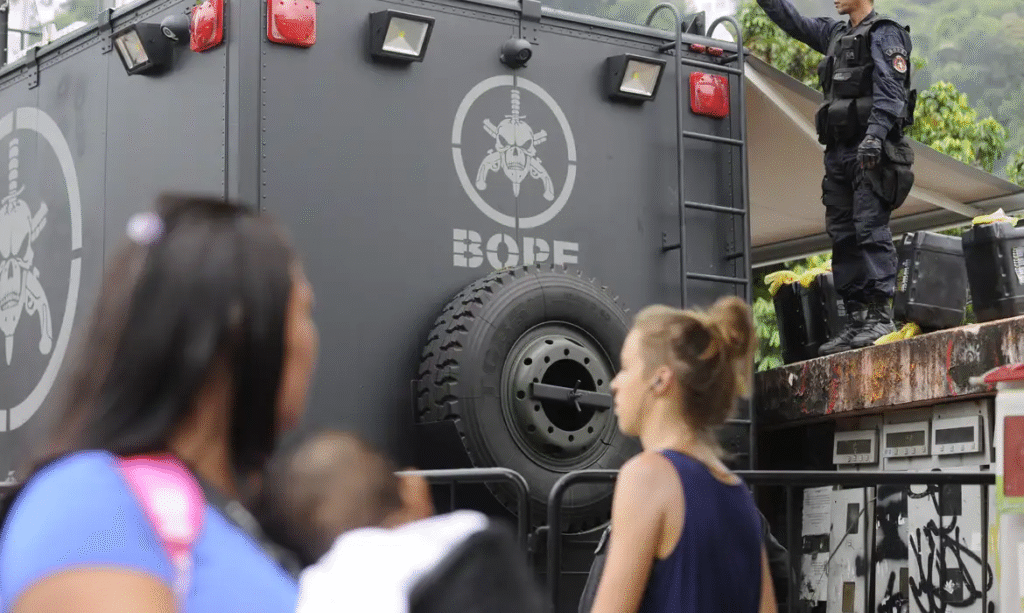
Throughout the year, Rio de Janeiro also conducted several other large-scale operations aimed at dismantling barricades, arresting faction leaders, and intercepting drug and arms flows. These actions frequently led to the suspension of public services, school closures, and interruptions to major transportation routes, affecting not only residents of targeted communities but also people commuting through surrounding areas.
In São Paulo, major operations followed a different pattern, with a stronger emphasis on intelligence-driven investigations. Police actions focused on organized crime logistics, including arms trafficking, financial crimes, and command-and-control structures linked to the PCC. Although generally less lethal than operations in Rio, these initiatives still sparked debate about police accountability and the scope of enforcement powers.
The scale and recurrence of large police operations in 2025 reflected the continuity of a long-standing security policy centered on territorial confrontation and high-impact enforcement. Rather than signaling a strategic shift, the actions observed in Rio de Janeiro and São Paulo followed an established national pattern that has shaped public security responses for years. The sustained political backing and institutional reliance on this model throughout the year suggested that it will remain a central reference for state-level policing in Brazil’s largest metropolitan areas.
Technology and Urban Surveillance
The expansion of surveillance technologies became one of the main pillars of urban security strategies in 2025, reflecting both institutional adaptation to complex crime patterns and growing tensions over rights and oversight. In 2025, urban security policies in Brazil increasingly incorporated technological solutions as both public authorities and private actors expanded investments in intelligent monitoring systems. Artificial intelligence, smart cameras, drones, and automated surveillance tools became central components of crime prevention and investigation strategies, particularly in large metropolitan areas such as São Paulo and Rio de Janeiro. These technologies were promoted as force multipliers, capable of extending state presence in complex urban environments.
São Paulo stood out for its rapid expansion of integrated surveillance systems, including facial recognition, AI-assisted cameras, and data-sharing platforms linking municipal agencies and police forces. SmartSampa security system in São Paulo became emblematic of this approach, leading to arrests of wanted suspects and the identification of individuals reported missing. At the same time, these systems generated public debate after cases of mistaken identification and concerns over transparency, oversight, and algorithmic bias.
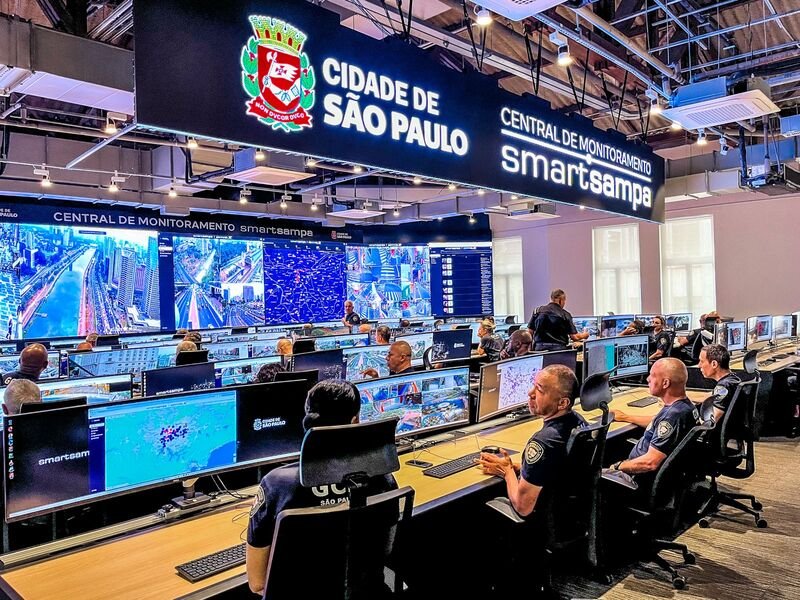
Rio de Janeiro followed a different path. While the city and the state expanded their camera networks and increased the use of drones, the model relied more heavily on the Operations Center (COR) and real-time monitoring rather than large-scale biometric identification. This contrast highlighted distinct governance choices: São Paulo prioritized automation and biometric tools, while Rio emphasized centralized coordination and situational awareness.
Looking ahead, the growing presence of intelligent surveillance systems appears likely to continue expanding. However, this trajectory remains inseparable from ongoing tensions surrounding privacy, data protection, and the potential misuse of surveillance technologies. Ensuring compliance with Brazil’s data protection framework, alongside clear governance and accountability mechanisms, will remain a defining challenge as cities deepen their reliance on digital monitoring tools.
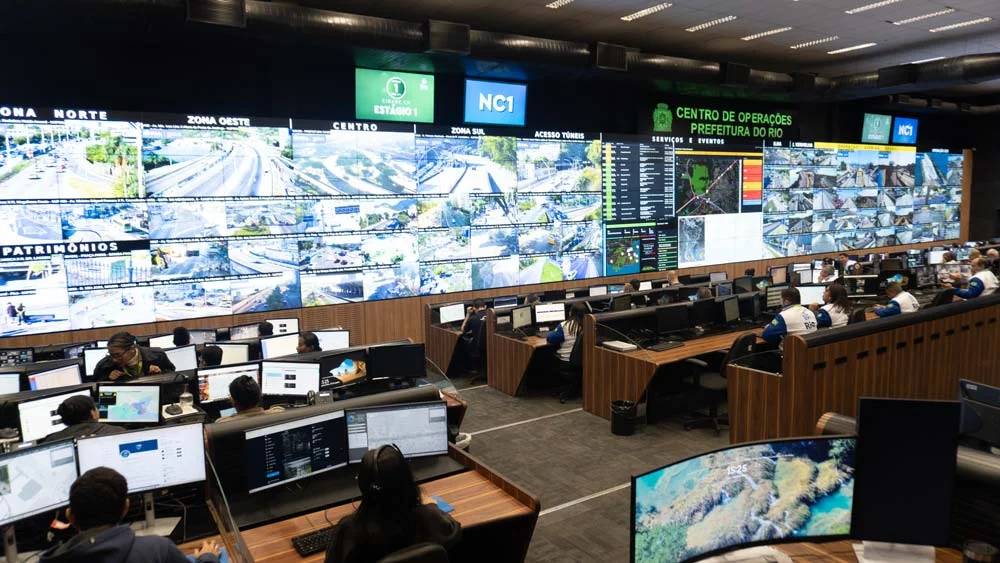
Alongside the expansion of fixed surveillance infrastructure, 2025 also saw the growing operational use of drones during large public events. Authorities increasingly relied on aerial monitoring to support crowd management, detect incidents in real time, and enhance situational awareness in highly dense environments. High-profile events such as Carnival celebrations and the Lady Gaga concert at Copacabana Beach illustrated how drones were deployed to monitor crowd flows, identify potential security risks, and coordinate rapid responses among different agencies. The use of drones offered greater flexibility than static cameras, allowing security teams to adapt coverage to changing conditions. To regain control of the airspace and protect ground personnel, Brazilian authorities have also begun a massive investment cycle in Counter-Unmanned Aircraft Systems (C-UAS). As of 2026, the strategy is shifting from simple ground operations to integrated electronic warfare.
Politics, Institutions, and Organized Crime
In 2025, Brazil’s public security agenda was strongly shaped by revelations about the depth of organized crime’s penetration into political, financial, and institutional spheres. While the territorial expansion and economic diversification of criminal organizations such as the Red Command (CV) and the First Capital Command (PCC) had been developing for years, the past year marked a turning point in terms of exposure. Coordinated investigations led by the Federal Police, the Federal Revenue Service, and public prosecutors revealed how deeply these groups had infiltrated legal supply chains, financial structures, and political networks.
The arrest of state lawmaker Thiego Raimundo dos Santos Silva, known as TH Jóias, became one of the most emblematic cases of this intersection between crime, business, and politics. Detained during a joint operation involving federal and Rio de Janeiro’s state judicial authorities, the state deputy for Rio de Janeiro was accused of drug trafficking, corruption, money laundering, and negotiating weapons and accessories for the CV. Investigators alleged that his jewelry business functioned as a financial and logistical front, facilitating illicit transactions and the acquisition of firearms. The case intensified public debate about political infiltration by criminal organizations, illustrating how elected officials can serve as strategic intermediaries by offering protection, legitimacy, and access to institutional channels.

A similar pattern emerged in investigations targeting the PCC. Operation Carbono Oculto, described by authorities as the largest operation ever conducted against organized crime in Brazil, mobilized approximately 1,400 agents across eight states. The investigation uncovered a multibillion-real scheme centered on the fuel sector, involving tax evasion exceeding R$7.6 billion, fuel adulteration, environmental crimes, and sophisticated money-laundering structures. The operation revealed how the PCC embedded itself in import and export chains, chemical supply networks, fintech platforms, and investment funds, financing assets ranging from fuel distributors to ethanol plants and port terminals.
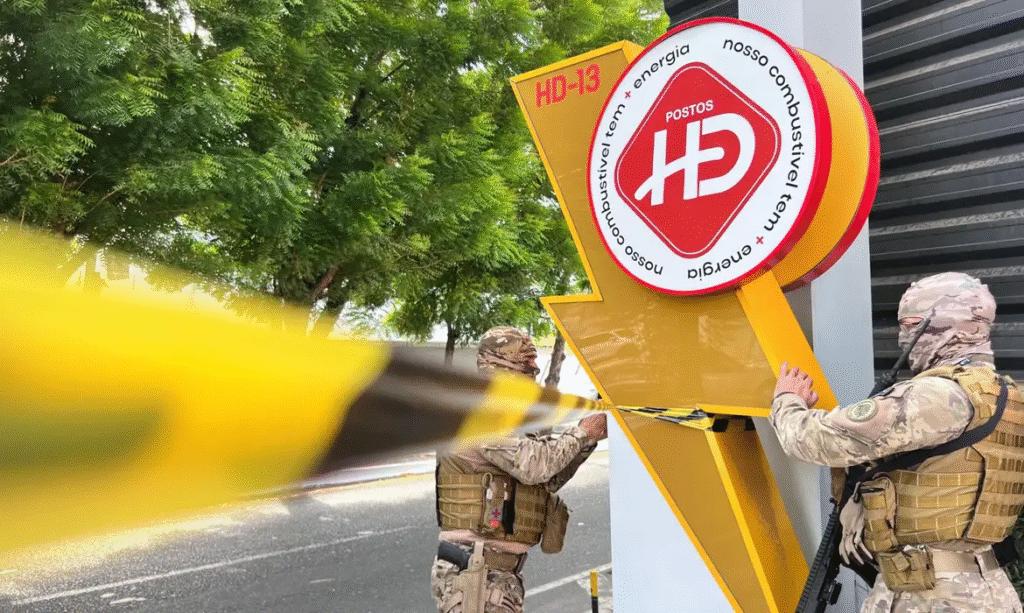
Together, these cases indicated that a key-challenge lies in addressing the structural entrenchment of organized crime within legal, political, and economic systems. The exposure achieved in 2025 raised expectations for sustained, coordinated institutional responses, suggesting that future enforcement efforts will increasingly depend on financial intelligence, regulatory oversight, and political accountability rather than traditional policing alone.
Conclusion
The developments observed throughout 2025 reflect a profound transformation in Brazil’s public security landscape. Criminal activity became increasingly connected, hybrid, and diversified, combining territorial control, financial sophistication, and digital operations. Organized crime groups demonstrated an ability to operate simultaneously in physical spaces, online environments, and formal economic sectors, reducing their reliance on traditional street-level violence while expanding their reach and resilience.
In response, state authorities intensified investments in enforcement capacity, large-scale police operations, surveillance technologies, and regulatory frameworks. Expanded use of intelligence-led policing, financial investigations, and digital monitoring reflected efforts to adapt institutions to more complex criminal structures. At the same time, the persistence of high-impact operations and the growing reliance on technological tools exposed structural trade-offs between immediate control, long-term governance, and institutional capacity.
The year also showed how deeply public security has become intertwined with political dynamics. Investigations revealing criminal infiltration into businesses, financial systems, and political institutions fueled debates about accountability, governance, and institutional integrity. As security policy increasingly intersects with economic regulation, technological oversight, and political dispute, the central challenge lies in balancing enforcement with democratic safeguards, and innovation with legitimacy, in a context where the boundaries between crime control and institutional resilience continue to narrow.
[1] Phishing uses emails to trick victims into revealing info, while smishing is a type of phishing that uses SMS or WhatsApp text messages, both aiming to steal data through fake links or urgent requests, but smishing specifically targets mobile users via text, often impersonating delivery services or banks for immediate action.

