


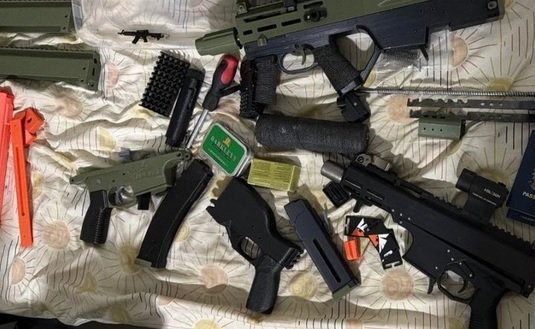
The Civil Police of Rio de Janeiro, the Rio de Janeiro Public Prosecutor’s Office (MPRJ), and the Ministry of Justice and Public Security launched Operation Shadowgun on Thursday (12/03), targeting an interstate scheme responsible for producing and selling weapons manufactured with 3D printers. According to the most recent police update, four men have been arrested — including the alleged leader of the group, who was located in Rio das Pedras, in the state of São Paulo.
This Content Is Only For Subscribers
To unlock this content, subscribe to INTERLIRA Reports.
Arrest Warrants
Agents were deployed to execute five arrest warrants in São Paulo and 36 search and seizure warrants across São Paulo, Rio de Janeiro, and nine other states. All suspects targeted in the operation had previously been indicted by the MPRJ. The operation also received support from the Cyber Operations Laboratory (Ciberlab) of the Ministry of Justice and Public Security, the Brazilian Intelligence Agency (Abin), and civil police units from the other ten states involved.
3D Weapon Production
According to investigations conducted by the 32nd Police Precinct (Taquara) and the Cybercrime Combat Unit of the Special Action Group to Combat Organized Crime (CyberGaeco/MPRJ), the group primarily produced and sold firearm magazines made with 3D printers. In addition, the suspects distributed digital blueprints for so-called “ghost weapons,” which are firearms that lack serial numbers and therefore cannot be easily traced by authorities.
How the scheme worked
The investigation began after an international organization shared an alert with Ciberlab regarding social media posts advertising weapons that could be printed at home. The main product promoted by the group was a 3D-printed semi-automatic firearm. The design was distributed together with a detailed technical manual and an ideological manifesto advocating unrestricted access to firearms.
Engineer
According to the Civil Police, the leader of the organization is an engineer specializing in control and automation systems. Using an alias and always appearing masked, he published ballistics tests, design updates, and instructions on the calibration and assembly of the weapons on social media platforms. Investigators say he also created a manual with more than 100 pages explaining the manufacturing process, allowing individuals with intermediate knowledge of 3D printing to produce the weapons at home using relatively inexpensive equipment. Authorities believe the material is circulated through social media, online forums, and the dark web. The group also used cryptocurrencies to finance its activities.
Organized Structure
The task force identified three additional members involved in the scheme. Each performed a specific function:
- Direct technical support
- Dissemination and ideological articulation
- Advertising and visual identity
According to investigators, the organization had a clear division of tasks and combined expertise in engineering, 3D printing technology, and digital security to enable the production and dissemination of the weapons.
Sales in 11 states
The investigation identified that the materials were sold to 79 buyers between 2021 and 2022, distributed across 11 Brazilian states. According to investigators, many of these buyers have criminal records, mainly for drug trafficking and other serious offenses. Authorities are examining whether the materials supplied organized crime groups, including drug trafficking organizations and militias. One of the buyers is currently imprisoned after being caught with a large quantity of weapons and ammunition. In Rio de Janeiro, ten buyers were identified in municipalities such as São Francisco de Itabapoana, Araruama, São Pedro da Aldeia, Armação dos Búzios, and in the capital, particularly in the neighborhoods of Recreio dos Bandeirantes and Barra da Tijuca.
Analysis:
Operation Shadowgun reflects the growing convergence between technological innovation and illicit firearms production, a trend that is increasingly challenging traditional arms control frameworks. The use of 3D printing technology allows individuals or small networks to manufacture key firearm components without relying on conventional supply chains, reducing the effectiveness of regulatory systems designed to monitor licensed manufacturers and serialized weapons. By distributing digital blueprints and technical manuals online, groups can extend their reach far beyond their immediate geographic location, enabling decentralized production that is difficult for authorities to detect or prevent.
From a security perspective, the potential diffusion of ghost weapon technology raises significant concerns about the future of illicit weapons markets. Unlike traditional firearms trafficking, which depends on physical supply chains that can be intercepted by law enforcement, digital blueprints can be copied and redistributed indefinitely once released. If such designs circulate widely among criminal groups, militias, or extremist networks, the barriers to producing functional weapons could decrease substantially.

