


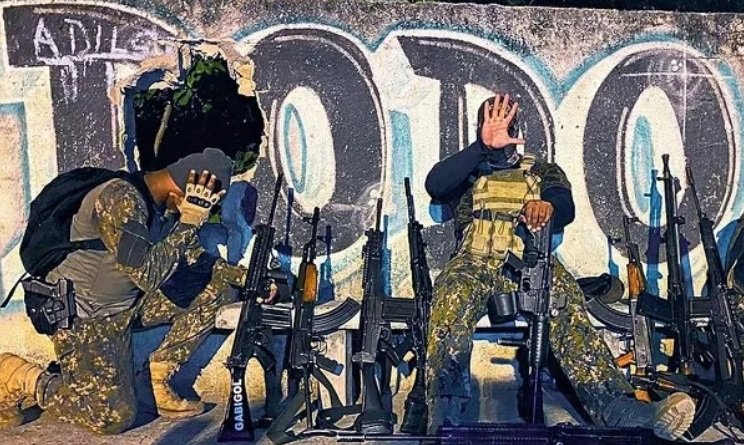
Civil Police officers, with support from teams of the Special Operations Battalion (BOPE), carried out a large-scale operation on Wednesday (14/01) in the Chapadão Complex, in Rio de Janeiro’s North Zone. The action focused on executing 51 search and seizure warrants issued by the courts as part of investigations into drug trafficking, money laundering, and the receipt of goods originating from robberies and thefts across the state. According to the Civil Police, the operation targets financial and logistical structures that sustain organized crime in the region. In addition to the Chapadão Complex, police teams simultaneously carried out enforcement actions in Teresópolis, in the Serra region, indicating the interstate and intermunicipal scope of the criminal network under investigation.
This Content Is Only For Subscribers
To unlock this content, subscribe to INTERLIRA Reports.
Operation Containment
The operation is part of another phase of Operation Containment, a strategy launched by the state government to curb the territorial expansion and economic power of criminal factions. “Search warrants were issued and are being executed. The Chapadão Complex is a hub for receiving stolen goods,” said delegate Thiago Neves, head of the Robbery and Theft Division (DRF), which is responsible for the investigations. According to the police, the area functions as a key distribution and storage point for stolen vehicles, electronics, metals, and other illicit assets, which are later resold or dismantled. The current phase seeks not only to seize illegal materials but also to dismantle the financial flows and support structures that allow criminal groups to sustain armed operations and expand their influence.
Five Arrested
Five people were arrested, including the third suspect accused of carrying out the “Goodnight, Cinderella” scam (the Spiked drink scam) in Ipanema in August. According to police, none of those detained were originally targets of Wednesday’s operation. In a vehicle found at one of the searched addresses, officers seized a rifle, grenades, ammunition, and bulletproof vests. Teams also executed a warrant at a scrapyard, where suspicious metal parts were found. All seized material was taken to Police Headquarters for analysis.
Red Command
According to investigations by the DRF, the activities of a criminal organization linked to the Red Command faction maintain an integrated and coordinated structure to carry out multiple crimes. The group operates in drug trafficking and the receipt of stolen goods, vehicles, and other illicit assets in the Chapadão area, while also employing money laundering mechanisms to move and conceal financial resources of illegal origin. Intelligence work also identified that part of the group’s logistics extends beyond the city of Rio de Janeiro. Investigators found that addresses in Teresópolis are used for storage, concealment of assets, logistical support, and possible financial transactions.
Territorial Disputes
In recent months, the Chapadão Complex has experienced periods of instability due to clashes between rival criminal factions. According to the Civil Police, this tense environment has contributed to Red Command by diversifying its criminal activities and maintaining continuous sources of income, particularly through money laundering and asset concealment. This financial flow is considered essential to sustaining weapons purchases, supplying rifles, and maintaining the armed structure of the drug trade.
Analysis:
The operation carried out in the Chapadão Complex reflects a strategic shift by Rio de Janeiro’s security forces toward disrupting the economic foundations of organized crime rather than focusing exclusively on armed confrontations. By prioritizing search and seizure warrants linked to money laundering, fencing, and logistics, the Civil Police signal an understanding that territorial control by criminal factions is sustained by diversified and resilient financial networks. Targeting storage sites, scrapyards, and support locations weakens the capacity of these groups to convert stolen goods into cash and to reinvest proceeds in weapons, personnel, and territorial disputes.
The findings from the operation reinforce the assessment that factions such as the Red Command operate through integrated criminal portfolios, combining drug trafficking with systematic handling of stolen vehicles, electronics, and other high-value goods.

