


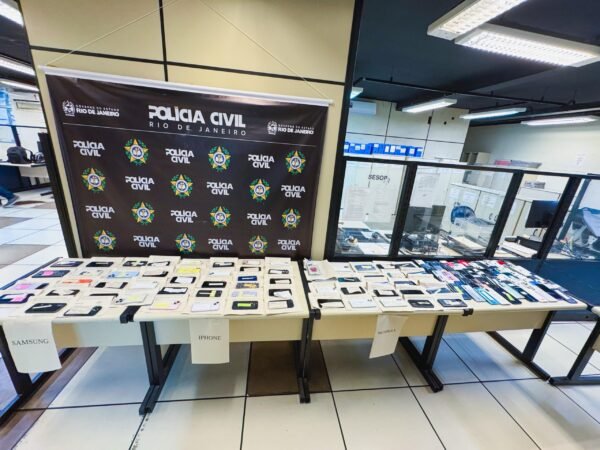
The Civil Police of Rio de Janeiro launched, on Monday (04/05), another phase of Operation Tracking, targeting a criminal network involved in the theft and robbery of cell phones, as well as the receiving and resale of these devices. In this stage, the focus is on a group linked to the Third Pure Command (TCP), which, according to investigators, developed a structured scheme to exploit stolen smartphones. Authorities identified that the group was not limited to reselling devices but also used them to carry out financial transactions, including loans and fraudulent operations, after unlocking and gaining access to victims’ personal data. The operation is part of a broader effort to dismantle organized crime structures that profit from the large-scale circulation of stolen electronics in the state.
This Content Is Only For Subscribers
To unlock this content, subscribe to INTERLIRA Reports.
São Carlos Complex
Agents from the 6th Police Precinct (Cidade Nova), with support from the Special Resources Coordination (Core), were deployed to execute arrest and search warrants in the São Carlos Complex, located in Estácio, in the North Zone of Rio de Janeiro. Upon entering the community, police teams were met with gunfire, leading to a confrontation with armed individuals suspected of protecting the criminal group. Despite the resistance, the operation continued with the objective of locating suspects, seizing devices, and collecting evidence. In parallel, other teams carried out actions at addresses in São Paulo, as part of the investigation into the interstate dimension of the scheme.
South Zone and Center
According to the Civil Police, the investigation lasted more than one year and revealed that the group operated mainly in the Center and South Zone of Rio de Janeiro, areas with high pedestrian flow and a concentration of potential victims carrying high-value smartphones. After the robberies and thefts, the devices were transported to the São Carlos Complex, where they were sorted and prepared for resale or further use. In cases involving more advanced security systems, the criminals relied on a network of accomplices based in São Paulo, who specialized in unlocking devices and bypassing security barriers, enabling access to personal data and financial applications.
Operation Tracking
Operation Tracking is a long-term initiative by the Rio de Janeiro Civil Police aimed at combating crimes related to the theft, robbery, and resale of cell phones at all stages of the criminal chain. Since its creation, the operation has led to significant results, including the recovery of more than 13,300 devices, with approximately 6,000 returned to their rightful owners. According to authorities, more than 870 suspects have been arrested, including individuals directly involved in robberies, thefts, and the receiving of stolen goods. The ongoing actions seek not only to reduce street-level crime but also to disrupt the financial structures that sustain these illegal activities.
Analysis:
The latest phase of Operation Tracking in Rio de Janeiro demonstrates how cell phone theft has evolved into a complex and highly organized criminal economy. The involvement of the Third Pure Command indicates that these activities are no longer limited to opportunistic street crimes but are embedded within structured networks capable of extracting value from stolen devices in multiple ways. The ability to access personal data and conduct financial transactions significantly increases the profitability of each theft, transforming smartphones into gateways for fraud, identity exploitation, and illicit financial operations. This shift reflects a broader trend in which digital assets and personal information have become central targets within urban crime dynamics.

