


Brazil’s political and legislative calendar heads into a prolonged pause as Congress enters its mid-year recess without voting on several priority measures, including the Public Security PEC, the 6×1 work schedule reform, and the confirmation of a Supreme Court justice — with little prospect of major legislative action before the elections. On the electoral front, the latest BTG/Nexus poll shows the presidential race remaining essentially stable, with Lula and Flávio Bolsonaro in a statistical tie in a simulated runoff at 47% to 44%. The trade dispute with the United States reaches a critical moment as the July 15 deadline approaches for Washington to decide whether to implement the proposed 25% tariffs on Brazilian goods, with the Lula administration bracing for confirmation of the measures while hoping for an expanded list of exemptions. Meanwhile, Flávio Bolsonaro’s campaign faces fresh turbulence after the senator publicly read a letter from his imprisoned father, prompting a legal petition seeking to revoke Jair Bolsonaro’s house arrest — the latest in a series of setbacks for a candidacy already weakened by internal divisions within the Bolsonarista movement.
This Content Is Only For Subscribers
To unlock this content, subscribe to INTERLIRA Reports.
No Session
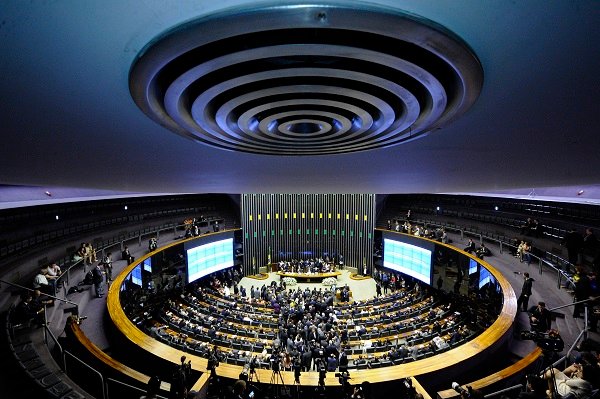
The National Congress session scheduled for Thursday (09/07) to vote on presidential vetoes was cancelled. Senate President Davi Alcolumbre (União Brasil) attributed the decision to a lack of consensus. As a result, the Legislature is not expected to vote on any other major measures before the mid-year recess, which begins next week and runs until July 31—and most likely not before the elections. The official campaign period begins on August 13. During the election season, the Chamber of Deputies and the Senate will meet only during a few concentrated legislative weeks and are not expected to consider major proposals. Consequently, Congress will enter the recess without voting on several priority issues, including the Public Security PEC (Proposed Constitutional Amendment), the PEC to end the 6×1 work schedule, the bill regulating rare earth mining, the bill allowing surplus oil revenues to be used to reduce fuel taxes, and the confirmation of the justice nominated to replace Luís Roberto Barroso on the Supreme Federal Court (STF) following the rejection of Jorge Messias’s nomination.
New Election Poll
A new BTG/Nexus poll released on Monday (13/07) indicates a stable presidential race. In a simulated runoff, President Lula (PT) receives 47% of voting intentions, compared with 44% for Senator Flávio Bolsonaro (PL-RJ), placing the candidates in a statistical tie. The figures are unchanged from the previous survey conducted in late June. The poll was carried out by telephone between July 10 and 12, interviewing 2,003 voters aged 16 and older nationwide. The margin of error is two percentage points, with a 95% confidence level. In the first-round scenario, Lula’s support declined from 42% to 40%, a variation within the margin of error, while Flávio Bolsonaro remained stable at 34%.
Tariffs
The Brazilian government will wait for the final scope of the United States’ decision regarding the proposed 25% and 12.5% tariffs on Brazilian exports before determining its response to the Donald Trump administration. The White House’s deadline to decide whether to implement the new measures expires on Wednesday (15/07). On June 1, the Trump administration proposed a 25% tariff on Brazilian goods following a trade investigation involving issues such as illegal deforestation, piracy, and the PIX payment system. The following day, it announced an additional 12.5% tariff on imports from 60 countries, including Brazil, citing shortcomings in efforts to combat forced labor. President Lula’s (PT) administration is working on the assumption that the new tariffs will likely be confirmed. However, Brazilian negotiators believe the U.S. government may issue a revised annex to the 25% tariff decision, potentially expanding the list of products exempt from the broader trade measure.
Flávio Bolsonaro
Congressman Lindbergh Farias (PT) has filed a petition with Supreme Federal Court (STF) Justice Alexandre de Moraes requesting the revocation of former President Jair Bolsonaro’s house arrest and his transfer to a closed prison regime. The petition alleges that Bolsonaro violated court-imposed restrictions by writing a letter that was later read publicly by his son, Senator Flávio Bolsonaro (PL), a presidential hopeful. The filing also requests that Flávio Bolsonaro be fined R$100,000 for what it describes as an act undermining the dignity of the justice system. Jair Bolsonaro has been under house arrest since last year following his conviction for leading a coup plot related to the 2022 presidential election and remains subject to restrictions, including a prohibition on communicating through social media. In the latest development affecting Flávio Bolsonaro’s presidential campaign—already strained by divisions within the Bolsonarista movement—the senator publicly read his father’s letter on the 11th. In the message, the former president referred to Flávio as his “spokesperson” and called for support for his presidential bid. The letter made no reference to former First Lady Michelle Bolsonaro (PL), with whom Flávio has exchanged public criticism in recent weeks.
Analysis:
Brazil’s political environment is entering a period in which electoral dynamics are increasingly shaping institutional decision-making. With Congress entering recess and the official campaign period approaching, legislative productivity is expected to decline as lawmakers prioritize regional political agendas and campaign activities over complex national reforms.
The stability observed in the latest presidential polling indicates that the election remains highly competitive despite recent political controversies. Although neither candidate has substantially altered the electoral balance, external developments—particularly the pending U.S. tariff decision—have the potential to influence the campaign by introducing economic issues into the political debate. Trade measures affecting Brazilian exports could generate broader discussions about economic management, foreign policy, and national sovereignty, while the government’s response will likely seek to balance diplomatic negotiations with domestic political considerations.
Sources: O Globo [1], [2], [3], [4], [5], [6]; G1 [1], [2], [3]; A Folha de SP.

