


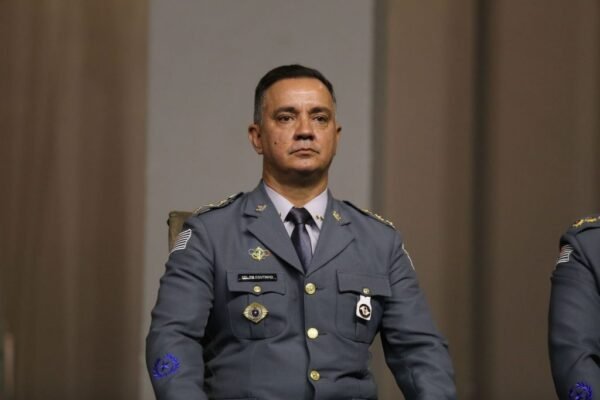
An operation launched on Tuesday (21/07) by the São Paulo Public Prosecutor’s Office targeted a group suspected of laundering money for the First Capital Command (PCC) and participating in so-called “crime courts,” through which the faction punishes—including with death—those accused of violating its rules. Three colonels from the São Paulo Military Police were named in the prosecutors’ reports for their alleged connections to the suspects. The investigation is being led by GAECO (Special Action Group for Combating Organized Crime), the Public Prosecutor’s Office’s specialized unit for combating organized crime, and stems from evidence recovered from mobile phones seized during three previous operations.
This Content Is Only For Subscribers
To unlock this content, subscribe to INTERLIRA Reports.
Investigation
The investigation advanced following a dispute over a property on the São Paulo coast. According to the Public Prosecutor’s Office, analysis of the mobile phones seized during that case uncovered evidence of a broader scheme involving money laundering, corruption of public officials, and the provision of financial services to the PCC. Investigators concluded that the suspects exchanged electronic bank transfers for cash and vice versa, a practice they allegedly referred to as “swapping TED [bank transfers] for cash.” Individuals holding cash proceeds from drug trafficking would deliver the money to the group and receive a bank transfer in return, allowing the funds to enter the financial system with an apparently legitimate economic justification. According to prosecutors, the scheme relied on shell companies, including one registered in the name of a hairdresser who formally owned an import-export business and another belonging to a resident of a public housing complex in Itapevi listed as the owner of an e-commerce company.
Involved Parties
The investigation also involves two individuals previously targeted in other high-profile cases: Meire Poza and Leonardo Meirelles. Both were investigated during Operation Car Wash on suspicion of participating in the financial network of black-market currency dealer Alberto Youssef. In March this year, they were also targeted in Operation Bazaar, which investigates corruption and money laundering within the São Paulo Civil Police. Meire was arrested but released a week later under a habeas corpus order. The court decision authorizing Tuesday’s operation states that investigators identified “a link between the financial operators acting as corruptors in Operation Bazaar and the PCC.” According to the Public Prosecutor’s Office, investigators also found instructions issued by Meire on how to conceal illicit proceeds. She is the subject of a preventive arrest warrant.
Léo do Moinho
In addition to Meire and Meirelles, investigators also targeted Leonardo Monteiro Moja, known as “Léo do Moinho,” a former leader of the Moinho favela in central São Paulo. Leonardo has been in custody since 2024 on suspicion of drug trafficking. Last year, the Civil Police and the Public Prosecutor’s Office stated that he continued to exercise influence over the Moinho area while imprisoned. In Tuesday’s operation, he is linked to two lines of investigation. The first concerns his alleged role in money laundering, with investigators describing him as a major client of the financial network. The second concerns his alleged involvement in a PCC “crime tribunal” convened over a dispute involving a R$2 million payment for a property in Riviera de São Lourenço, in the coastal municipality of Bertioga.
WhatsApp Group
According to the court order authorizing 18 arrest warrants and search-and-seizure operations, investigators concluded that members of the core group suspected of laundering criminal proceeds exercised influence over Civil and Military Police officers. Among the Military Police officers mentioned is Colonel José Augusto Coutinho, who served as General Commander of the São Paulo Military Police until April this year and is now retired. The investigation also mentions Colonel Luiz Carlos Pereira Martins, who has been in the reserves since 2019, and another colonel identified only as Patrício. One intercepted message indicates that the suspects discussed the need for “financial resources to pay the police.” According to investigators, the exchange occurred between two individuals suspected of providing financial services to the PCC. Court documents state that the former commander was mentioned in conversations among the group’s financial operators, although the ruling does not disclose the content of those discussions. Colonel Patrício reportedly appears in a spreadsheet as a client of one of the financial operators, while investigators also found a handwritten note indicating a payment of R$1,000 to him during a previous operation. Prosecutors further allege that Colonel Pereira Martins participated in a WhatsApp group alongside suspected money launderers and maintained contact with members of the group even after they became targets of Operation Fractal in 2022.
Analysis:
The investigation illustrates one of the most significant challenges posed by organized crime in Brazil: its ability to establish relationships with members of state institutions. Allegations involving current and former Civil and Military Police officers are particularly serious because they suggest that criminal organizations may seek not only to evade law enforcement but also to obtain privileged information, operational protection, and influence over investigations. Even when only a limited number of officers are implicated, such cases can erode public confidence in security institutions and complicate efforts to combat organized crime.
For criminal organizations such as the PCC, cultivating connections with law enforcement personnel represents a strategic advantage that extends far beyond corruption for financial gain. Access to insiders may facilitate money laundering, protect logistical networks, compromise police operations, and reduce the risk of arrests or asset seizures.

