


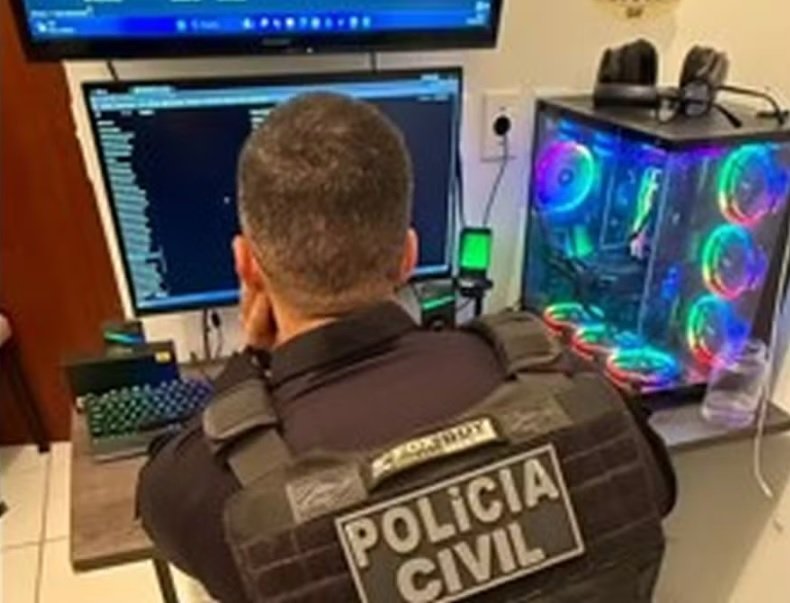
On Tuesday (4), the Federal District Civil Police conducted an operation targeting a group suspected of planning violent acts in Brasília during the 2026 election period. In total, investigative measures were carried out against eight individuals, aged between 19 and 31, in the states of Santa Catarina, Paraná, São Paulo, Pernambuco, and Rio Grande do Sul. The operation received support from the civil police forces of each of those states, which assisted in locating the suspects and carrying out the court-authorized measures.
This Content Is Only For Subscribers
To unlock this content, subscribe to INTERLIRA Reports.
Discussions Regarding the Attacks
Evidence gathered by investigators includes discussions about storming public buildings, selecting potential targets, organizing tactical formations, recruiting participants from different states, analyzing maps, and sharing architectural blueprints and 3D models of buildings located in Brasília’s central area. According to the Federal District Civil Police, the group also circulated manuals containing instructions for manufacturing explosive devices. The material under investigation suggests that the suspects were discussing both the logistical and operational aspects of a possible coordinated action in the federal capital.
Operation “Interrupted Network”
Named Operation “Interrupted Network” (Operação Rede Interrompida), the investigation began after the National Public Security Secretariat, which is part of the Ministry of Justice and Public Security, forwarded a report identifying suspicious communications. In these exchanges, Brasília was repeatedly mentioned as the destination for a mobilization planned to take place during the election period. The information prompted authorities to investigate the participants, their connections, and the possible level of preparation for the planned acts.
Previous Attacks
In November 2024, Brasília was the scene of a bombing at the Three Powers Plaza. Francisco Wanderley Luiz detonated an explosive device near the Supreme Federal Court (STF), resulting in his own death. Before the attack, he had repeatedly announced the date and time of the planned action through social media posts. He had also established a staging area near the plaza, which included a car, a trailer, and explosive materials, without being intercepted by the authorities before carrying out the attack.
Analysis:
The operation demonstrates that Brazilian authorities are adopting a more preventive approach to politically motivated violence during an election year. Rather than waiting for concrete actions to take place, investigators intervened at what appears to have been an early planning stage, based on intelligence indicating discussions about targets, logistics, and the acquisition of operational knowledge. This reflects lessons learned from previous incidents and a broader recognition that online radicalization and decentralized networks can rapidly evolve into real-world security threats if left unchecked.
The timing of the investigation is particularly significant because 2026 is a presidential election year, a period that traditionally increases political polarization and the risk of isolated or coordinated acts of violence. Brazil’s 2022 elections demonstrated how electoral tensions can translate into security incidents, including politically motivated assaults, attacks against party supporters, road blockades following the announcement of the results, and, ultimately, the January 8, 2023, attacks against the headquarters of the Three Branches of Government in Brasília.

